

ADVERTISEMENT:

Search for a story:
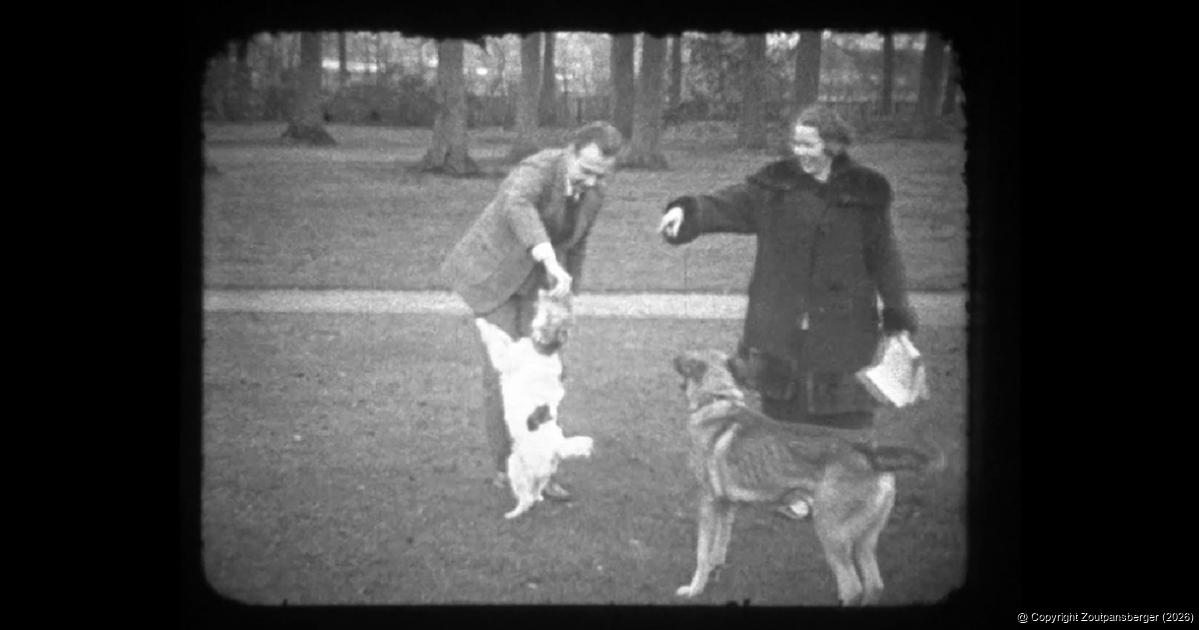
We dubbed Episode 16 the “Dog film”. Much of the film centres around Oom Willem and Tannie Jo's enjoying time with one of their great loves — dogs.
WATCH: Time has come to say goodbye to Oom Willem and Tannie Jo
Date: 27 September 2025 By: Andries van Zyl
This week, we wrap up our weekly travels with Oom Willem van den Berg. Over the past 18 weeks, we have joined the adventurous Oom Willem on his almost 100-year-old escapades, which were captured on 16 mm film. We travelled with him and his wife, Tannie Jo, across the length and breadth of South Africa and even accompanied them on a trip up the east coast of Africa and into Europe. But for now, our journey must end with two bonus reels.
For those who are only joining us now, or who may have missed why we ran the weekly history column, here is a quick recap.
Earlier this year, we received a very interesting “gift” from two Louis Trichardt residents, Susan and Irene Adendorff. Their grandfather, Piet Adendorff, used to farm in the Levubu area, near where the Albasini Dam is situated. A good friend of his was Willem van den Berg, a Dutchman who arrived in the Soutpansberg in the early 1930s.
Willem van den Berg was a fascinating character and one of the first people to experiment with 16 mm film. As far back as 1926, he began making movies of the trips he and his family and friends undertook – firstly in South Africa, and later also in other parts of the world. He was also very fond of showing his films to visitors.
After his death in 1984, the two trunks containing the film reels were mostly abandoned. His Soutpansberg farm was sold, and some of his belongings went to his goddaughter. When she passed away, the trunks ended up with the Adendorff family, who had been friends of the Van den Bergs for decades. Oom Willem and Tannie Jo had no children of their own.
Susan and Irene realised that the films might have historical value, but the cost of converting such reels into digital format is prohibitively high. Many of the films were also in extremely poor condition and had started to disintegrate after so many decades. The Zoutpansberger was then approached to see whether we could assist in preserving the films. And assist we did. To help preserve Oom Willem’s films for future generations, we digitised them – but we did not stop there. We also brought the films back to life by retracing Oom Willem and Tannie Jo’s travels and inviting our readers to join us.
The 18-week-long journey gave us a unique glimpse into a bygone era, when motorcars were still few on South African roads and many people still relied on horse-drawn carts or ox wagons to get around. The films were taken between 1926 and the early 1930s.
Our readers joined Oom Willem and Tannie Jo on their “first” trip as they made their way from South Africa into what was then Rhodesia, over into Mozambique, and from there up the east coast of Africa. Back in South Africa, we also visit them in the Free State, where Oom Willem worked on a cattle farm before settling on a farm near the Albasini Dam in the Soutpansberg. Oom Willem and Tannie Jo were also fond of the Cape, while also travelling to KwaZulu-Natal.
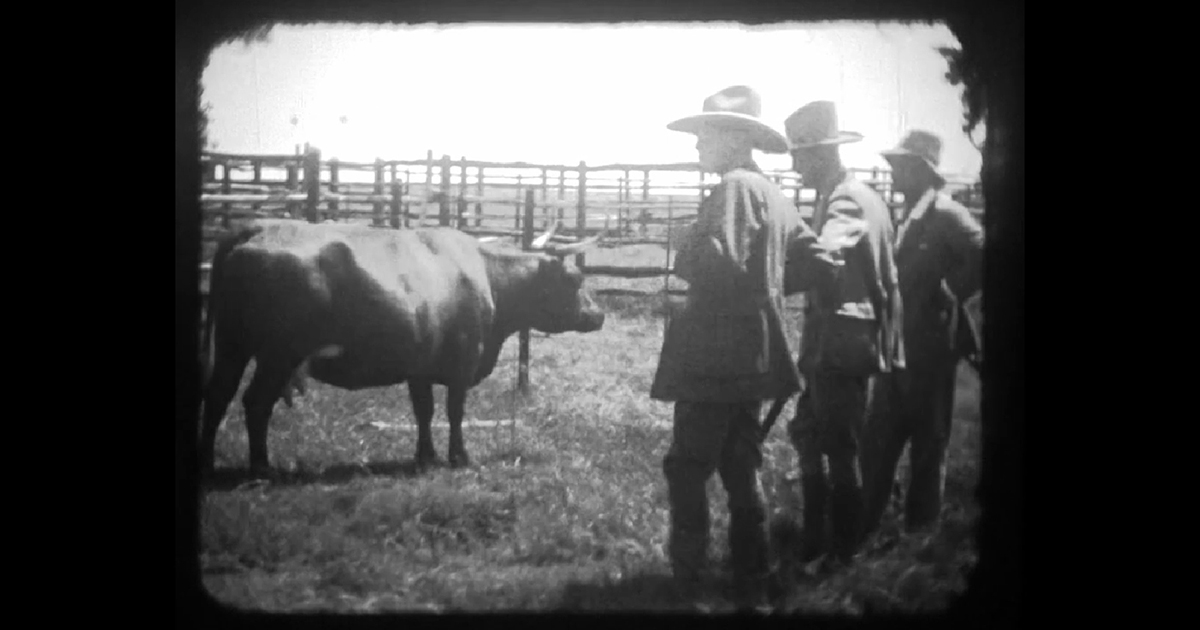
Although we will not go into much detail regarding our two bonus reels marking the end of Oom Willem’s travels this week, one of the two reels (Episode 17) again takes us back to the Free State once again, where Oom Willem once worked on the farm Wintersvlei.
 |
|
One of the two reels (Episode 17) takes us back to the Free State again, where Oom Willem (left) once worked on the farm Wintersvlei. |
After coming to South Africa in 1926, Oom Willem went to a large cattle ranch in the Western Transvaal that belonged to a Norwegian company and worked there for about nine months. He then heard about two Hollanders, Van Beek, who had a farm in the Free State, where they were breeding Afrikaner cattle. This was how Oom Willem ended up on the farm Wintersvlei, where he worked for about two years. Oom Willem also met Tannie Jo in the Free State. She was the sister of Dick Koker, who worked with him on the farm. The wedding took place in Holland, at the insistence of Van den Berg’s father.
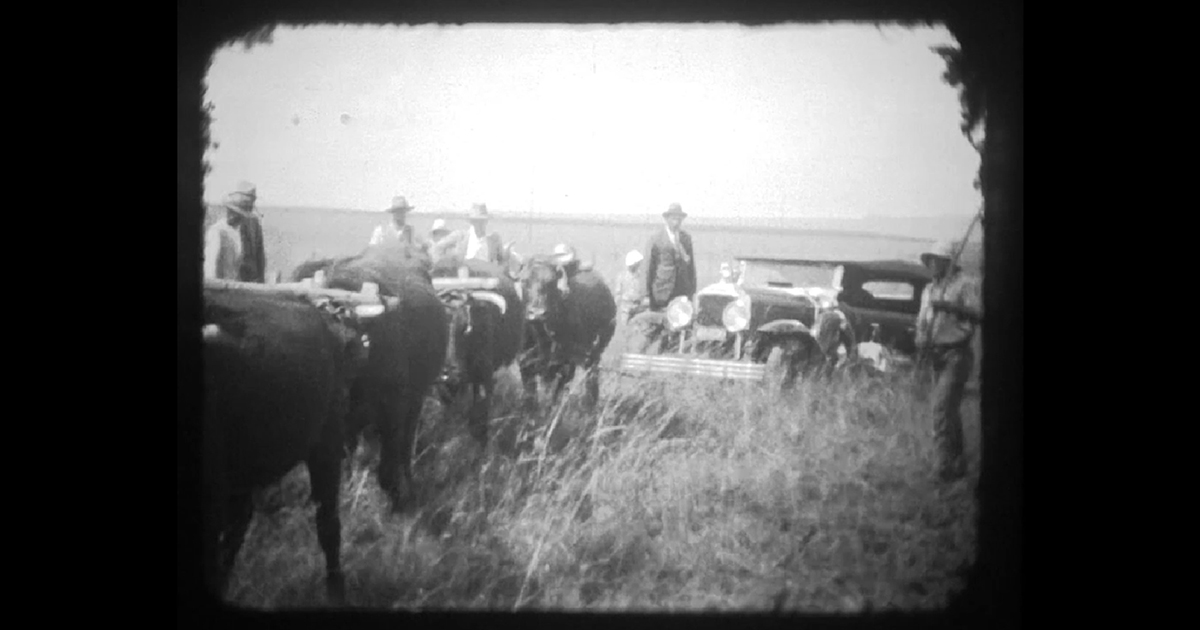
A recurring theme in Oom Willem’s travels is his finding himself stuck or stranded on a couple of occasions. This is testimony to his adventurous side. In Episode 17, from the 02:20-minute mark up to the four-minute mark, Oom Willem is seen either having to be rescued again or rescuing other travellers after getting stuck in the mud. In the end, oxen had to be used to get the stranded vehicle out of trouble.
 |
|
A recurring theme in Oom Willem’s travels is his finding himself stuck or |
Also, some interesting footage shows a group of camel riders at the 5:30 mark. Whether it is Oom Willem, we don’t know. Neither do we know who they are or where they came from.
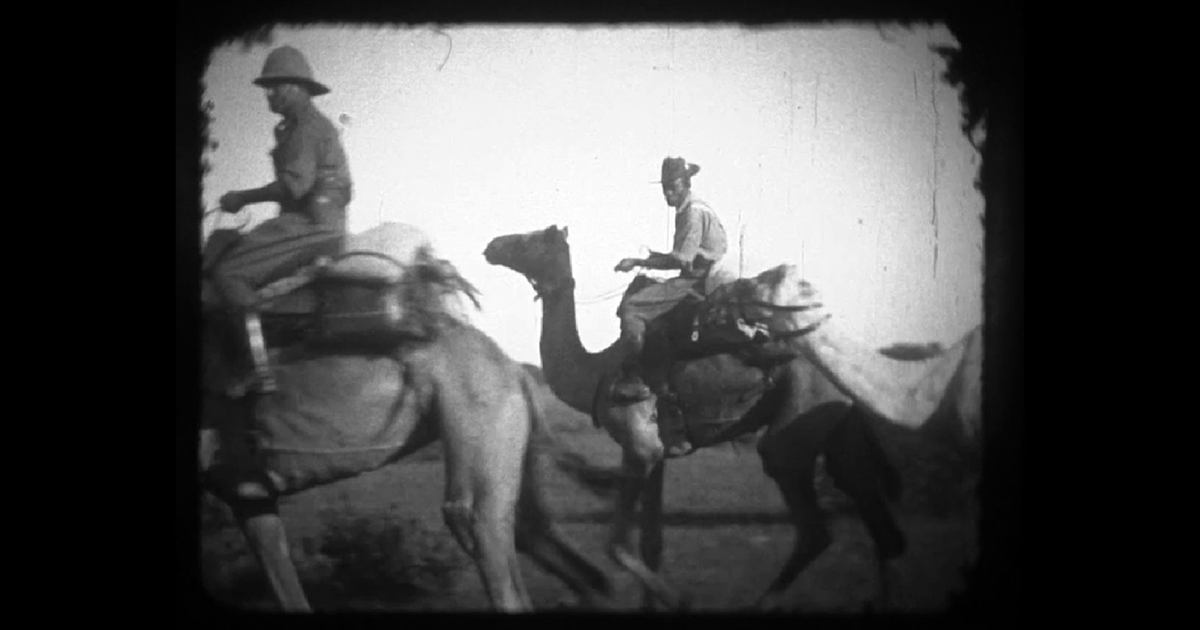 |
But, in the context of the film, they were also on the farm. The rest of the film centres around everyday farm life 100 years ago.
The other bonus reel features footage most definitely not taken in South Africa. The landscape and architecture of the buildings resemble those of European origin, and it is known that Oom Willem and Tannie Jo had made several European trips, including returning to Holland for their wedding. We dubbed the reel the “Dog film”. Much of the film centres around Oom Willem and Tannie Jo’s enjoying time with some family and one of their great loves — dogs. The Van den Berg couple can be seen in a very playful mood, entertaining a couple of dogs.
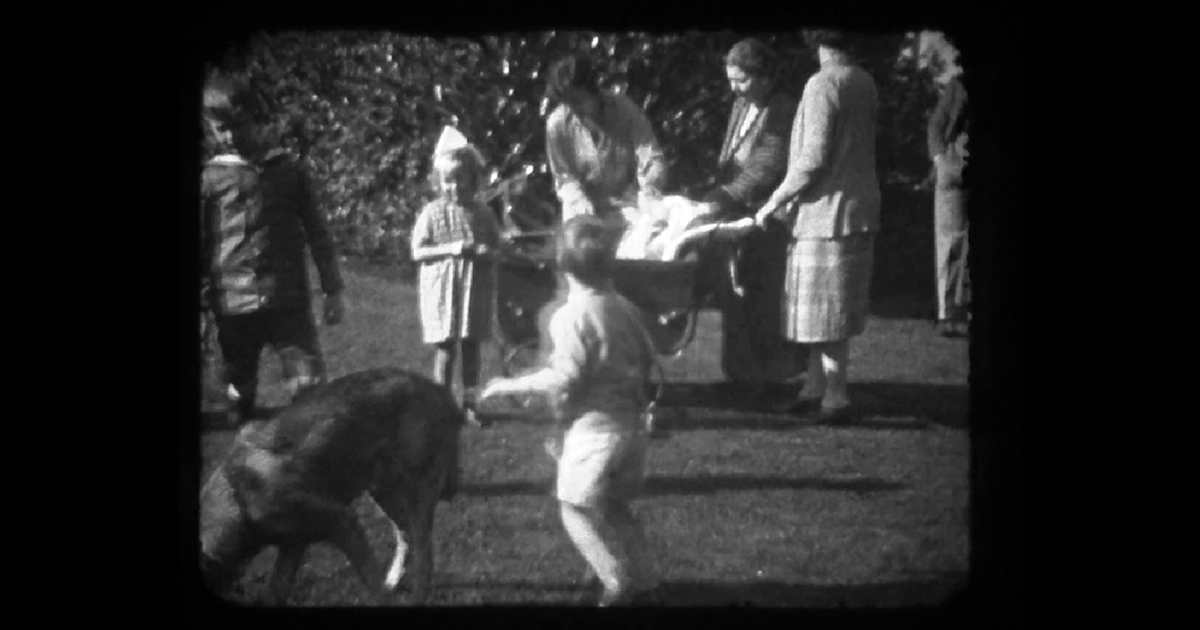
About halfway through the “Dog film”, Oom Willem and Tannie Jo are seen amidst a number of young children, and one cannot help but wonder who they are and if any of them are still alive. One also wonders about Oom Willem and Tannie Jo, who, as indicated, had no children of their own.
 |
|
One cannot help but wonder who these children are and if any of them are still alive. |
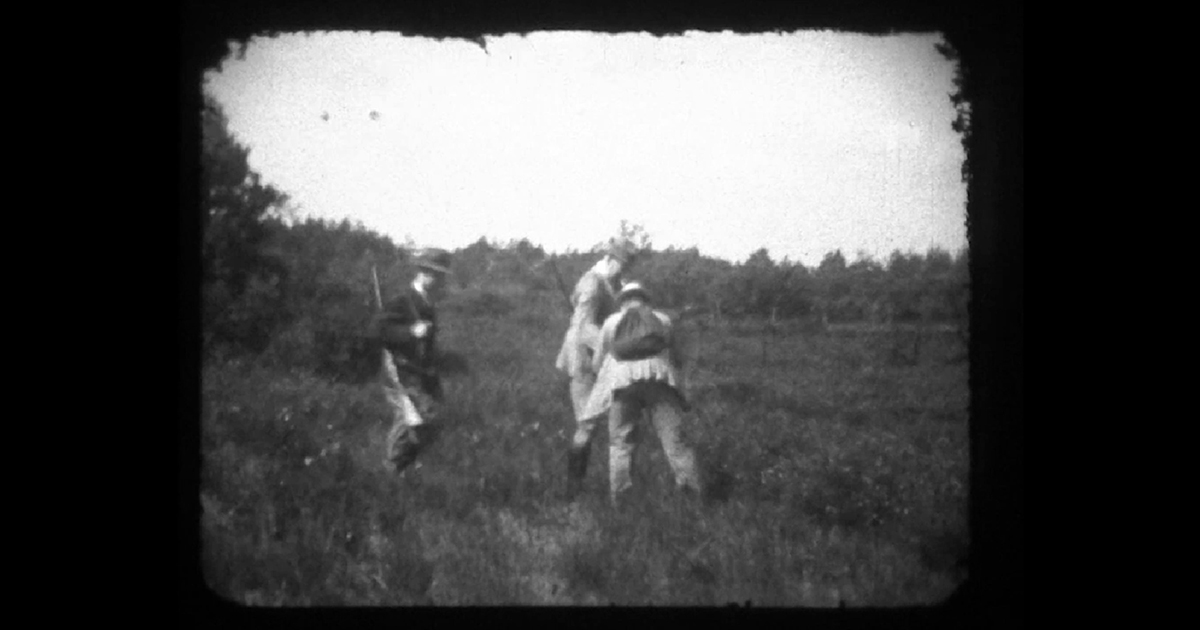
The scenery then changes to a group of men going on a hunting trip with the dogs. Carrying shotguns, the men most probably went hunting for game bird species such as pheasants, partridges, quails, and waterfowl, such as ducks and geese.
 |
The film later cuts away to snow-covered landscapes, indicating that it was taken sometime later and, again, most definitely not in South Africa.
We hope you enjoyed our series about Oom Willem and his films. Many people might have found it boring, but we firmly believe our history is worth preserving. To quote Percy Bysshe Shelley (1792 – 1822): “History is a cyclic poem written by time upon the memories of man.” Shelley was one of the most important figures of the English Romantic movement — a poet, essayist, and political thinker whose works still influence literature today.
If you want to catch up on the series, please visit our website at www.zoutpansberger.co.za and go to the dropdown menu at our History button.
Viewed: 604

Andries van Zyl
Andries joined the Zoutpansberger and Limpopo Mirror in April 1993 as a darkroom assistant. Within a couple of months he moved over to the production side of the newspaper and eventually doubled as a reporter. In 1995 he left the newspaper group and travelled overseas for a couple of months. In 1996, Andries rejoined the Zoutpansberger as a reporter. In August 2002, he was appointed as News Editor of the Zoutpansberger, a position he holds until today.
Most Read Articles
Sponsored Content
Recent Headlines