

ADVERTISEMENT:

Search for a story:
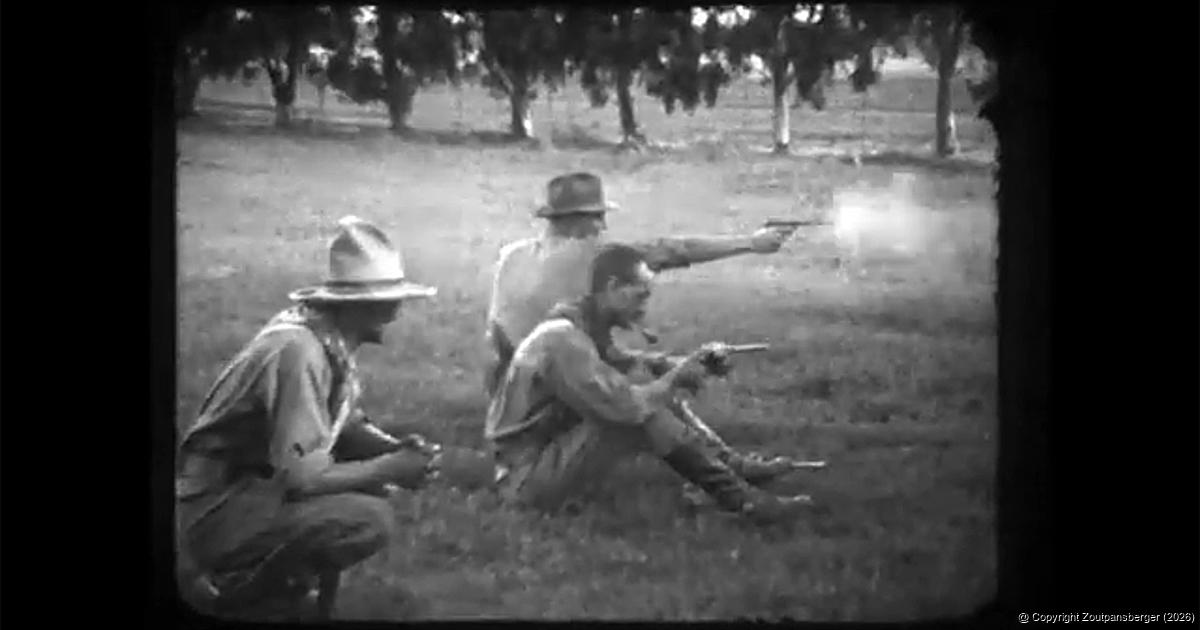
But it was obviously not all work and no play for Oom Willem. Oom Willem and friends are seen doing what many South Africans love to this day: target shooting.
WATCH: Oom Willem becomes a farmer - and shows off his skills at a show
Date: 13 September 2025 By: Anton van Zyl
In Episode 14 of Oom Willem van den Bergh’s travels, we find ourselves back on home soil, with Oom Willem spending some time either on the Van Beeks’ farm in the Free State or on the neighbouring Wintersvlei farm, which belonged to the Van Wyk family. In previous episodes, we reported at length on Oom Willem’s relationship with the two farms.
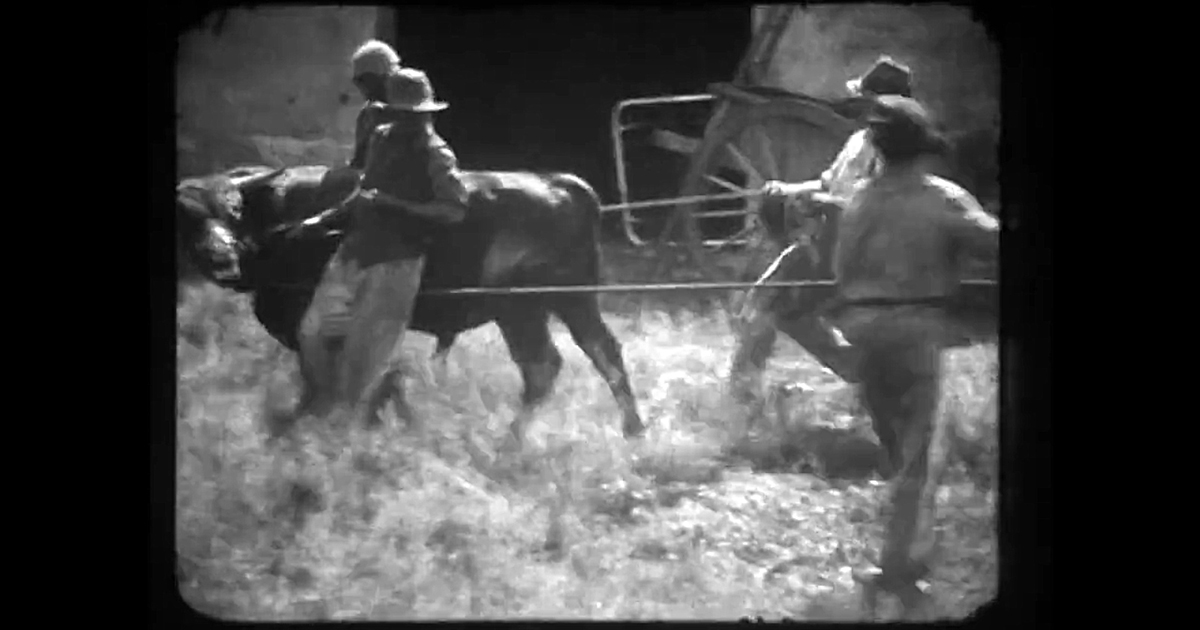
What becomes clear early on in Episode 14 is Oom Willem’s continued interest in cattle farming. From the 34-second mark, he filmed daily aspects of cattle farming. A fascinating piece of footage (from the one-minute mark) shows farm workers leading young oxen to water while restraining them with ropes.
In the context of early 20th-century South Africa, there might have been several reasons for this. These include control and safety, breeding control, and cultural practices. In some farming traditions, especially where oxen were central to transport and farming, leading cattle on ropes was standard. It reinforced the bond between animal and handler and allowed farmers to select which animals would drink first.
 |
|
A fascinating piece of footage (from the one-minute mark) shows farm workers |
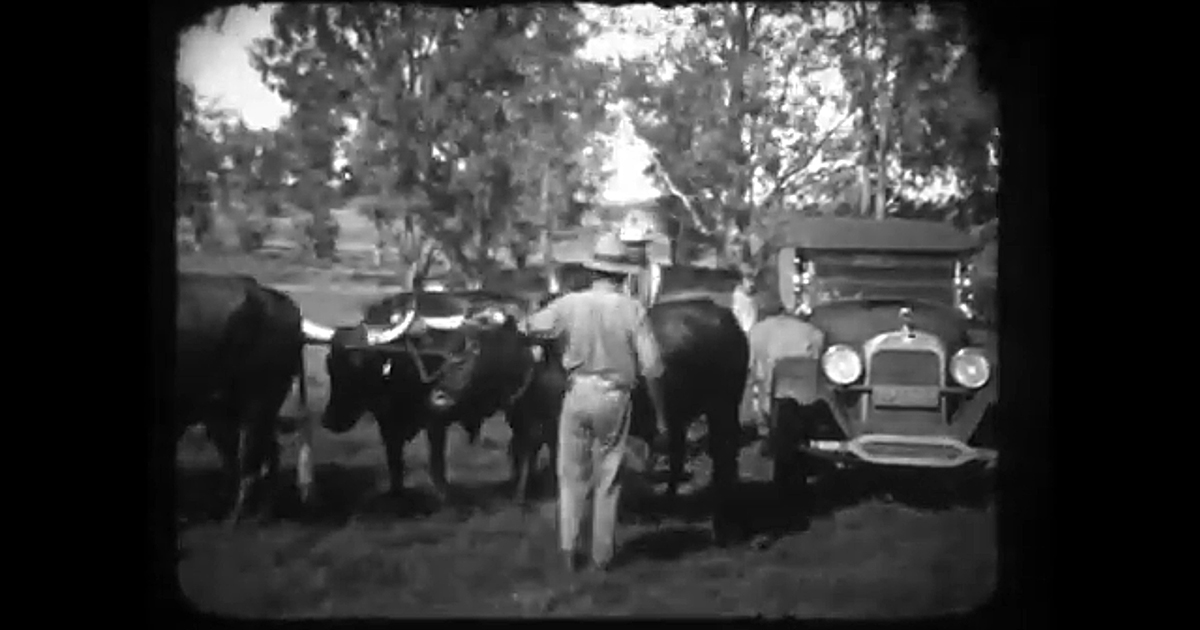
In both Episode 14 and earlier episodes of Oom Willem’s films, oxen are seen pulling ox-wagons, which were common 100 years ago. A couple of times in previous reels, oxen were also used to pull Oom Willem’s vehicles out of trouble. In Episode 14, at around the 9:58 mark, another example of this can be seen.
 |
|
A couple of times in previous reels, oxen were also used to pull Oom Willem’s vehicles out of trouble. In Episode 14, at around the 9:58 mark, another example of this can be seen. |
Following the cattle-farming scenes, it looks like Oom Willem took a trip to a neighbouring sheep farm, once again having to cross a river on a pontoon (around the four-minute mark). Pontoons like these would have been a common sight in the area during the 1920s, before being replaced by bridges. Travelling from the farm would certainly have meant crossing several rivers in the area, including the Vaal River. It is clear that Oom Willem enjoyed his visit to the sheep farm, which included a sheep-shearing demonstration.
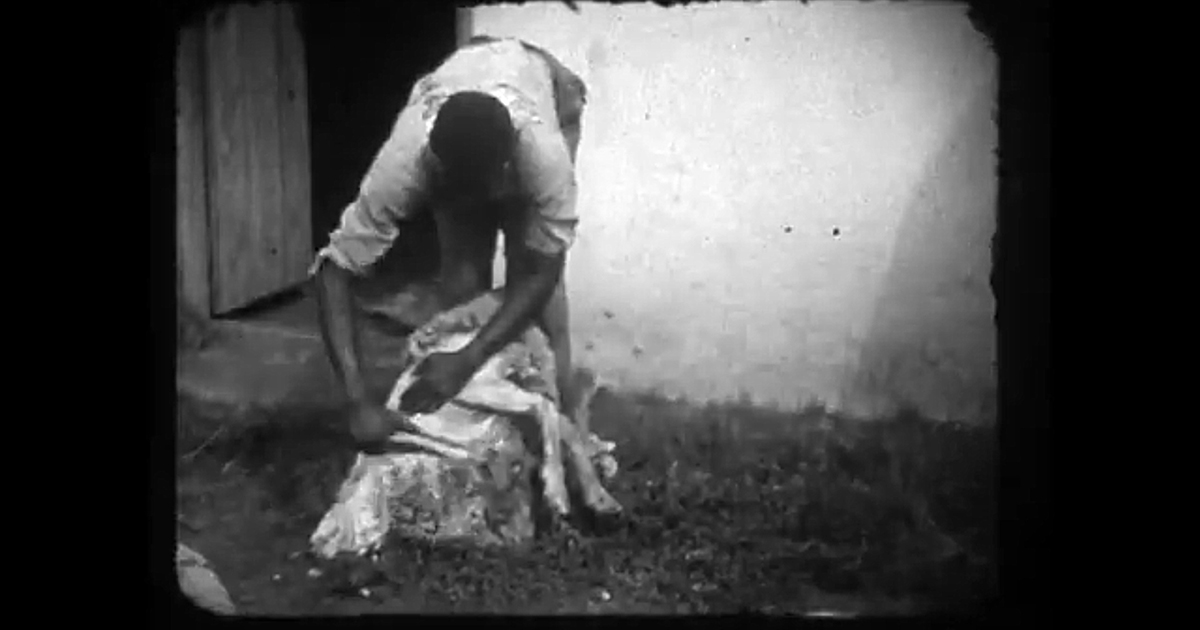 |
| The sheep-shearing demonstration. |
 |
|
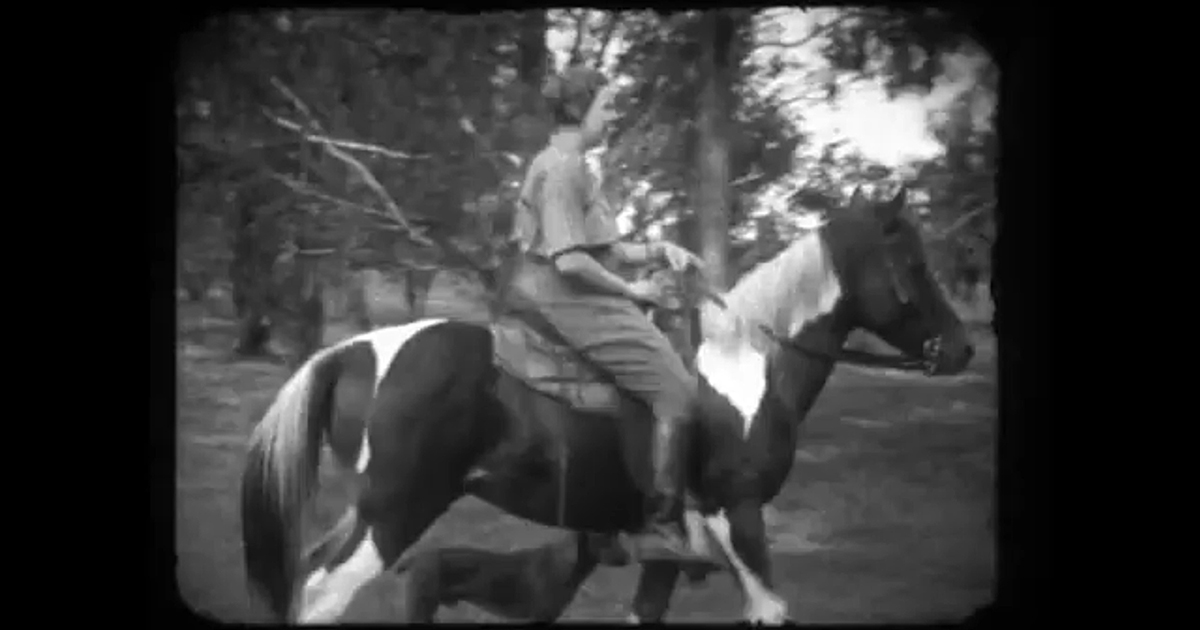
Tannie Jo is seen doing what she greatly enjoyed – horse riding. It is clear that she was an accomplished rider, having no trouble getting her horse up to full gallop. |
Next, Tannie Jo is seen doing what she greatly enjoyed – horse riding (07:18). It is clear that she was an accomplished rider, having no trouble getting her horse up to full gallop. After this, the men in the film take to horseback to inspect the large herd of Afrikaner cattle. The Afrikaner breed, an indigenous South African breed, is one of the oldest in the country, well known for its uniform deep-red colour, large, well-developed hump (especially in bulls), strong, hardy build suited to the local climate, and long history of being used as draft animals, particularly in ox-wagons.
But it was obviously not all work and no play for Oom Willem. Around the nine-minute mark, Oom Willem and friends are seen doing what many South Africans love to this day: target shooting. The film quality is not good enough to identify the weapons used, apart from the fact that they were handguns. After that, Oom Willem and his friends take to the road again.
At the 11-minute mark, Oom Willem visits a large agricultural show. We must admit that we’re slightly stumped.
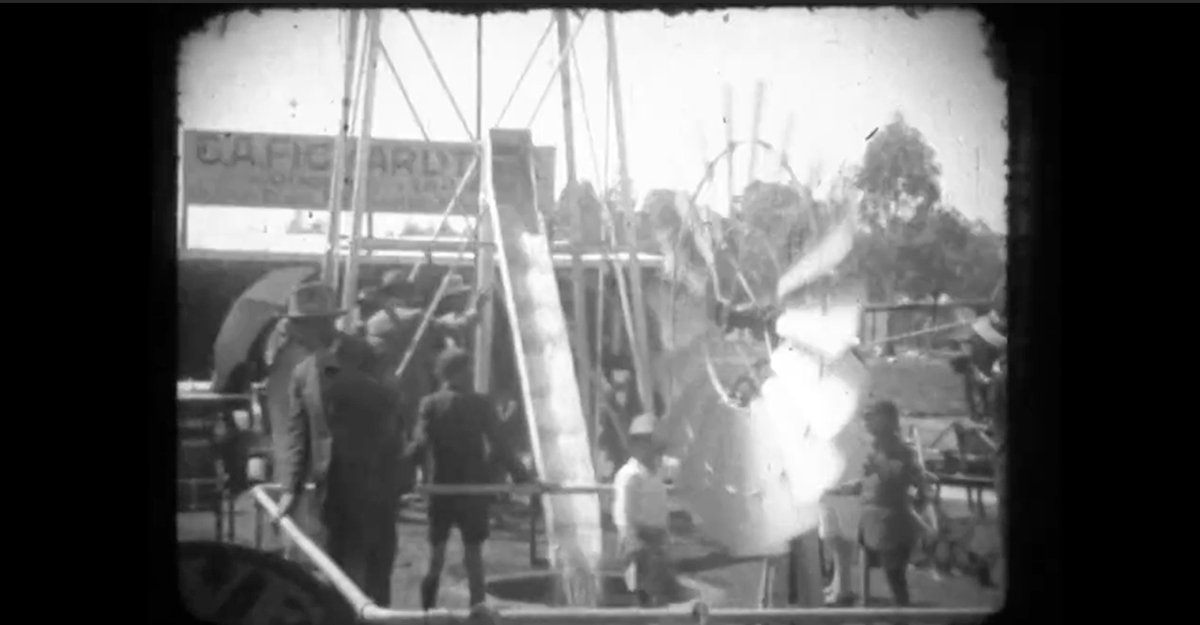
The first thought was that it might be in Bloemfontein. One of the exhibitors, demonstrating wind-driven implements, is GA Fichardt Ltd, then one of Bloemfontein’s leading commercial houses. Founded in 1848 by Gustav Adolf Fichardt, the company had grown from a general merchant business into a powerful institution in the Free State capital’s economy.
 |
|
One of the exhibitors at the show was GA Fichardt Ltd, then one of |
But we can find no evidence of a large agricultural show in the area during the late 1920s.
Another exhibitor that can be identified is Mangold Brothers. The company was established in 1878 by James Mangold and his brother, Carl Christian, in what was then Port Elizabeth. The firm quickly grew to become the largest engineering company in the area. It was known for manufacturing and distributing architectural cast iron components, some of which still exist on historical buildings in the region.
In the early 20th century, one of the biggest agricultural shows in the country was the Royal Agricultural Show, hosted by the Royal Agricultural Society of Natal in Pietermaritzburg. This was South Africa’s oldest and most prestigious agricultural show, dating back to 1851. By the 1920s, it was well established and featured livestock competitions and exhibits of agricultural products. From where Oom Willem stayed at the time, it would have been a journey of well over 600 km.
Pietermaritzburg would have been closer than Cape Town, where the Cape of Good Hope Agricultural Society held its annual show in Rosebank. This popular event, running since the mid-1800s, showcased livestock, poultry, machinery and farming products in the Western Cape region.
Our guess, however, is that Oom Willem attended the Rand Easter Show, hosted by the Witwatersrand Agricultural Society in Johannesburg. First held in 1894, this was the premier agricultural exhibition for the Transvaal region by the 1920s.
In the late 1920s, the Rand Easter Show was held at Milner Park, today the site of the University of the Witwatersrand’s West Campus. It was an 11-day event showcasing a wide range of agricultural activities, including livestock competitions such as cattle, poultry and yearlings, while farm products and equipment were also on display.
Over time, the event expanded to include industrial and commercial exhibitions, attracting foreign participants with country pavilions. It also featured military tattoos, police displays and show-jumping competitions. The show later moved to a larger venue at Nasrec in 1981.
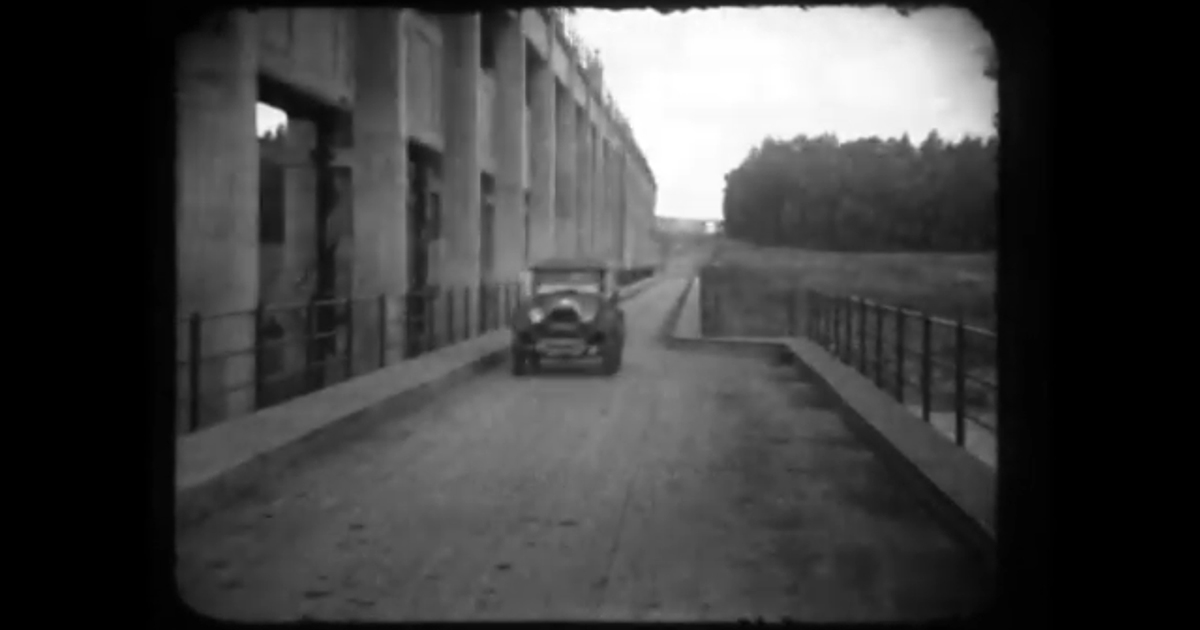
Perhaps a strong indicator that he did visit the Rand Easter Show is the footage of a bridge crossing at the 16:20 mark in the film. Although we have realised that the chronology of the clips is not always exact, we must assume he photographed this crossing when returning from the show.
We are not certain of the make of the car. It could be a 1920s Buick Master Six, but it is not the car he used for the trip to the bushveld (Episode 9). We know from stories he later told that his father bought a Buick while visiting the country and gave it to him, but this does not seem to be the same car. It may be a Chevrolet Series AB National or even a Dodge Brothers. The car’s number plate starts with TP, which refers to Pretoria.
The river looks like the Vaal River and the crossing is very likely the Barrage near Vanderbijlpark. On their way back from Johannesburg, the group must have opted for the fairly new road leading back to the Free State.
 |
|
The Vaal Barrage was built by Rand Water between 1916 and 1922, |
The Vaal Barrage was built by Rand Water between 1916 and 1922, and officially opened on 27 July 1923. This historic engineering work spans the Vaal River along what is now Boundary Road between Vanderbijlpark and Parys, creating a crossing that has served the region for more than a century.
The barrage consists of a set of gates across the Vaal River, downstream of the Vaal Dam, creating a 64 km-long reservoir with significant storage capacity for water supply to the industrial Vaal Triangle region.
Speaking of construction, in Episode 15 of Oom Willem's travels, we visit the construction site of another South African landmark. Can you guess which one? Watch Episode 15 below to get a sneak peek.
Viewed: 1868

Anton van Zyl
Anton van Zyl has been with the Zoutpansberger and Limpopo Mirror since 1990. He graduated from the Rand Afrikaans University (now University of Johannesburg) and obtained a BA Communications degree. He is a founder member of the Association of Independent Publishers.
Most Read Articles
Sponsored Content
Recent Headlines