

ADVERTISEMENT:

Search for a story:
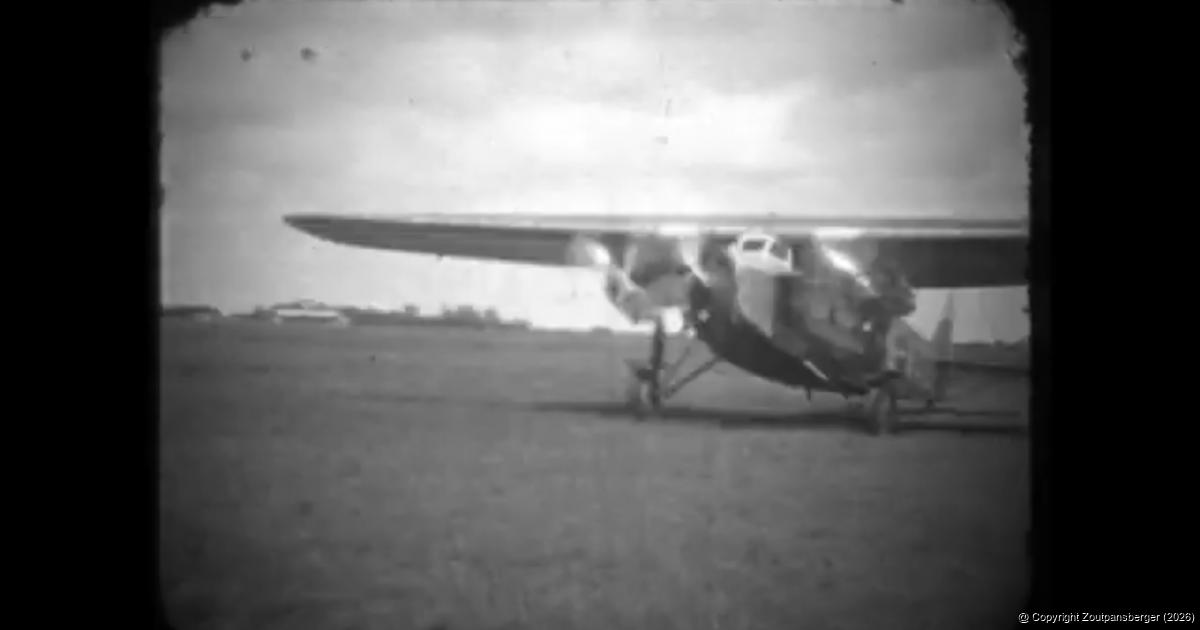
With the help of aviation enthusiasts, we have established that the aircraft was a Fokker F.VIIB/3m, registration number G-AADZ – the famous plane of US millionaire Van Lear Black.
WATCH: Oom Willem captures one of aviation history's greatest achievements (Part 2)
Date: 06 September 2025 By: Anton van Zyl
In part 1 of Episode 13 last week, we saw Oom Willem pay a brief visit to Spain before re-joining the cruise ship, which later docked in Walvis Bay harbour. From there, the tour group visited the coastal towns of Walvis Bay and Swakopmund. We left them as they boarded their ship again in Walvis Bay, and in part 2 of Episode 13, we join them as they continue their journey.
At the 7:44 mark, we rejoin Oom Willem as they dock in the historic German town of Lüderitz in former South West Africa (present-day Namibia).
Lüderitz Bay was first charted by Portuguese explorer Bartolomeu Dias in 1487, who named it Angra Pequena (“small bay”). In 1883, German merchant Adolf Lüderitz acquired the area, establishing the first German settlement in what became German South West Africa. The German flag was raised in 1884, and after Lüderitz disappeared on an expedition in 1886, both the bay and town were named after him.
A dark chapter followed between 1905 and 1907 with the Shark Island concentration camp, where thousands of Herero and Nama people died. The discovery of diamonds in 1908 transformed the town, sparking rapid growth and the construction of Kolmanskop and much of Lüderitz’s German colonial architecture.
After World War I, South Africa took over administration, and as the diamond industry shifted south, Lüderitz turned to fishing and small industries. Today, it is known for its preserved colonial heritage, the ghost town of Kolmanskop, and unique coastal wildlife.
 |
|
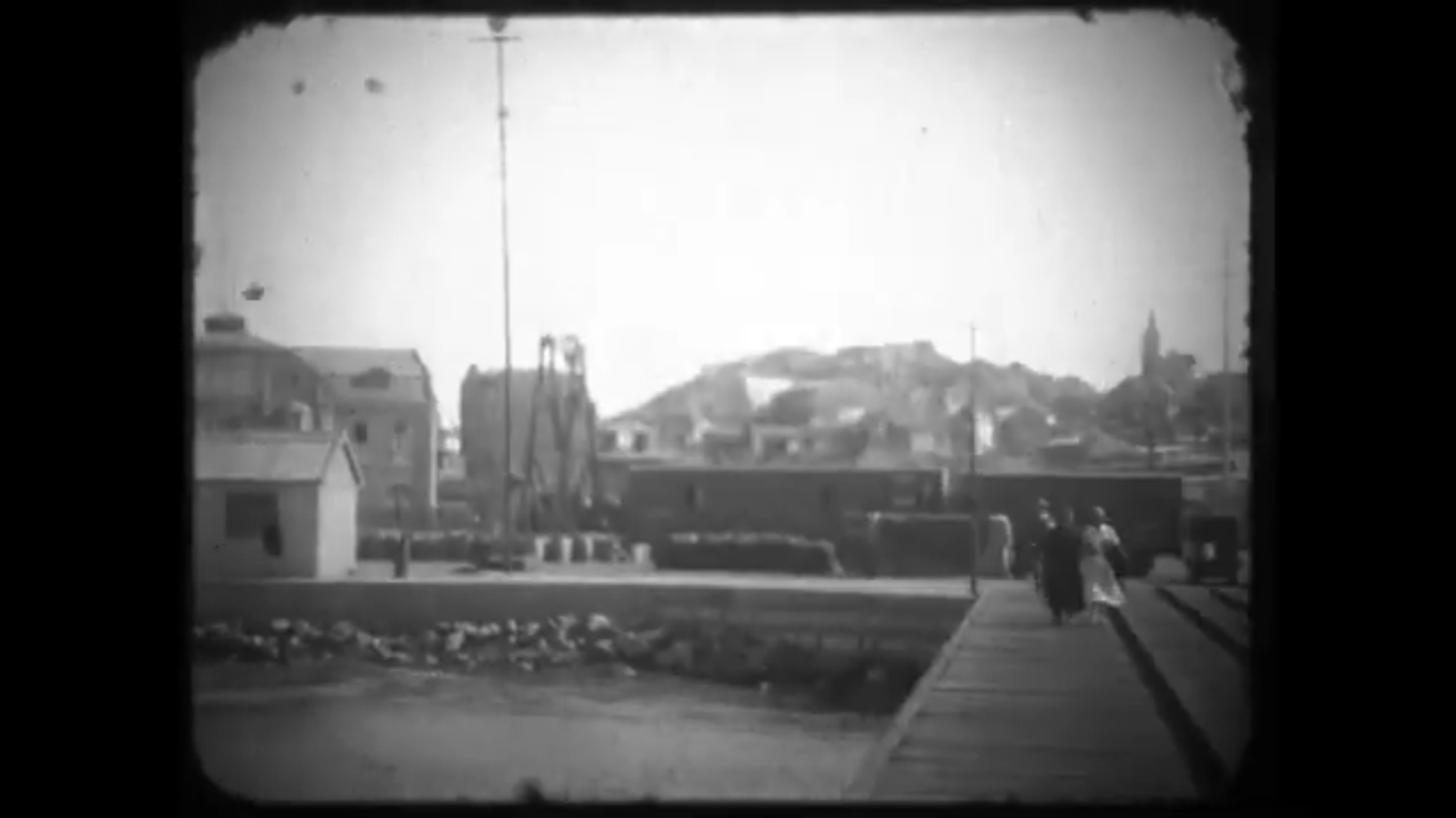
The historic German town of Lüderitz in the former South West Africa. To the right in the background, the landmark Felsenkirche (Church on the Rock) can be seen. |
Dominating the skyline is the Felsenkirche (Church on the Rock), perched on Diamond Hill. Designed by architect Albert Bause, its foundation stone was laid in 1911, and it was consecrated in 1912. Declared a National Monument in 1978, the church remains one of Lüderitz’s most striking landmarks.
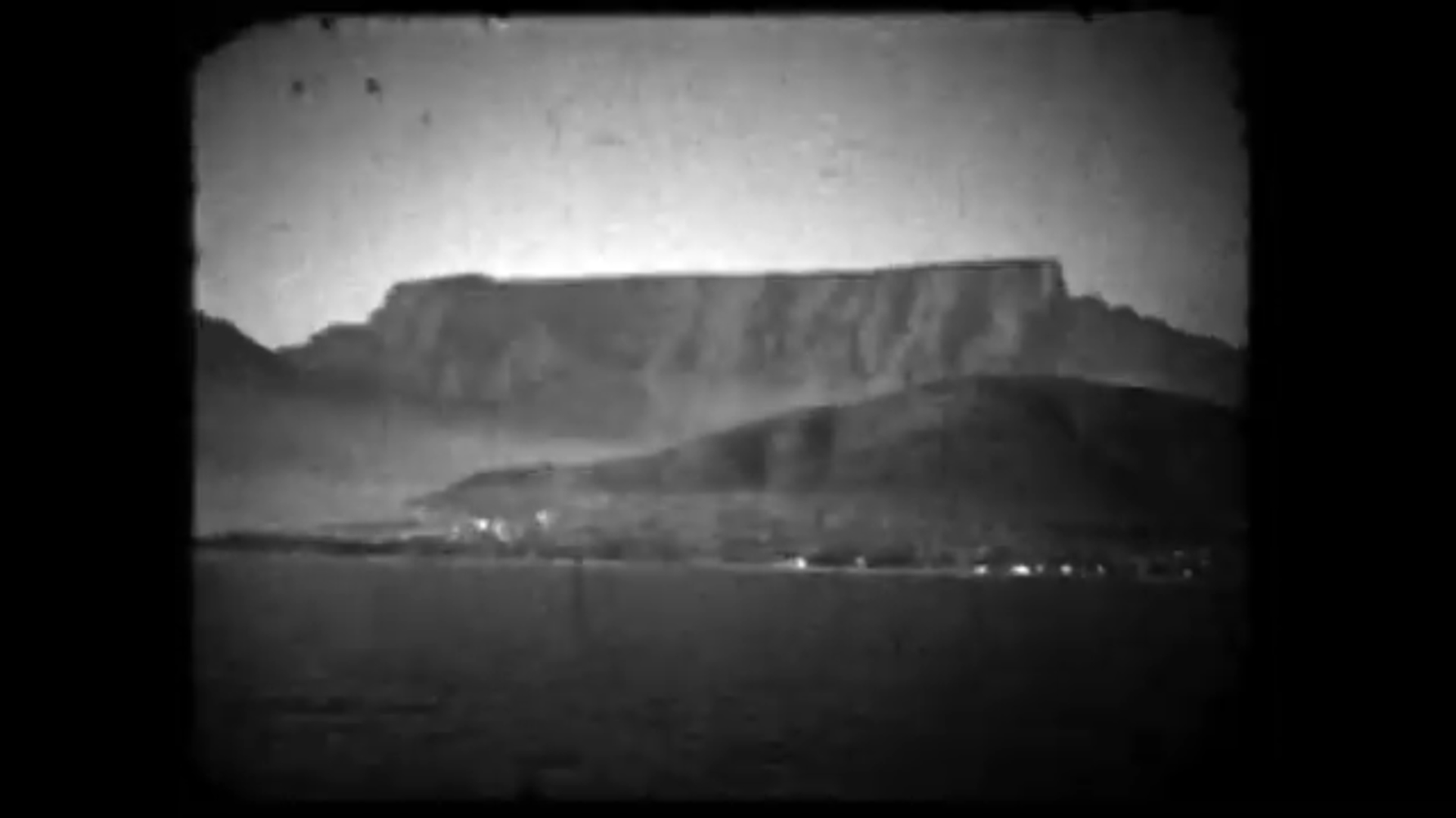
Then it is back on board the ship. At 08:15, the group arrives at Cape Town harbour, with Table Mountain clearly visible in the background. The next scenes are probably somewhere in the Oranjezicht area of Cape Town, where they witness a street parade with a military-style band marching past.
 |
|
Oom Willem’s arrival in Cape Town from Lüderitz, with the world-famous |
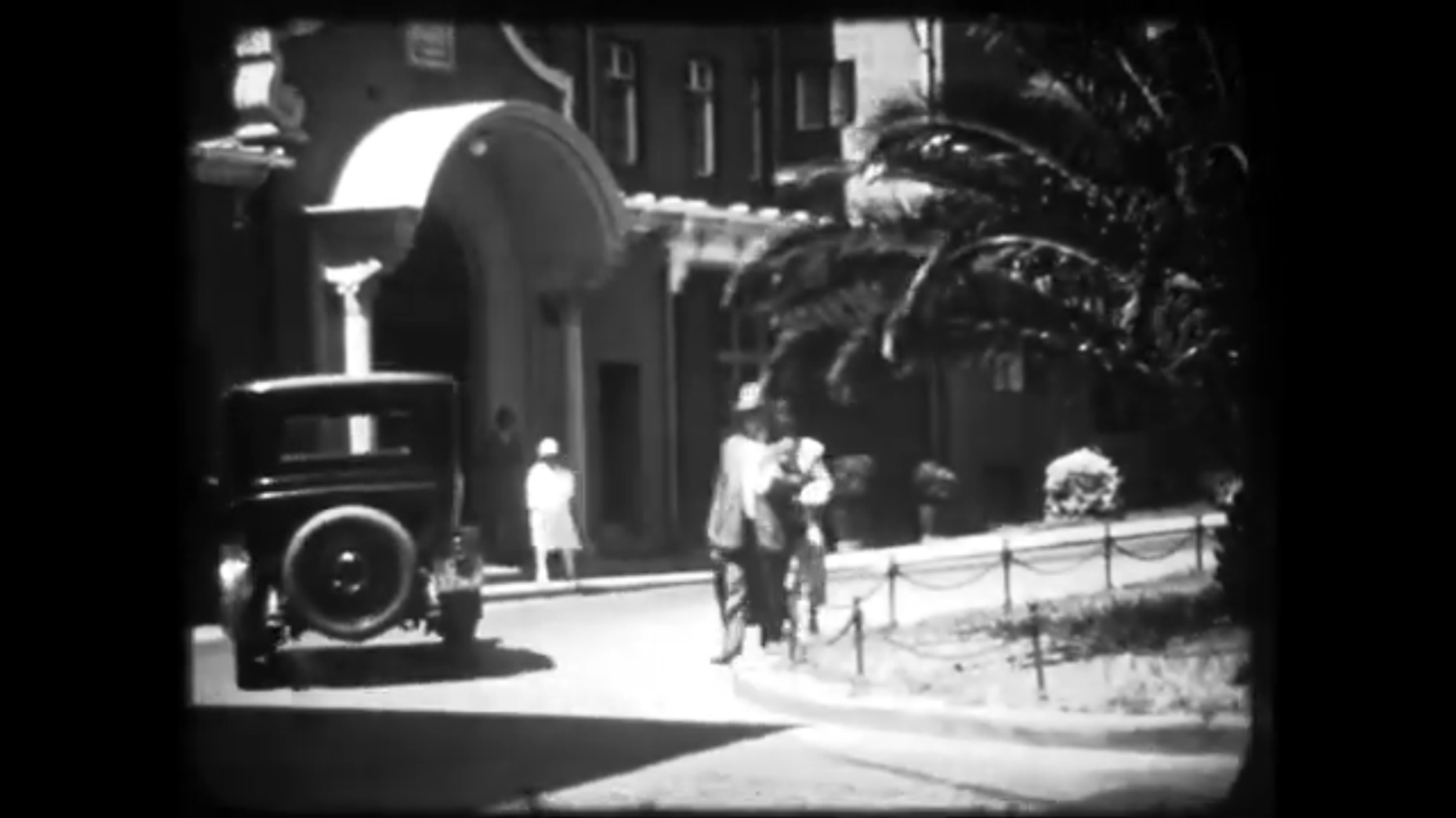
From around 09:35, the group finds itself on the outskirts of central Cape Town, outside the historic Mount Nelson Hotel. The hotel, fondly known as The Nellie, has hosted many famous guests since it opened on 6 March 1899. Even Sir Arthur Conan Doyle held séances in his room when he stayed there in 1928.
 |
|
The historic Mount Nelson Hotel, fondly known as The Nellie. Opened in 1899, |
It was the first hotel in South Africa to have hot and cold running water. The young war correspondent Winston Churchill was a guest there after escaping from the Boers, while Lord Kitchener spent most of the war at the hotel.
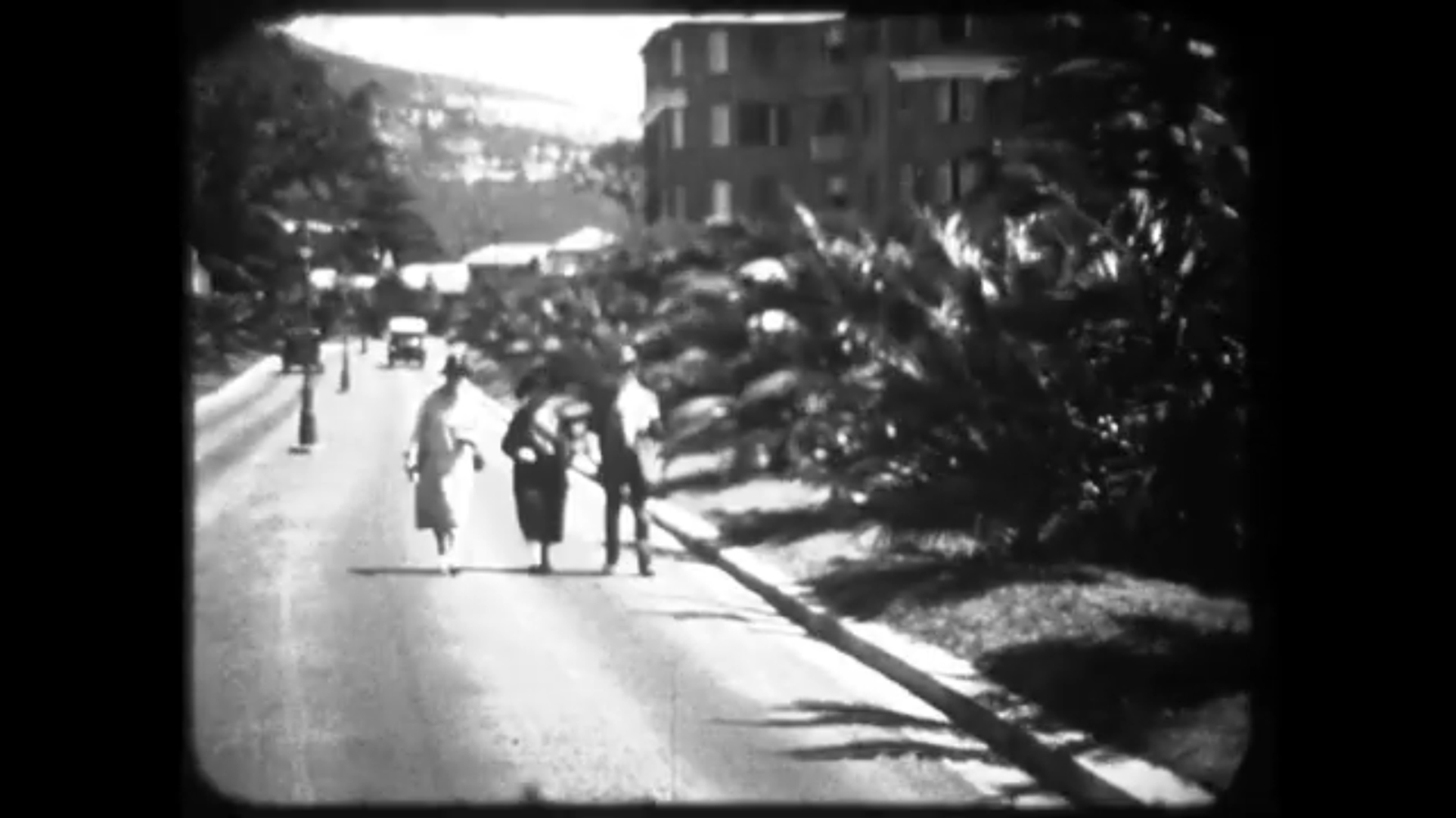
At 09:40, the guests take a leisurely stroll down what appears to be Kloof Road, with the Mount Nelson on the right.
 |
|
Kloof Road, with the Mount Nelson in the background. |
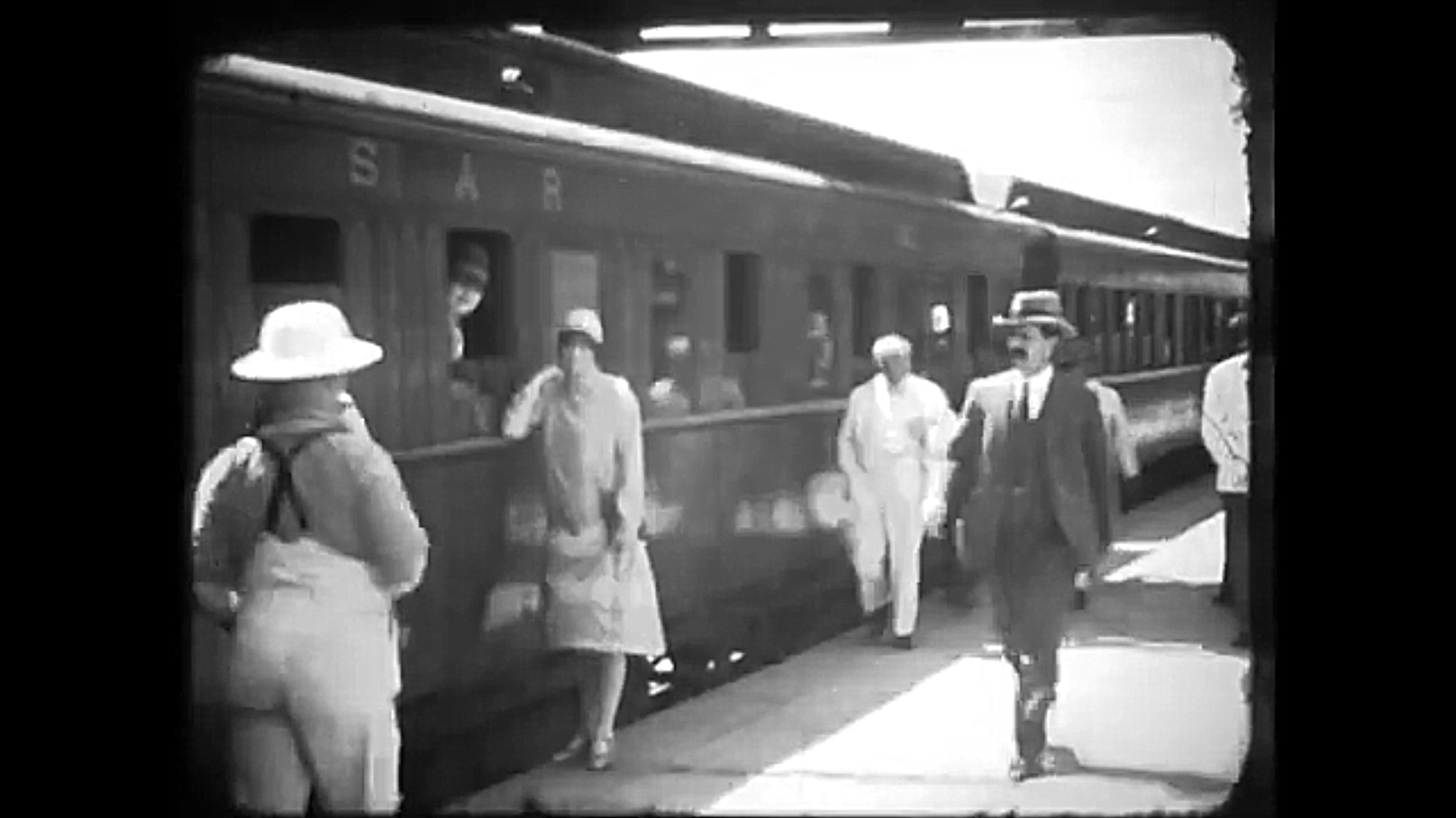
In the next scene, the travellers are at a railway station. One might assume it was Cape Town station, but the presence of trees makes this unlikely. It could be that the group boarded the train in Cape Town and got off near Maitland. Maitland station was also known as the “cemetery station” because of the large graveyards in the area.
 |
|
The group is believed to have boarded the train in Cape Town and disembarked |
The reason for visiting Maitland would not have been to see the dead, but rather to rush to Maitland Aerodrome, where some very important visitors were about to arrive. This aerodrome, which later became Air Force Base Ysterplaat, was Cape Town’s main civilian flight facility in the late 1920s and early 1930s.
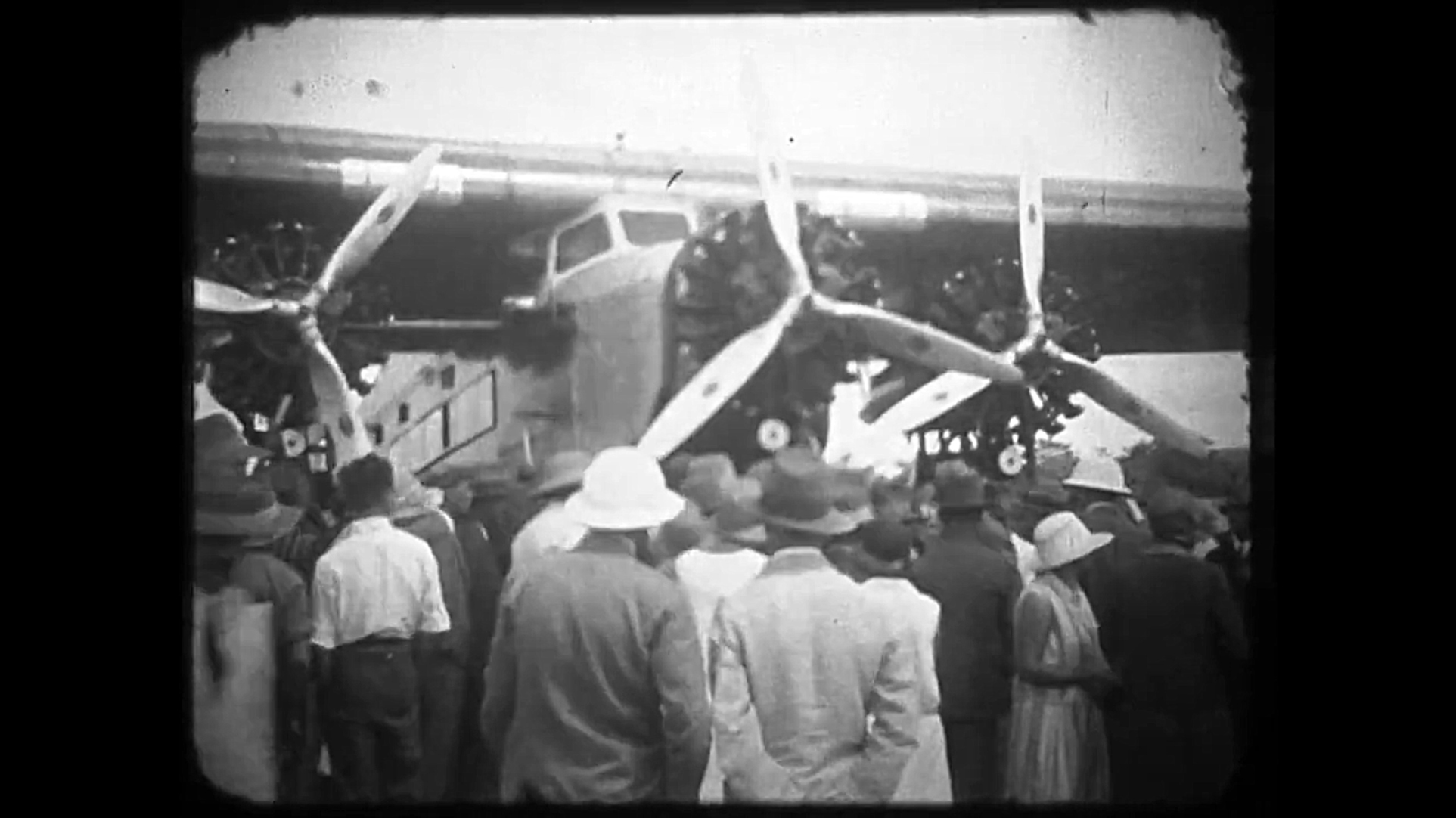
The next scene (10:18 to 12:44) provides some of the most fascinating footage in all of Oom Willem’s films. It shows a plane landing in a field, with a crowd of cars, motorbikes and people waiting. It was clearly a very significant event.
 |
|
A Fokker F.VIIB/3m, registration G-AADZ, identified as the aircraft of US millionaire |
With the help of aviation enthusiasts, we have established that the aircraft was a Fokker F.VIIB/3m, registration number G-AADZ – the famous plane of US millionaire Van Lear Black.
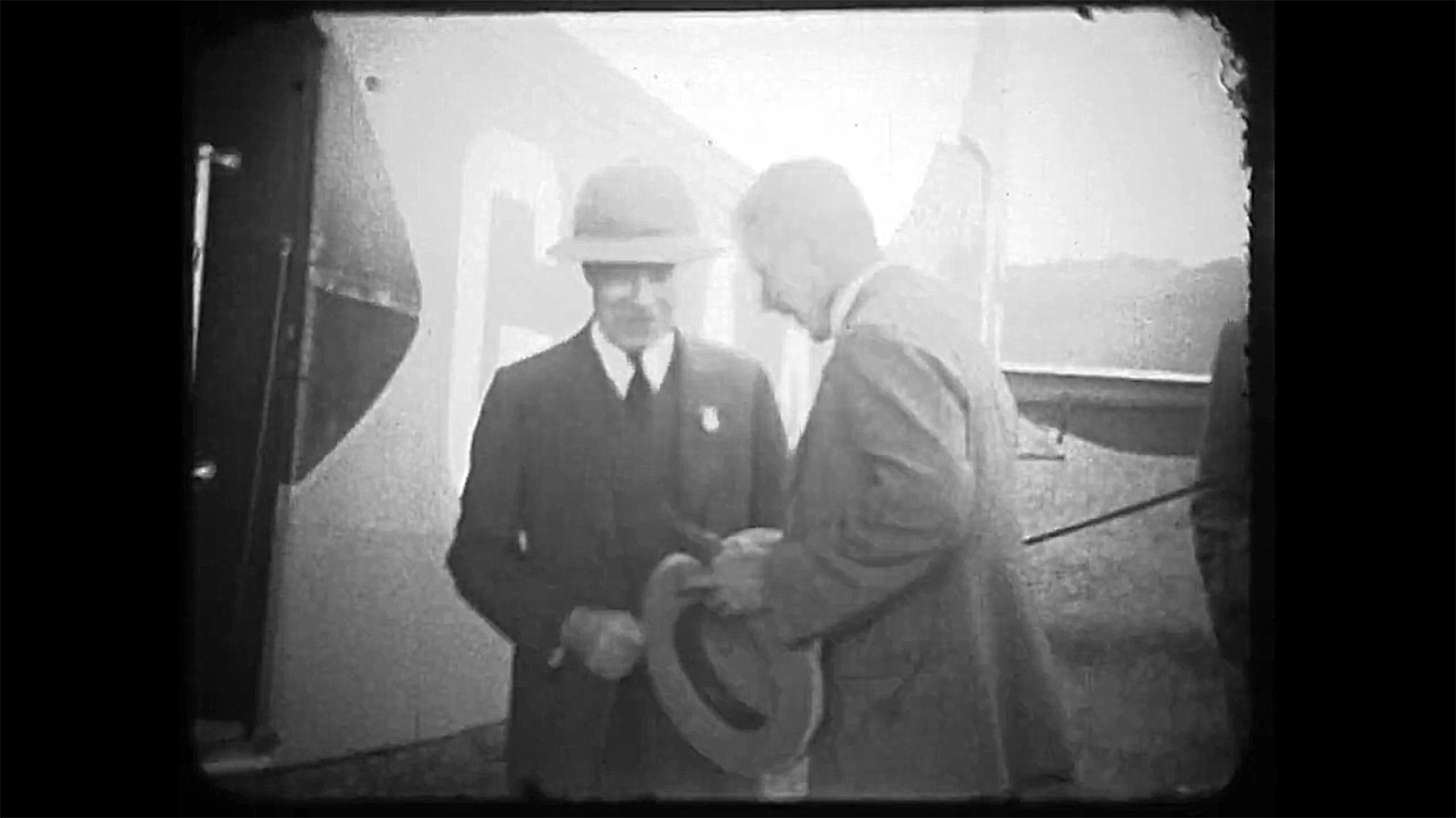
Black was one of the first great aviation pioneers. In 1927, he made an early attempt to prove the viability of civil aviation when he chartered a Fokker from KLM to fly from Amsterdam to what is now Jakarta in Indonesia.
In May 1928, he embarked on a flight from Croydon, near London, to Cape Town, to demonstrate that Africa could be a viable passenger air route. He reached Khartoum, but the aircraft was damaged during landing and he had to abandon the trip.
He then purchased one of KLM’s Fokker F.VIIB/3m aircraft, fitted with three Wright Whirlwind J-4 radial engines, each producing 200 hp. The aircraft was registered in early 1929 under the name Maryland Free State – a reference to his birthplace in the US.
On 11 February 1929, he and his crew took off from Croydon on his second attempt to reach Cape Town. They were delayed for a week by fog in Paris, but on 23 February, he landed safely in Khartoum. On 5 March 1929 the Fokker, along with four Fairey IIIF planes, landed in Cape Town. This makes it possible to date Oom Willem’s footage precisely to Black’s landing.
 |
|
US millionaire and aviation pioneer Van Lear Black (left), filmed on |
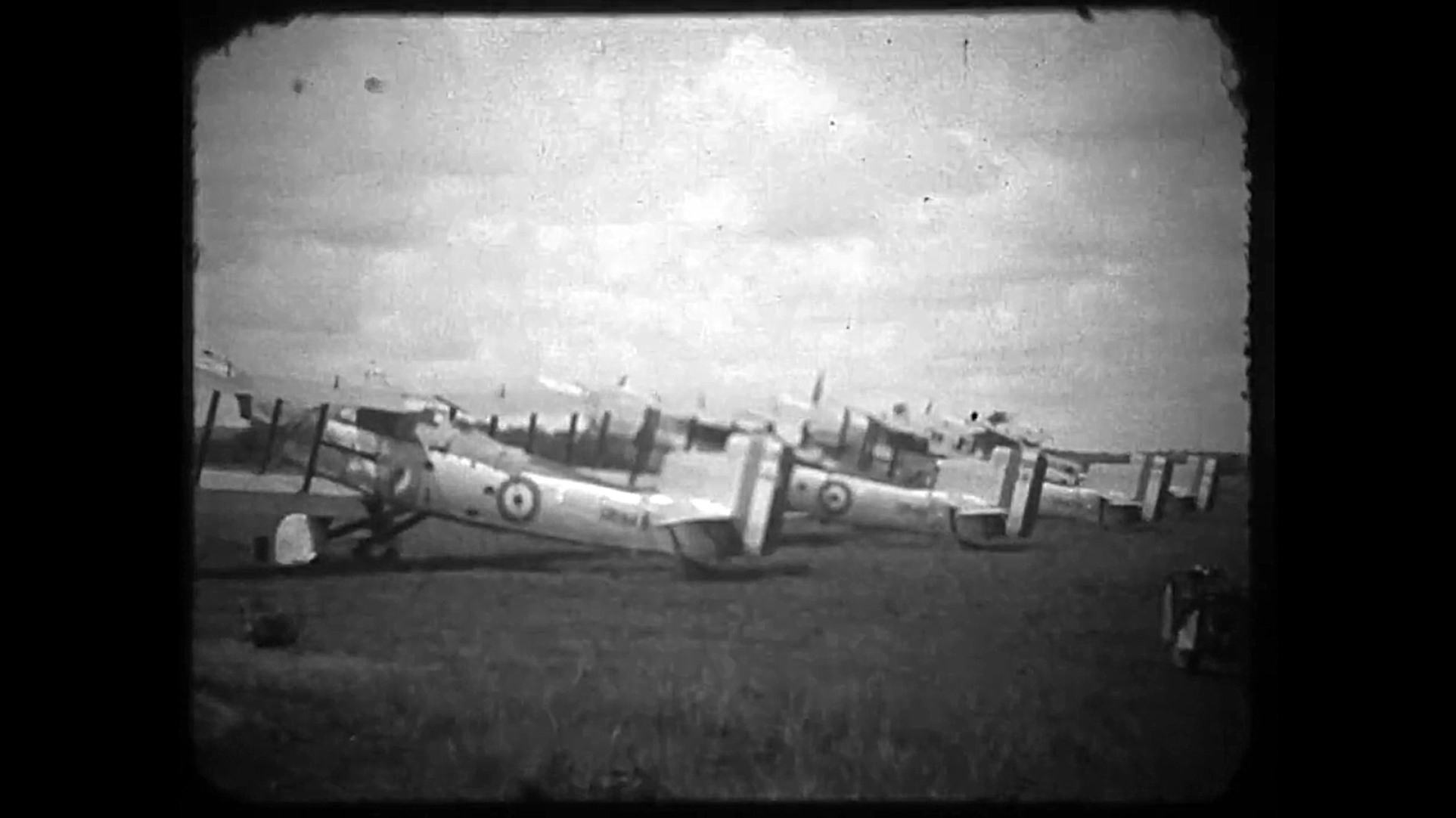
Whether the Fairey IIIF squadron of the Royal Air Force (RAF) accompanied Van Lear Black’s plane is uncertain. In 1926, the RAF undertook the first long-distance formation flight from Cairo to the Cape and back with four Fairey IIID biplanes. The expedition became an annual event, with four Fairey IIIF biplanes making the journey in 1927, 1928 and 1929.
 |
|
Four Fairey IIIF biplanes of the Royal Air Force were also present during |
It is quite likely that the RAF squadron accompanied Van Lear Black, as his route south would have taken him through Egypt, the Anglo-Egyptian Sudan, Uganda, Lake Victoria, British East Africa, Rhodesia and the Transvaal, before continuing from Bloemfontein to Cape Town.
Oom Willem managed to capture one of the greatest aviation achievements in Africa in the 20th century – and one of the continent’s most remarkable aviation pioneers.
Van Lear Black later returned to London to embark on another adventure – a round trip through Europe, Africa and Asia to Tokyo and back to London. He suffered a setback when forced to make an emergency landing in Monte Carlo, damaging the undercarriage.
On 31 May, he took off on a flight from Croydon to Japan. He reached Karachi on 4 June without incident, but the plane was damaged while landing at Dum Dum airport in Calcutta. Remarkably, none of the five people on board was seriously injured. An Indian cyclone destroyed the plane soon afterwards.
Black died suddenly in 1930, apparently falling from the afterdeck of his yacht Sabala in rough seas en route to Baltimore after a trip to New York.
But back to Oom Willem. As mentioned in part 1 of Episode 13, the film occasionally jumps around, possibly due to Oom Willem’s editing. From 12:45, he finds himself back in Namibia. A clue is the B-registration numbers on the vehicles. Shortly afterwards, the tour group is seen at a desert railway station, probably Swakopmund station, already shown in Episode 1. From there they travel by rail, making a couple of stops along the way and interacting with locals. It is unclear whether this was the main railway line between Swakopmund and Windhoek.
 |
|
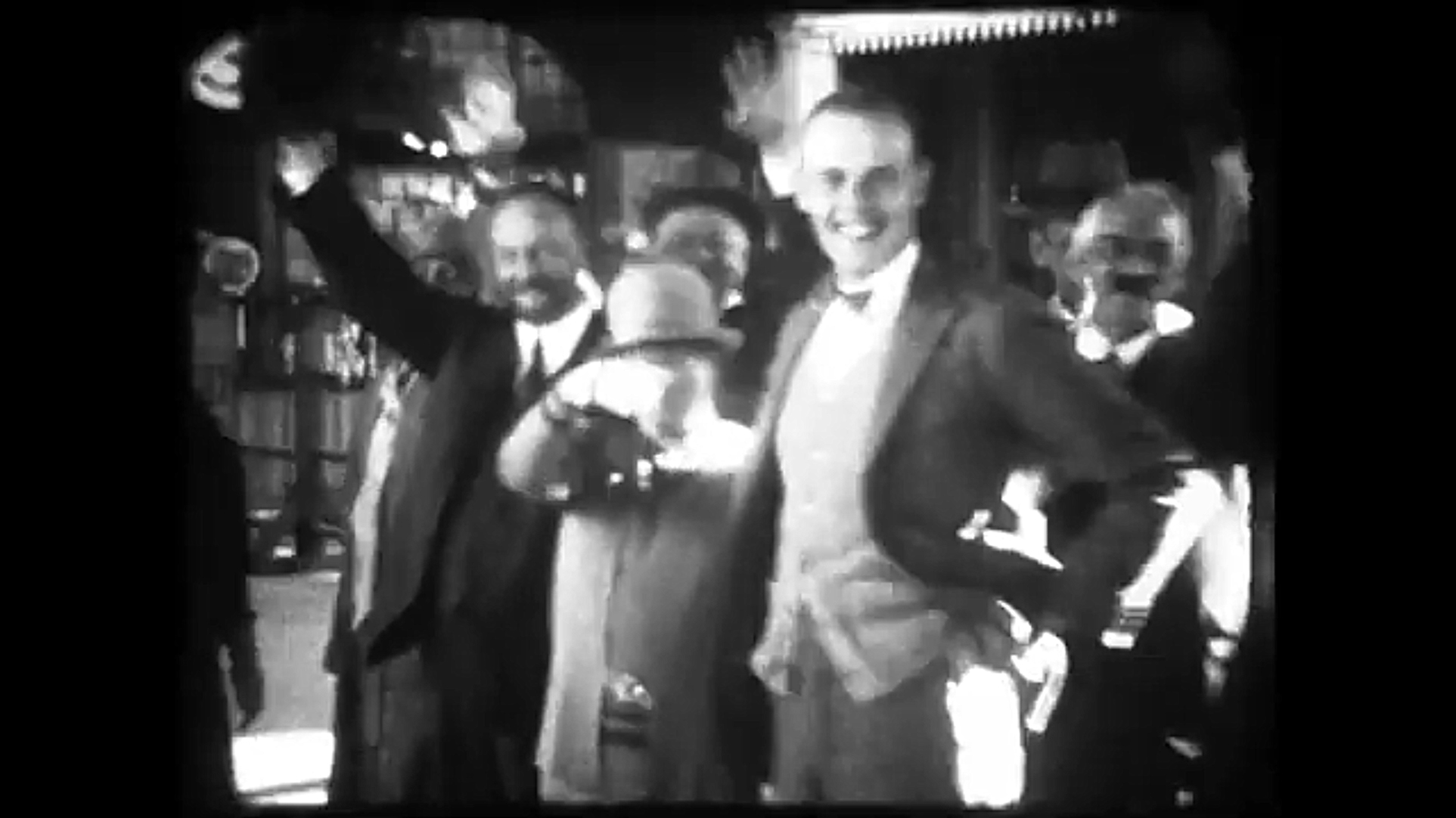
Oom Willem is seen bidding someone farewell (14:11) at a railway station. |
Then Oom Willem is seen bidding someone farewell (14:11) at a railway station, before the film cuts back to the cruise ship and ends with deck games.
So where will Oom Willem be heading next? To find out, click on the video below for Episode 14.
Viewed: 1913

Anton van Zyl
Anton van Zyl has been with the Zoutpansberger and Limpopo Mirror since 1990. He graduated from the Rand Afrikaans University (now University of Johannesburg) and obtained a BA Communications degree. He is a founder member of the Association of Independent Publishers.
Most Read Articles
Sponsored Content
Recent Headlines