

ADVERTISEMENT:

Search for a story:
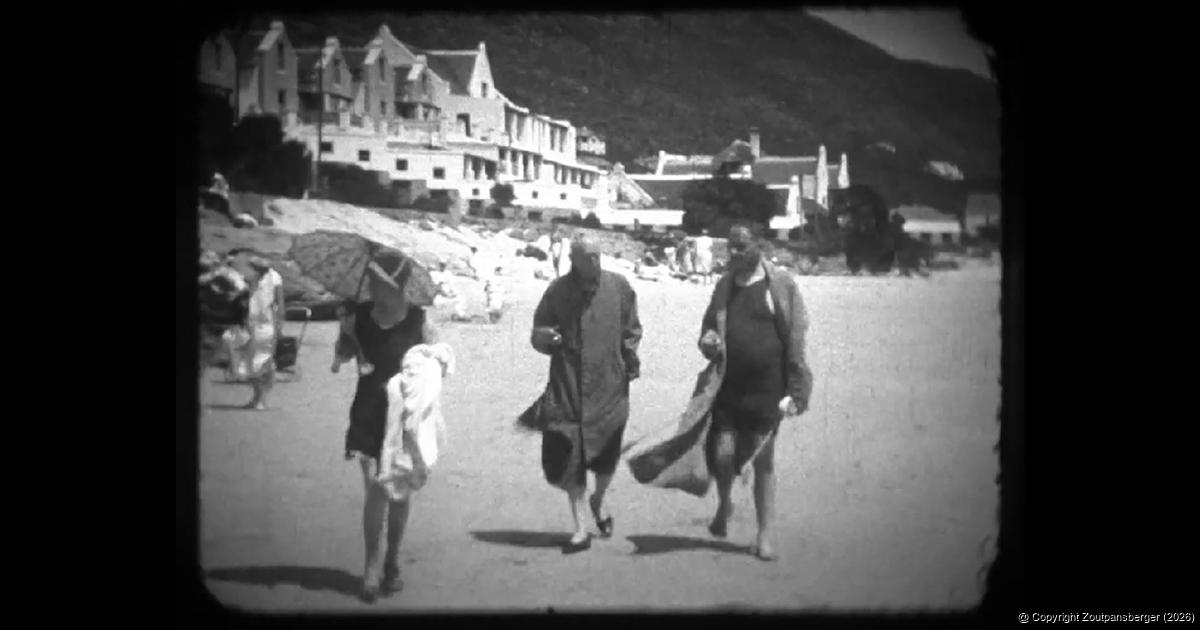
Some time is spent enjoying the beach, most likely at St James Beach on the False Bay strip, recognisable by the Edwardian-era hotels and gabled apartment blocks.
WATCH: Oom Willem takes a trip on a cruise ship to Cape Town
Date: 23 August 2025 By: Anton van Zyl
We are backtracking a bit this week, linking up with earlier episodes in our travels with Oom Willem van den Berg. In our defence, it is not always easy to identify and date unmarked, hundred-year-old films. Some of the reels also appear to be out of sequence, possibly from being incorrectly spliced and stitched together.
Unlike today’s digital era, where clips can be edited on a computer in minutes, film editing a century ago was a slow, manual process. Home movies were shot on 8mm or 16mm reels. Oom Willem used a 16mm camera, probably one of the first available, as this technology only reached the market in 1924.
After every trip, he would have had to send the reels away for development to laboratories in cities such as Johannesburg and Cape Town. Kodak entered the South African market around 1913 and by the 1920s operated several outlets capable of developing film.
Once the spools were returned, the challenge remained: cutting out blank sections and splicing the rest into a reel of about 30 feet. In Episode 13, we will see that Oom Willem clearly got his reels mixed up somewhere along the way.
But back to this week's Episode 12 ...
Our more observant readers will recall that the first five episodes covered his journey by boat up the east coast of Africa to the Mediterranean, followed by visits to the Netherlands and the Swiss Alps. But we never explained how the group returned to South Africa.
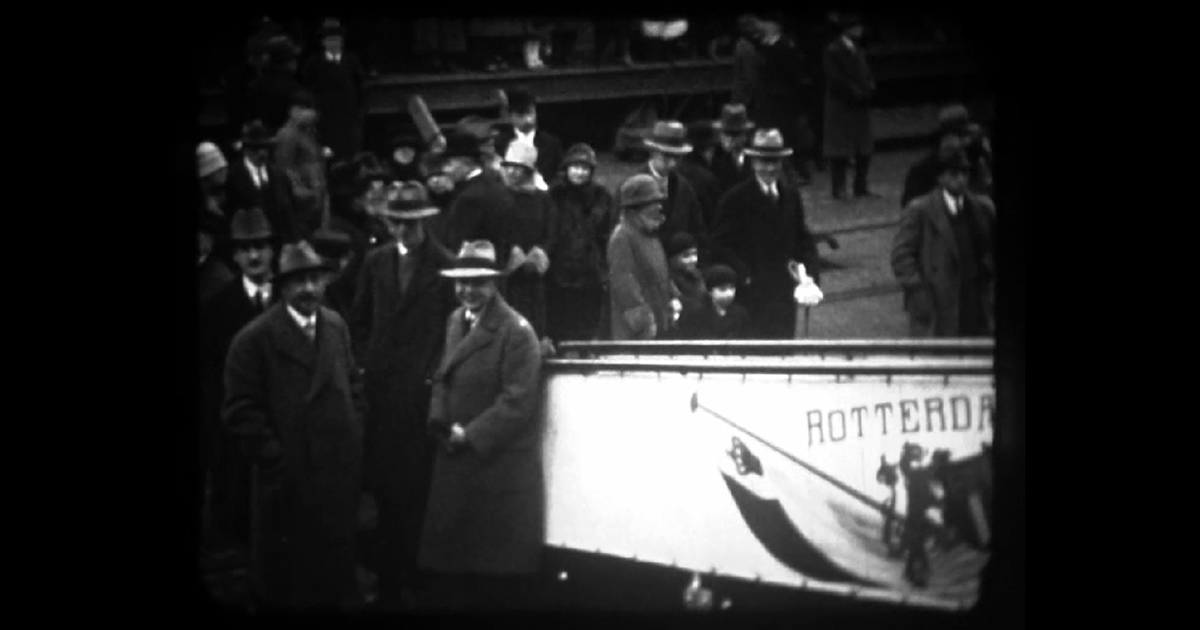
This week’s episode begins aboard a luxury cruise ship. When they dock in harbour, the name “Rotterdam” is clearly visible, suggesting they had embarked on the SS Rotterdam, flagship of the Holland America Line. Launched in 1908, she remained the company’s largest and fastest ship until 1929. The ship had been converted from coal to oil fuel in 1920.
 |
|
The SS Rotterdam was the flagship of the Holland America Line. Launched in 1908, she remained the company’s largest and fastest ship until 1929. |
We estimate the voyage took place in late 1927 or early 1928, possibly as Oom Willem’s honeymoon cruise with his wife Jo, whom he met in 1927.
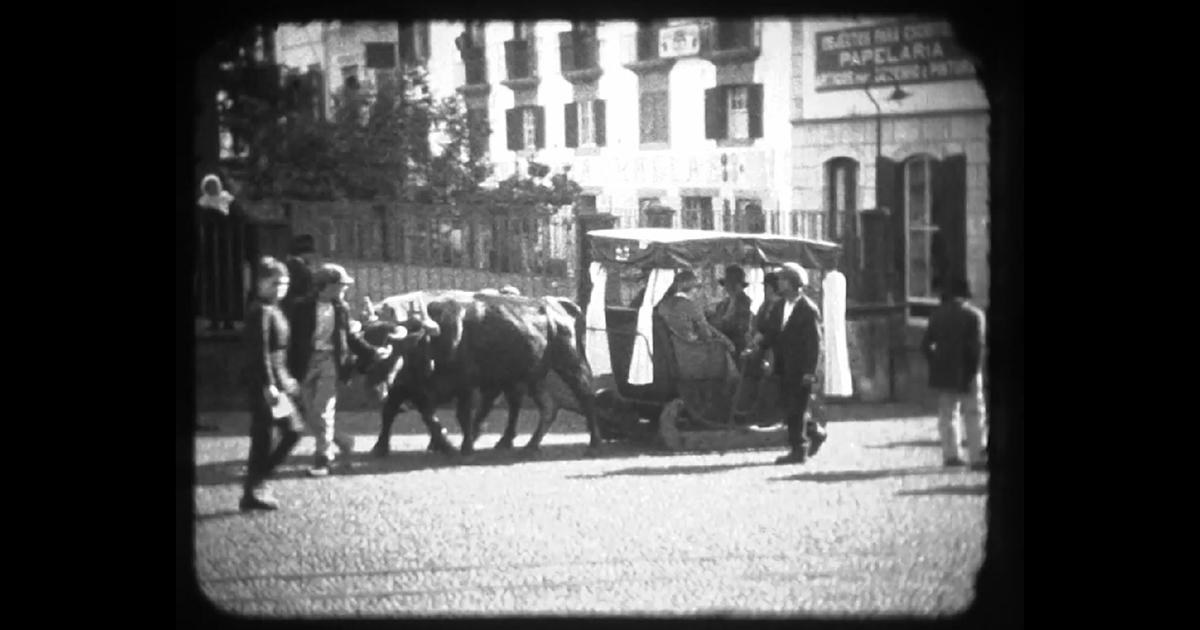
The group likely departed from Rotterdam, the main Dutch port for such voyages, with their first stop in Lisbon, capital of Portugal. There they are seen touring the city and even riding in an ox-drawn sleigh – evidence that the visit was just before Christmas 1927.
At around the 0:40 mark, a sign reading “Papelaria Coelhouse” appears, likely a stationery or bookshop also selling photographic supplies. It may have been where Oom Willem bought extra film. While the closest match we could find is Livraria Lello & Irmão in Porto, this could just as well have been a smaller Lisbon shop, perhaps in Rua do Ouro or a nearby street.
 |
|
Riding in a ox-drawn sleigh in Lisbon, a sign reading “Papelaria Coelhouse” appears, likely a stationery or bookshop also selling photographic supplies. |
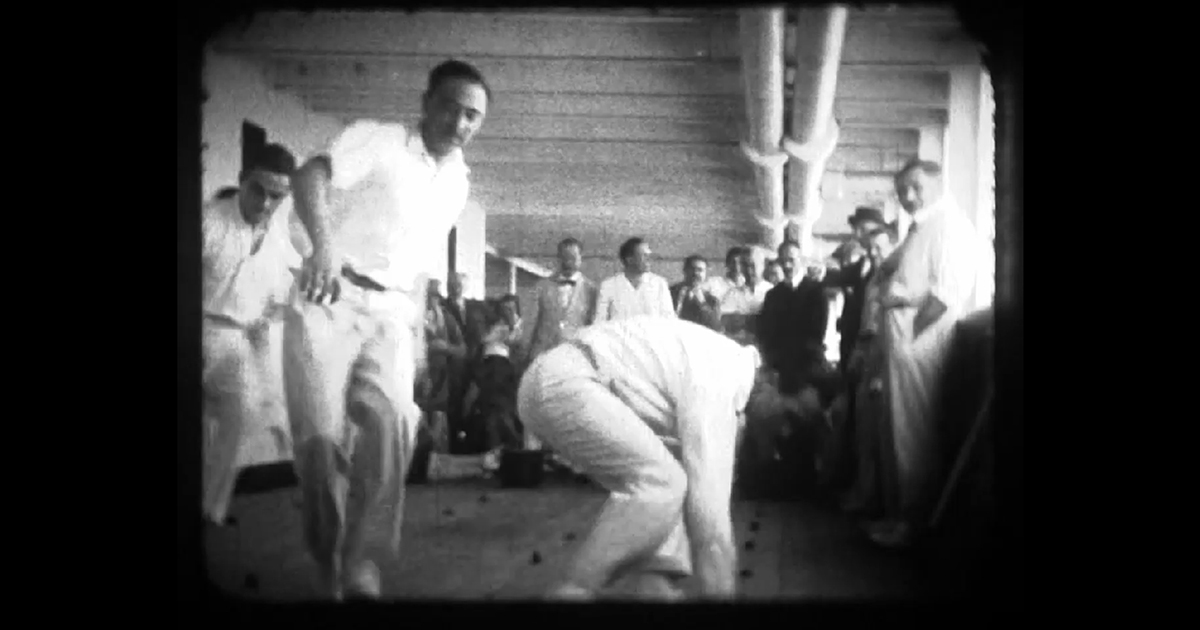
From 01:20, the group is back on board, drinking tea, socialising and taking part in deck games. With no cinemas or organised entertainment, cruise passengers of the 1920s made their own fun. Popular activities included shuffleboard, deck tennis, tug-of-war and egg-and-spoon races. Oom Willem was clearly fascinated by the fun and games – or perhaps his energetic new wife – and filmed much of the action.
 |
|
With no cinemas or organised entertainment, cruise passengers of the |
Just before the 04:00 mark, the ship is in Cape Town. (Footage of Walvis Bay and Lüderitz seems to belong to another reel, which we will cover next week.)
From Cape Town harbour, the action shifts to a restaurant with an ocean view. A steam locomotive – likely a SAR Class 6 or 6A, often used on branch lines and shunting duties – passes by. In the background, a lighthouse or beacon can be seen, possibly the breakwater at Kalk Bay. An impressive building also features, though we could not identify it. It looks as if the group went straight from the harbour to the Muizenberg area, probably using Main Road (now M4) going past Woodstock, Observatory and Plumstead,
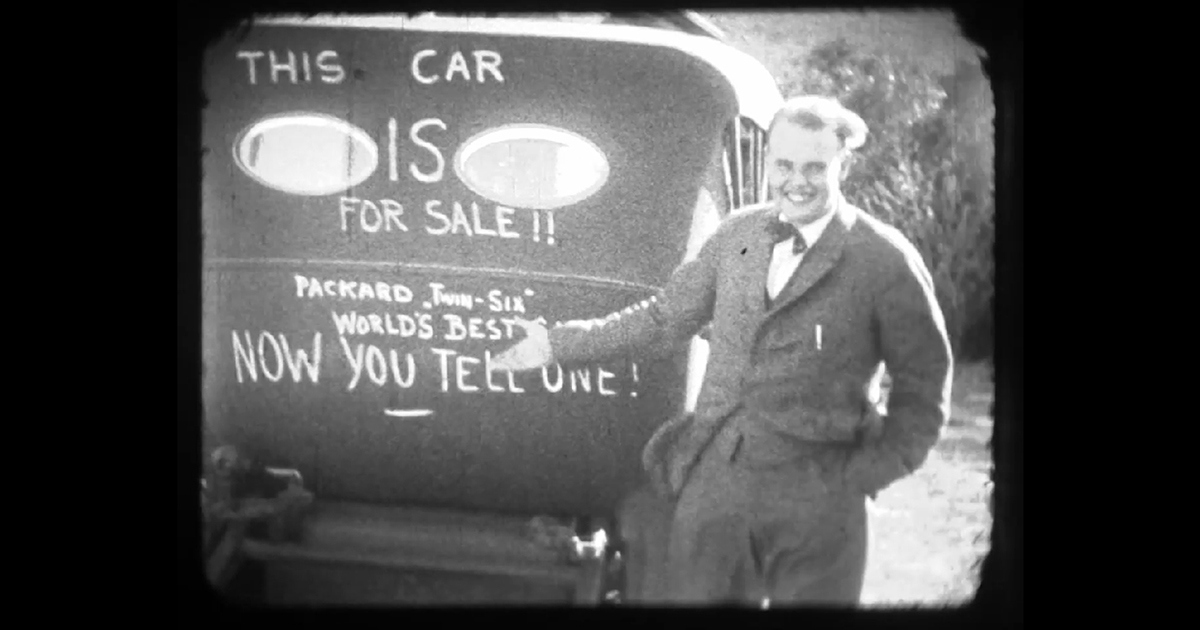
he group travelled in a Packard “Twin Six”, clearly marked on the back. Introduced in the 1910s, this luxury car with its V12 engine set a benchmark in automotive engineering and smoothness.
 |
|
The Packard “Twin Six” the group travelled in. Introduced in the 1910s, this luxury car with its V12 engine set a benchmark in automotive engineering. |
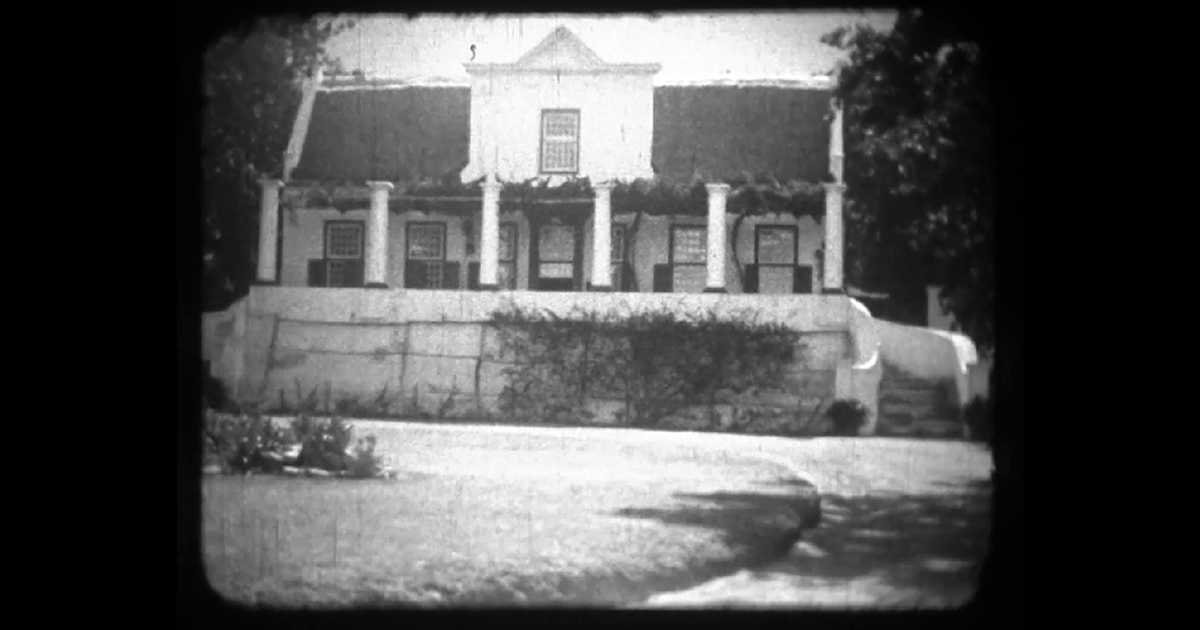
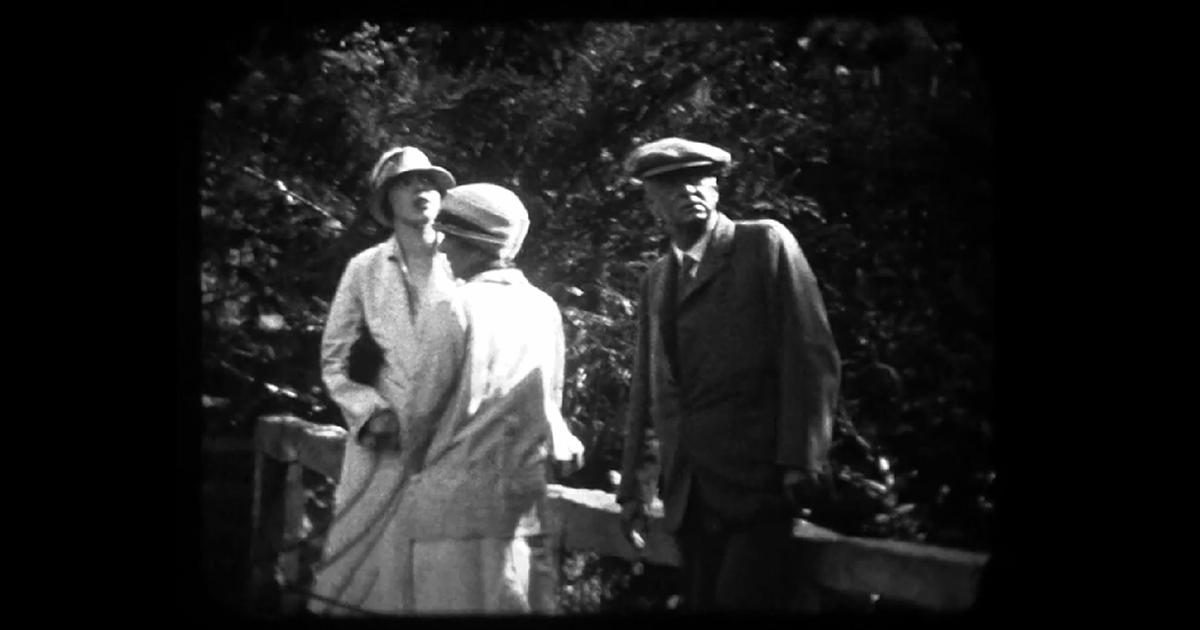
At 04:43, the group arrives at Tokai Manor House, the Cape Dutch homestead dating back to 1792 and rebuilt by Andries Teubes with architect Louis Michel Thibault in 1795–96. They also visit the adjacent Tokai Arboretum, established in 1885 by Joseph Storr Lister to test exotic tree species in the Cape climate.
 |
|
Tokai Manor House, the Cape Dutch homestead dating back to 1792 and rebuilt by Andries Teubes with architect Louis Michel Thibault in 1795–96. |
 |
|
Their trip to the Cape seems to have included a visit to Tokai Arboretum. The group is seen walking through the sculptured gardens. |
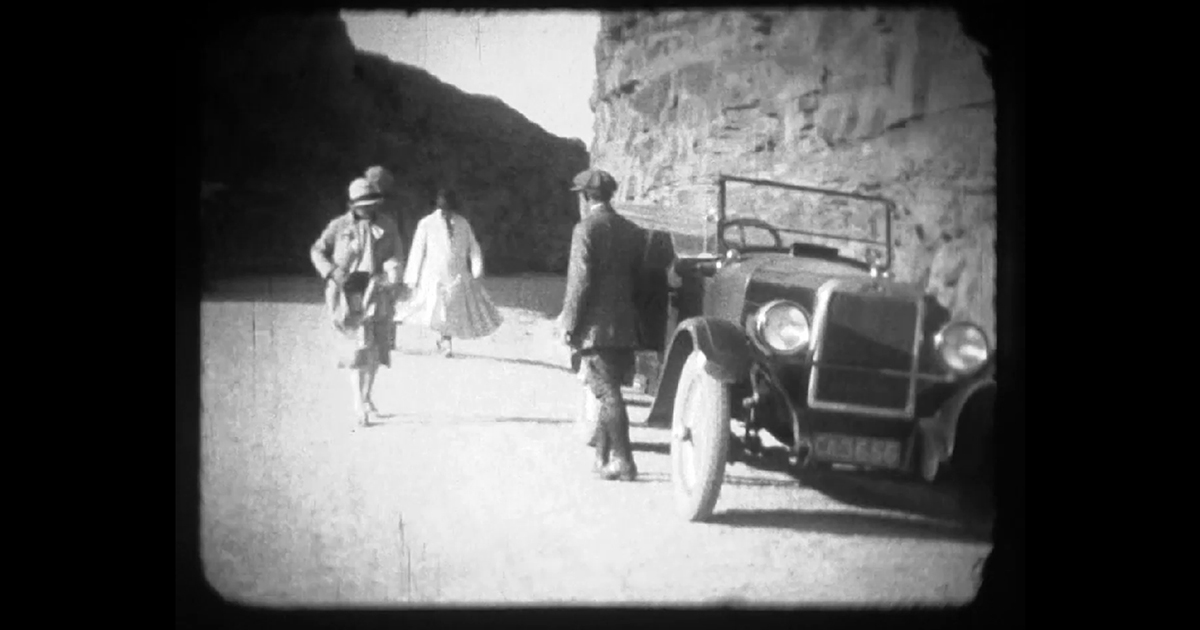
By 05:31, they are back on the road, jackets and hats pulled tight against the Cape’s famous wind. Their route follows Chapman’s Peak Drive, a dramatic 9km mountain pass carved between cliffs and sea.
Known fondly as “Chappies,” the road has symbolised Cape beauty for more than a century, drawing both locals and visitors. The peak itself was named after John Chapman, first mate of the Consent, which rounded the Cape in 1607. Sent ashore near what is today Hout Bay, Chapman returned successfully with provisions, and the bay was briefly called “Chapman’s Chaunce.” While the bay’s name changed, Chapman’s name remained attached to the striking peak overlooking it.
 |
|
Their route followed Chapman’s Peak Drive, a dramatic 9km mountain pass carved |
Construction of the road began in 1915 to link Hout Bay and Noordhoek. It was hailed as an engineering triumph and was officially opened on 6 May 1922 as Chapman’s Peak Drive. For Oom Willem, or anyone with a car at that time, it must have been quite an adventure to drive along Chapman’s Peak.
The next sequence shows a horse farm or exhibition. One possibility is Imhoff Farm, transformed in 1912 into one of the Cape’s first show farms.
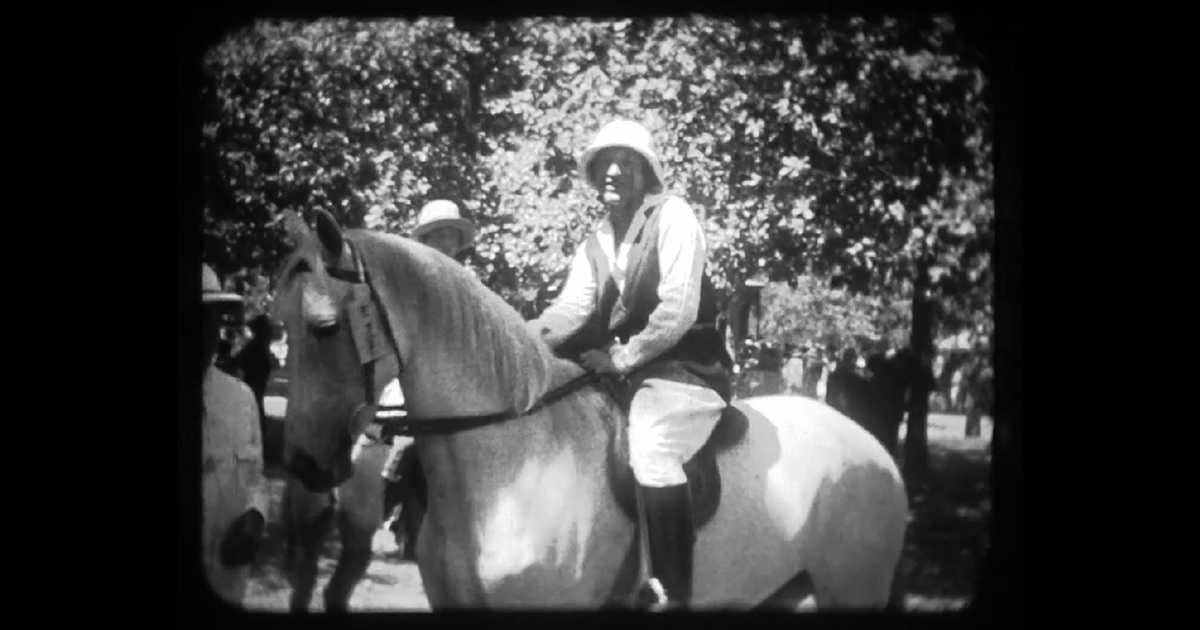 |
|
The trip inludes a visit to a horse farm or exhibition. One possibility is Imhoff Farm, transformed in 1912 into one of the Cape’s first show farms. |
From 07:00, the group is back by the sea, most likely at St James Beach on the False Bay strip, recognisable by the Edwardian-era hotels and gabled apartment blocks along the seafront.
The final scenes show them at what seems to be a nearby hotel or guest house. One detail stands out: smoking etiquette was clearly different in the 1920s, with both men and women puffing away at every opportunity.
So where is Oom Willem off to next? Look at the film below and see if you can identify the places visited?
Viewed: 2178

Anton van Zyl
Anton van Zyl has been with the Zoutpansberger and Limpopo Mirror since 1990. He graduated from the Rand Afrikaans University (now University of Johannesburg) and obtained a BA Communications degree. He is a founder member of the Association of Independent Publishers.
Most Read Articles
Sponsored Content
Recent Headlines