

ADVERTISEMENT:

Search for a story:
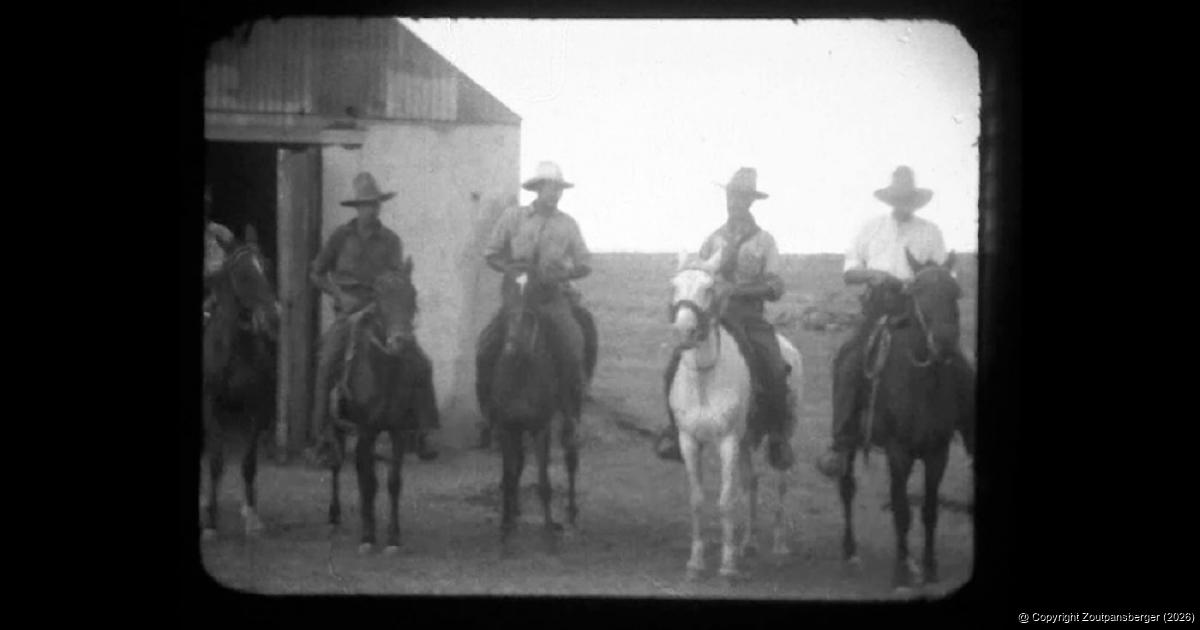
Without context, one might think they were looking at cowboys working on an old American West ranch. The cattle farm was obviously vast, with Oom Willem and friends taking to horseback to cover the distances.
Watch: Oom Willem plays cowboy on Free State cattle farm
Date: 16 August 2025 By: Anton van Zyl
When Oom Willem arrived in South Africa in 1926, his first stop was in the Western Transvaal, but the Free State beckoned.
“I went to a big cattle ranch in the Western Transvaal that belonged to a Norwegian company, and I worked there for about nine months. Then I heard about two Hollanders, Van Beek, who had a farm in the Free State, and they were breeding Afrikaner cattle,” he told Piet Adendorff in an interview many years later.
Piet Adendorff became a good friend after Oom Willem had moved to the Soutpansberg in the early 1930s. He also recorded their conversations, which were later transcribed and helped connect some of the dots when piecing together where Oom Willem had travelled to when making his home movies.
This week’s reel is most certainly at the Van Beek’s farm in the Free State — and probably the neighbouring Wintersvlei farm, which belonged to the Van Wyk family. This is also where Oom Willem met his wife, Jo. She was the sister of Dick Koker, who worked with him on the farm.
“[Frans] van Wyk and his wife were very old, and they wanted to sell the place. Now there was a Hollander by the name of Hendrik Bosch. Frans met him in Holland when he was over there, and he wanted to buy a cattle ranch in South Africa. Hendrik Bosch studied anthropology, history of mankind, studying skulls and all that — he wasn’t a farmer at all, of course — but he built this farm and a herd of cattle. Now when he mounted a horse, he got up on one side but fell off the other — he wasn’t a farmer at all. He appointed Nico van Beek as his manager,” Oom Willem explained.
But Bosch’s lack of knowledge or passion for farming did not stop him, and he bought the farm from the Van Wyks. The main attraction, however, was one of the daughters of Albert Erasmus, a nearby farmer. “And old Hendrik fell in love with Annatjie,” Oom Willem later recalled. When he realised that the love was not reciprocal, his heart was broken and he returned to Holland, wanting nothing more to do with the farm.
His uncle Willem, a medical doctor, was tasked with selling the farm and all the belongings. Oom Willem had to go and fetch the Dutch group at the station, which was situated on a farm near Bloemhof.
“So I went to fetch Dr Willem Bosch, his wife, and also Tante Mies, a sister of his wife, and a daughter of about 20 or 22,” he said. Because there were not enough facilities at the Van Beek’s farm, some of the guests had to be accommodated on Wintersvlei, where there was a small rondavel.
 |
|
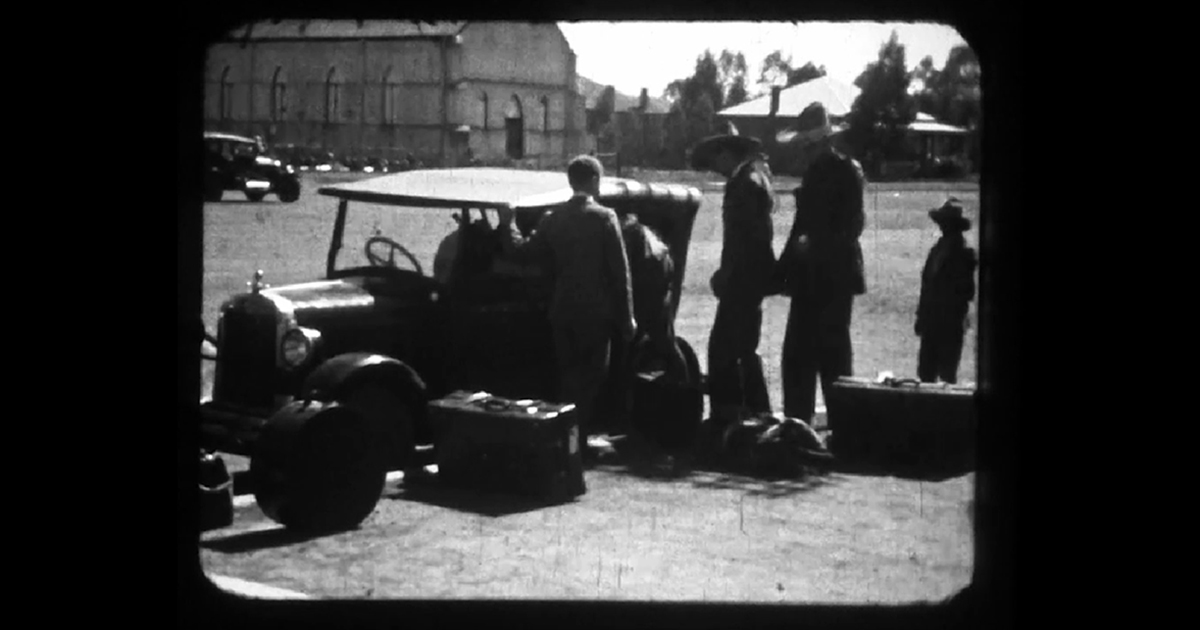
At the beginning of the film, Oom Willem is seen fetching (and later dropping off again) a group of friends. Could they be Dr Willem Bosch, his wife, and also Tante Mies? |
But it seemed that the one doomed love affair quickly enkindled two other successful ones. Dr Bosch’s daughter, Ems, proved irresistible to Nico van Beek, the farm manager. “[They] went horse riding every day, coming back holding hands. And sure enough, one morning during breakfast they announced their engagement,” Oom Willem recalled.
The old people did not like it, arguing that it was too quick a romance. The couple, however, did not budge, and the parents realised it was of no use arguing. “Alright, as a wedding present I will give you the whole farm and the cattle and everything on it. I’ll buy it from Hendrik,” Dr Bosch told them.
The wedding ceremony was one of the most extravagant the region had ever witnessed.
“Hell, that was a Wild West show,” Oom Willem recalled many years later. “Everybody came on horseback, the revolvers were fired off and the shotguns. The old people were there and some motor cars in Hoopstad. The reception was at the hotel — a small hotel that belonged to a Jew, Goodman. Oh boy, the drinks — ‘die dokter, betaal, die dokter betaal’ — the drinks were on the house. Doors were broken, windows were broken, there was glass on the floor, there was chaos, a helluva mess! But everybody enjoyed themselves.”
But at the wedding, there was another guest who caught the eye of the young Willem van den Berg. Dick Koker, a good friend of the Van Wyks, arrived with his sister, Jo.
“And … ja, en toe was dit weer sulke tyd! Cupid with his bow and arrow, he must have lived there on that farm,” Oom Willem recalled.
“And I wrote to my parents that I was engaged, and that I would really like to have a wedding like Nico had in Hoopstad. My father said that he is not going to pay for another hotel in Hoopstad, you people must come to Holland and have a proper wedding, and that is what happened.”
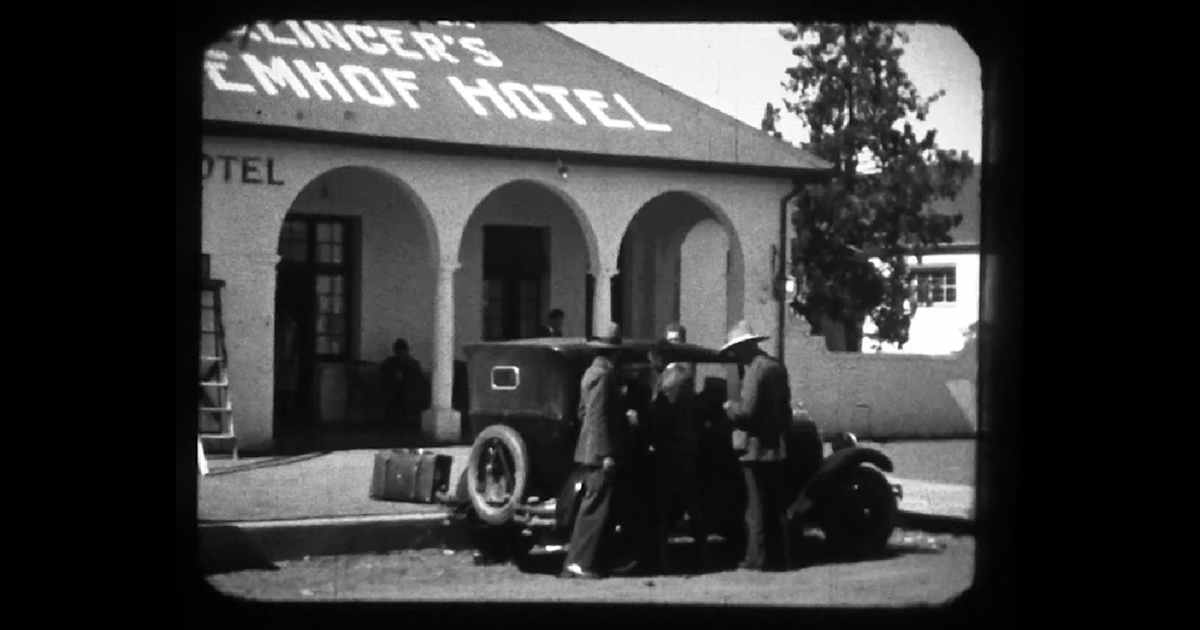
In the film reel we discuss this week, many of the locations Oom Willem described in his later stories can be seen. Oom Willem is shown fetching (and later dropping off again) a group of people, possibly Dr Willem Bosch, his wife, and also Tante Mies, from a railway station. Sticking to the above storyline (though, again, we are only guessing), this is also possibly the railway station situated on a farm outside Bloemhof, as shortly afterwards the group is filmed outside the Bloemhof Hotel.
 |
|
Oom Willem and friends, filmed in front of the Bloemhof Hotel. This confirms Oom Willem was probably en route to the Van Beek family’s farm in the Free State — and probably the neighbouring Wintersvlei farm, which belonged to the Van Wyk family. |
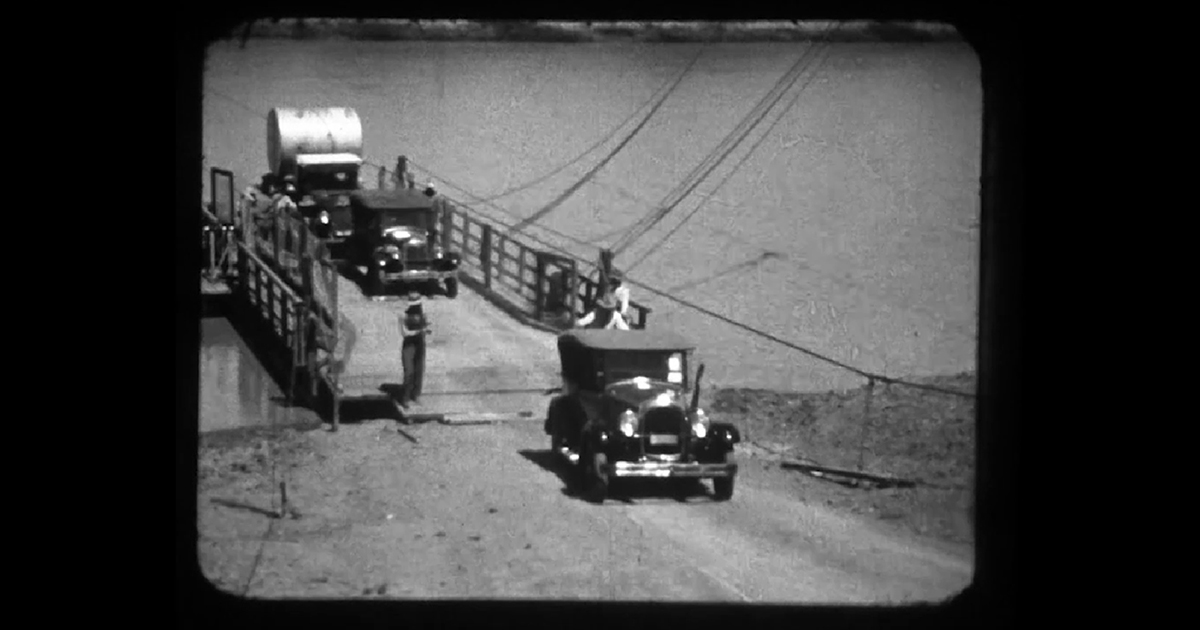
Upon leaving the hotel, the group, travelling in two vehicles — one of which is a 1926 Dodge Brothers Tourer — is seen crossing a river, most probably the Vaal River, in a hand-drawn pontoon (pont).
 |
|
The group is seen making a river crossing on a pontoon. Travelling from Bloemhof via Hoopstad to the farm Wintersvlei would certainly have taken them across the Vaal River. Hand-drawn pontoons in the area were a common sight. |
Pontoons like these would have been a common sight in the area during the 1920s, before being replaced by bridges. Travelling from Bloemhof via Hoopstad to the farm Wintersvlei would certainly have taken them across the Vaal River.
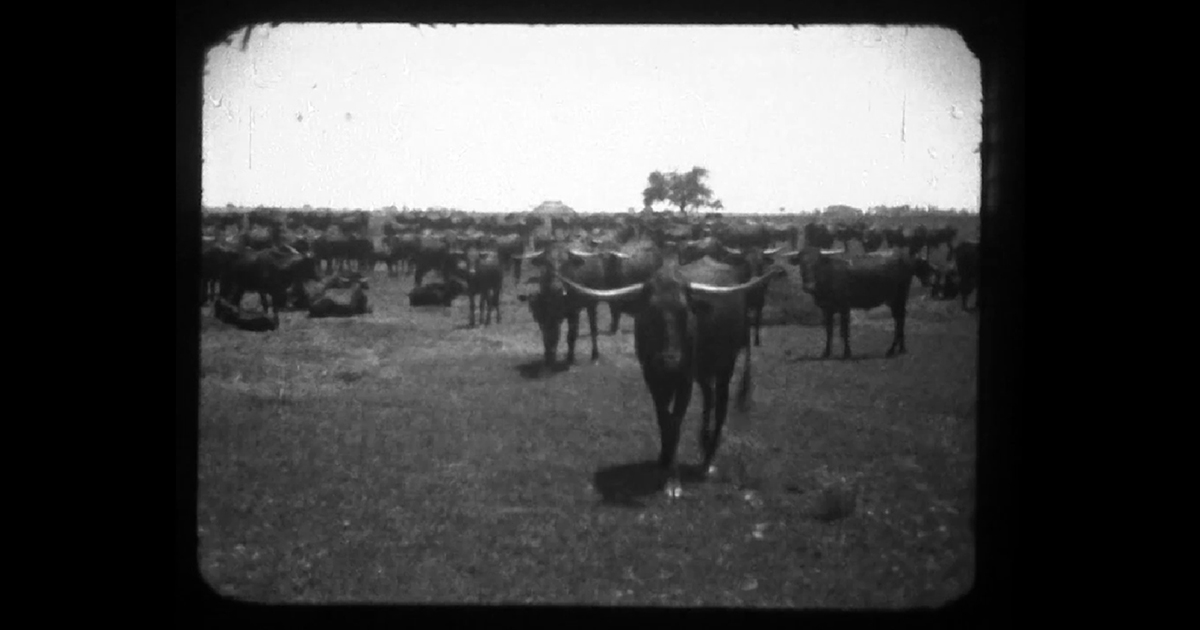 |
|
Possibly the Van Beeks’ huge Afrikaner herd. |
Much of the film focuses on farm life, with a strong emphasis on cattle farming, but also on horse breeding. It could be that most of the footage was taken on the farm next to Wintersvlei as mentioned above. The film also shows a glimpse of a rondavel, probably the one Oom Willem referred to as being on Wintersvlei.
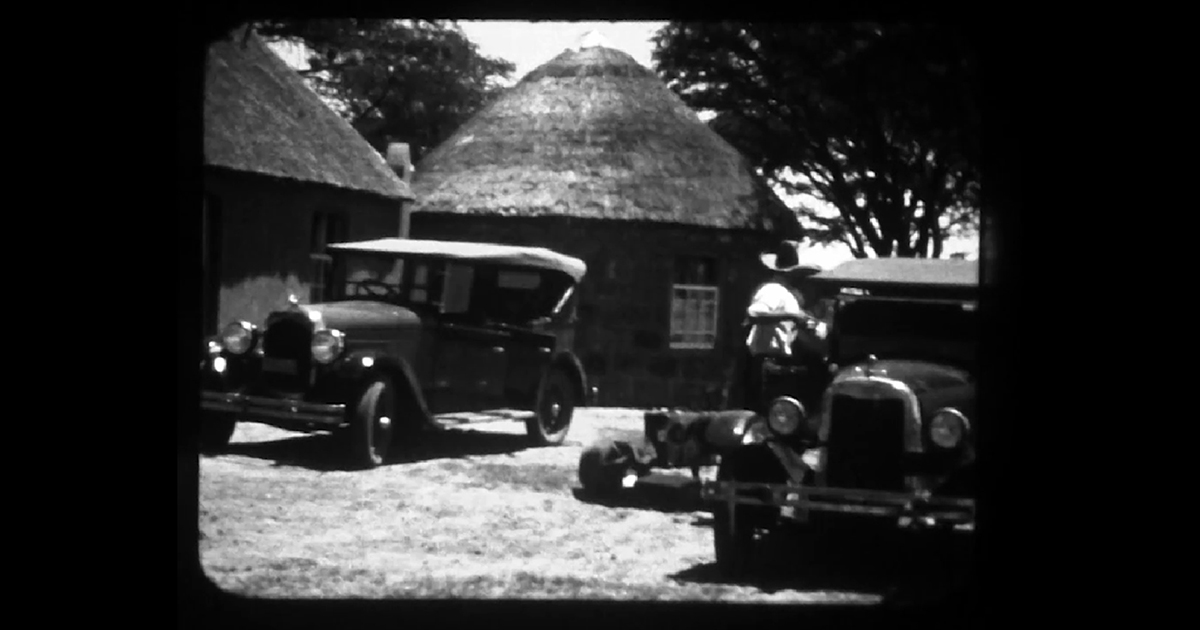 |
|
Could this be the rondavel Oom Willem was referring to in his story? |
So where is Oom Willem off to next? Watch Episode 12 below:
Viewed: 2199

Anton van Zyl
Anton van Zyl has been with the Zoutpansberger and Limpopo Mirror since 1990. He graduated from the Rand Afrikaans University (now University of Johannesburg) and obtained a BA Communications degree. He is a founder member of the Association of Independent Publishers.
Most Read Articles
Sponsored Content
Recent Headlines