

ADVERTISEMENT:

Search for a story:
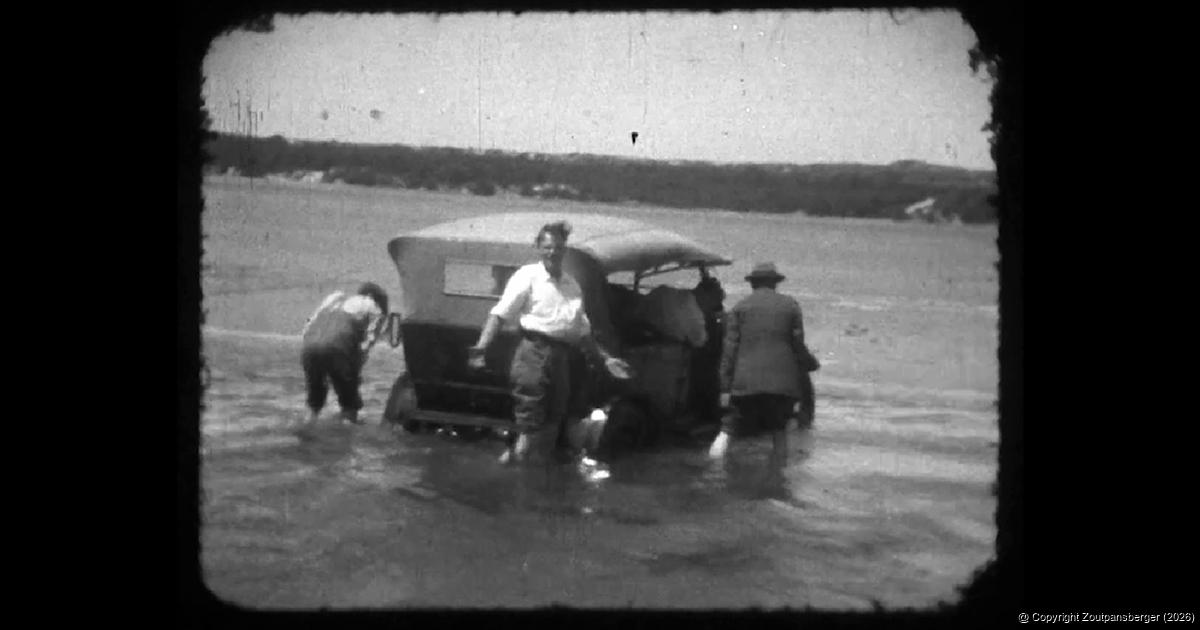
Oom Willem is seen attempting a water crossing that almost turned out to be his undoing. He gets completely stuck in what appears to be a lagoon—possibly part of the Knysna Lagoon system. Try as they might, they could not get his car out.
WATCH: Oom Willem takes a trip to the Cape and visits some ostriches near a cave
Date: 09 August 2025 By: Andries van Zyl
We are back on the road again with our adventurous Oom Willem van den Berg, this time trying to piece together his trip through the Western Cape almost 100 years ago. Once again, we had our work cut out for us, as the few distinguishing landmarks made it difficult to determine the exact locations visited by him, his wife Tannie Jo, and some friends.
As usual, we called in the help of our resident, self-employed archivist, cultural historian, and heritage specialist, Pétria de Vaal. In Episode 10, we join Oom Willem and friends as they are seen leaving what appears to be a hotel or guest house. Exactly where, we do not know, but perhaps our readers in the Cape can shed some light on the where and the what?
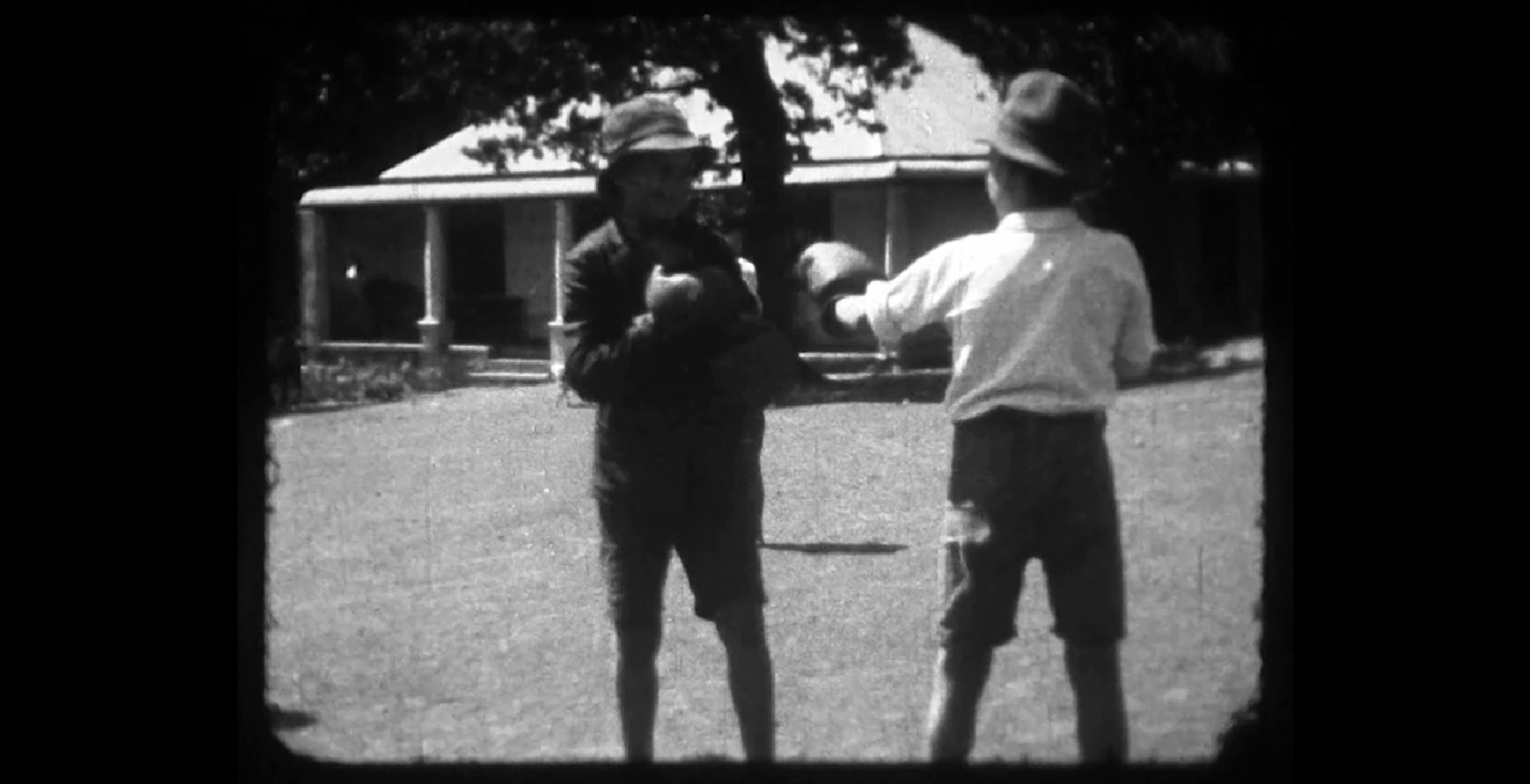
From there, we follow the group up some winding dirt roads, with Oom Willem at one stage stopping at what appears to be a school (1:20 timestamp). A couple of young boys are seen admiring Oom Willem and his friends’ vehicles, at a time when motor cars were still relatively new on South African roads. Also filmed is a group of young girls enjoying the attention. There is even a bit of boxing involved, as two young boys (1:30) go at each other with a pair of huge boxing gloves. It is truly a pity that the old 16mm film has no sound—we can only imagine the words exchanged.
 |
|
There is even a bit of boxing involved, as two young boys go at each other with a pair of huge boxing gloves. It is truly a pity that the old 16mm film has no sound—we can only imagine the words exchanged. |
This is followed by a short clip of a steam train making its way up what seems to be a mountain pass.
Around the 2:00 mark, Oom Willem is seen being picked up in an old Ford Model TT in front of the Commercial Hotel. The name was not unique, which made it difficult to identify. Two hotels with similar names were identified in the Western Cape at the time, one in Hopefield and another in Swellendam. However, the architecture of both hotels does not match the one shown in the film.
The first concrete clue about Oom Willem’s whereabouts appears at the 2:40 mark, where Pétria identifies an imposing building as the well-known old Drostdy (former magistrate’s residence), which was started in 1747 in Swellendam.
From Swellendam, it seems that Oom Willem travelled eastward in the direction of the Cango Caves as that is where they end up at the 3:30 mark. The route provides a unique insight into 1920s travel in South Africa. This would have involved following principal wagon and early motor road networks, and on numerous occasions, Oom Willem is seen filming ox-wagon travel and transport.
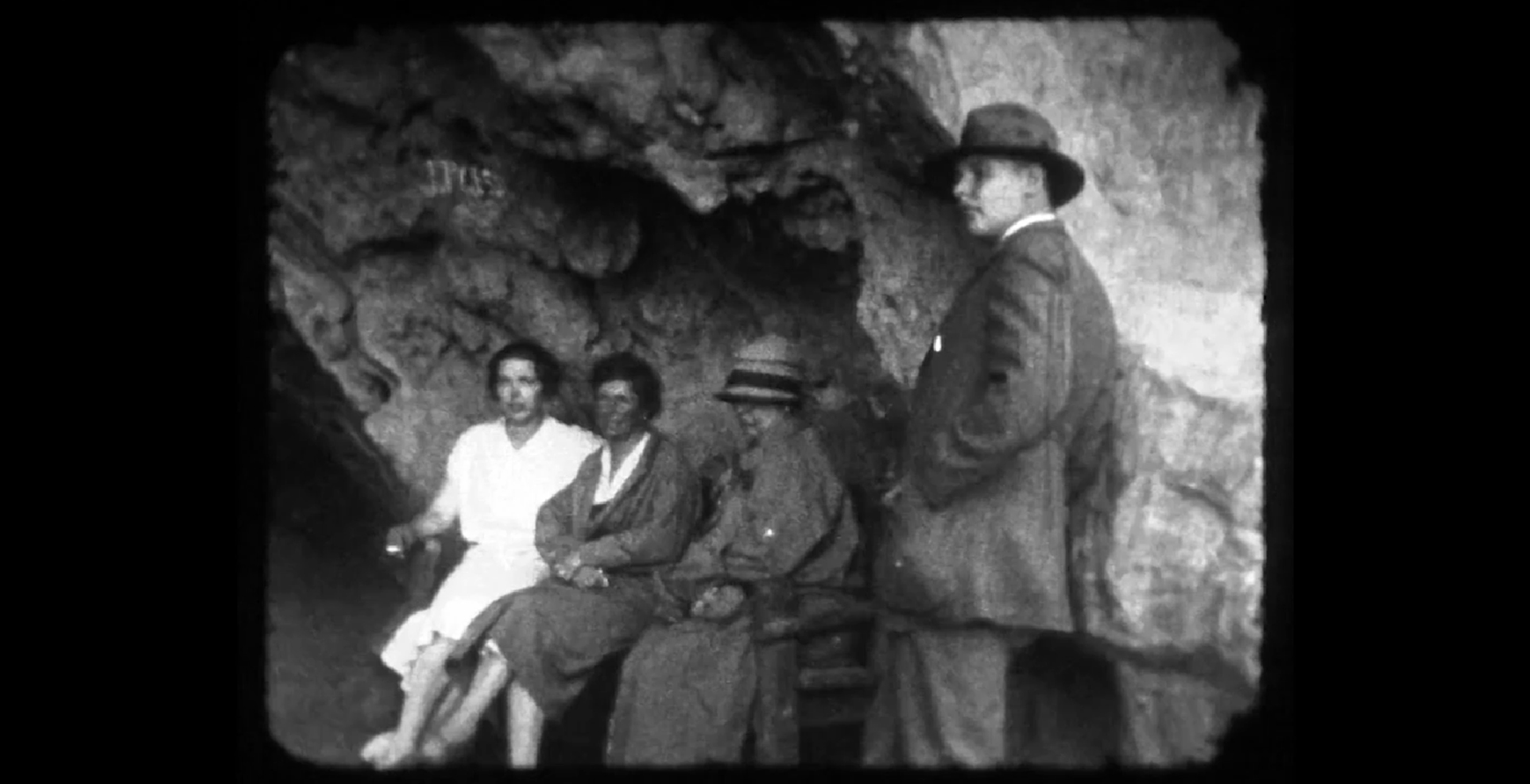
Oom Willem is seen at the entrance to the Cango Caves. In the late 1920s, the journey there would have been slow, especially compared to today; much of the road was gravel and could become muddy or deeply rutted. A railway connection to Oudtshoorn existed by this time (possibly the steam locomotive Oom Willem filmed earlier), but the section to the Cango Caves was accessible only by road or private vehicle.
 |
|
Oom Willem is seen at the entrance to the Cango Caves. In the late 1920s, the journey there would have been slow, especially compared to today; much of the road was gravel and could become muddy or deeply rutted. |
The Cango Caves road itself was notorious for its poor condition, requiring multiple crossings of the Grobbelaars River and making travel challenging, especially in wet weather. The film also captures several river crossings as Oom Willem travels back to Oudtshoorn, probably via Schoemanspoort, which connects the Cango Caves and Oudtshoorn.
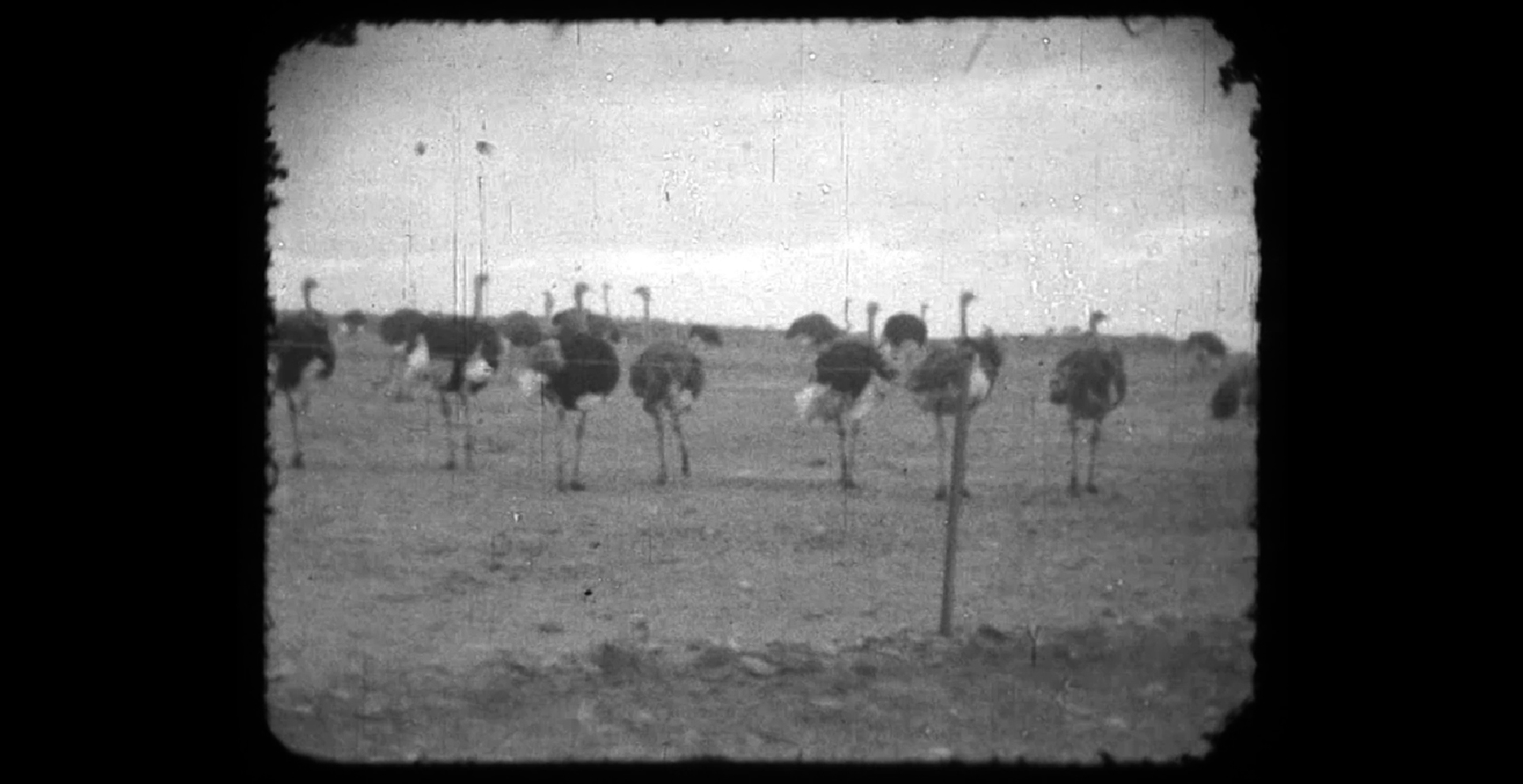
The Cango Caves area is situated in the picturesque Cango Valley, about 29 km north of Oudtshoorn. Oudtshoorn was considered the ostrich farming capital of the world in the 1920s and was famous for its ostrich feather boom, especially during the late 1800s and early 1900s. The ostrich industry in Oudtshoorn peaked around 1913 before collapsing with the onset of World War I. The town's economy was deeply intertwined with ostrich farming during that period, making it a central hub of the industry in South Africa, and ranking globally among major export commodities such as gold, diamonds, and wool. Oom Willem also spends some time filming these magnificent creatures (4:07 to 4:30).
 |
|
Oudtshoorn was considered the ostrich farming capital of the world in the 1920s. The ostrich industry in Oudtshoorn peaked around 1913 before collapsing with the onset of World War I. Oom Willem also spends some time filming these magnificent creatures. |
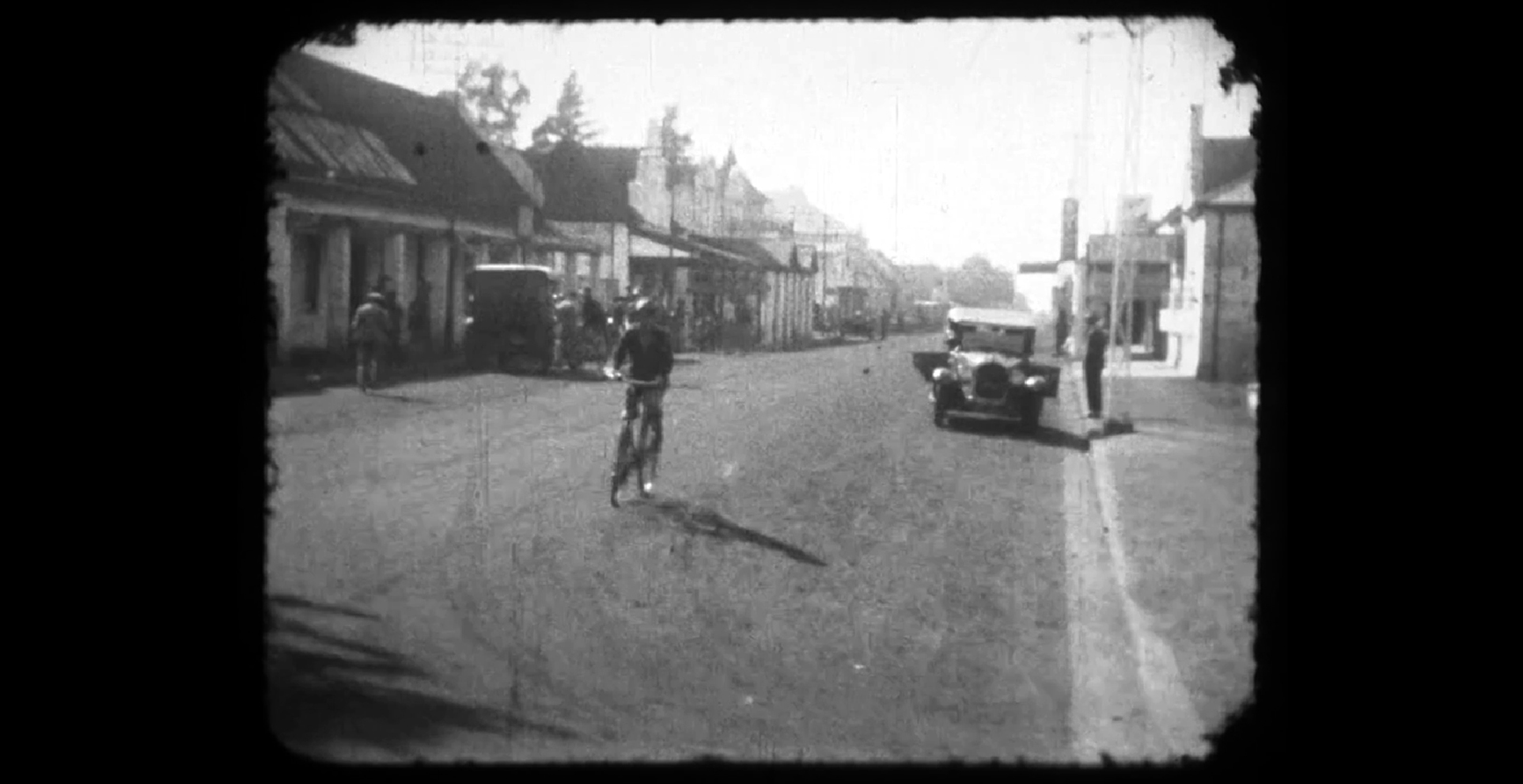
Next to come into frame (5:02) is probably a street scene from Oudtshoorn, but again we could not confirm it. The architecture fits the time period and style of the town, but no clear landmark is visible. There is a close-up of what seems to be an old Standard Bank of South Africa building, but no matches for such a building could be found. Perhaps our readers can help?
 |
|
A possible street scene of 1920’s Oudtshoorn, but once again we could not confirm it. The architecture fits the time period and style of the town, but no clear landmark is visible. |
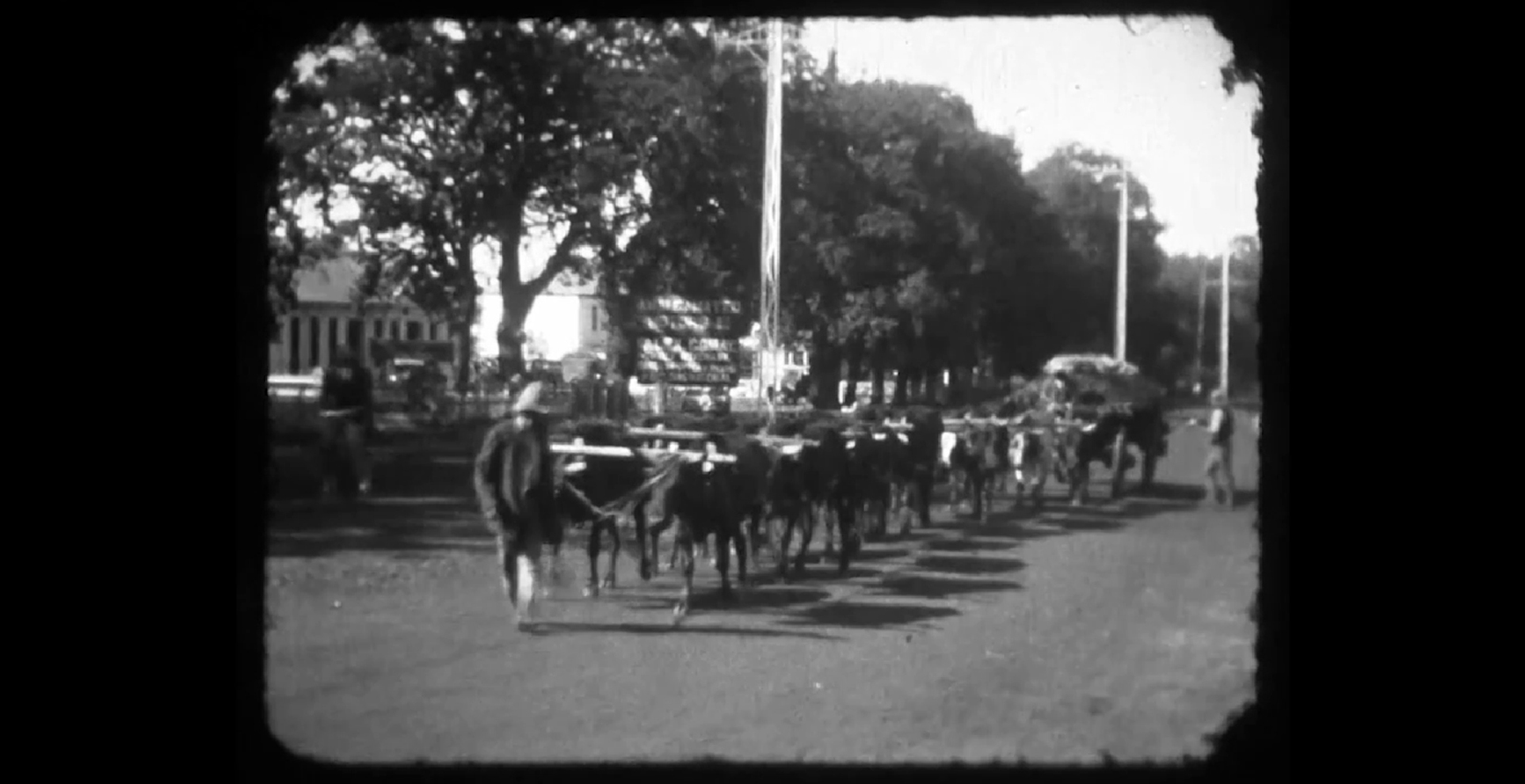
The film then cuts to a long street scene (5:13 to 6:05), where the predominant mode of transport is still the ox-wagon, donkey cart, or horse-drawn carriage. It is clear that wherever Oom Willem found himself, it was definitely a trade and transport hub.
 |
|
It is clear that wherever Oom Willem found himself, it was definitely |
Oom Willem then appears to head down to the coast, stopping to visit friends along the way. Geographically, the film suggests they might have travelled south-east via George and Wilderness to Knysna. Some of the footage bears a striking resemblance to the Knysna Lagoon system (7:27).
Several steel bridge crossings are shown in the film, but none could be identified with certainty. The closest match was the Red Bridge near Knysna at the 8:06 mark, but we doubt that it is the same bridge.
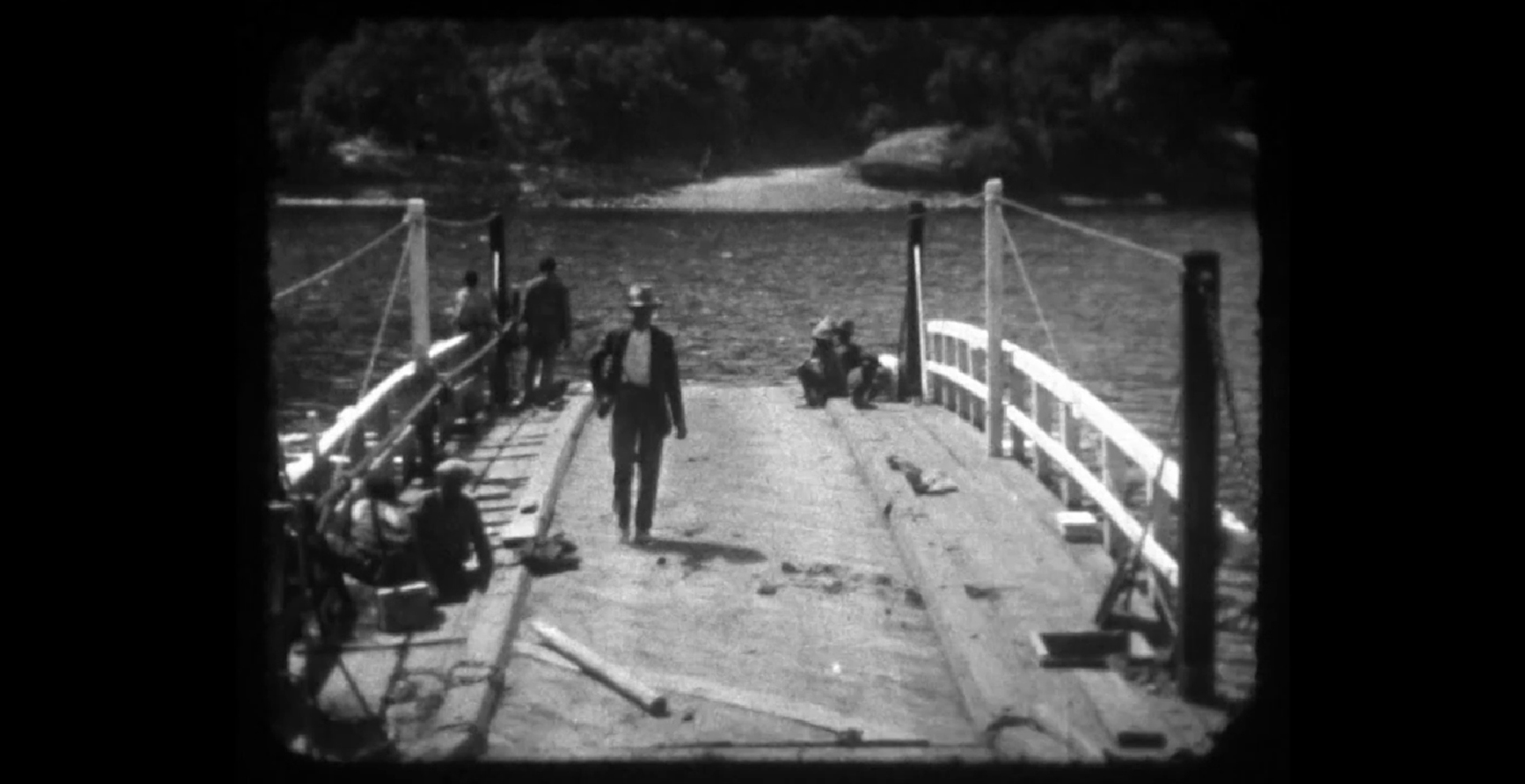
Another distinguishing feature we thought would be easy to identify was when Oom Willem did a hand-drawn pontoon crossing at the 8:16 mark. With so many waterways in the area, pontoon crossings were not uncommon. The crossing bore some resemblance to the Malgas pontoon crossing over the Breë River, but given the probable route Oom Willem took, this seems unlikely—it is about 270 km away. Another possibility was the well-known hand-drawn pontoon over the Knysna River. This seems more likely, but there is a snag: based on the fact that Oom Willem’s films were mostly taken after his arrival in South Africa in 1926, the Knysna pontoon had already ceased operation in 1923. This brings us back to the possibility that it was one of the many other hand-drawn pontoons that operated in the area at the time.
 |
|
Could this be the hand-drawn pontoon over the Knysna River? It seems more likely, but there is a snag: based on the fact that Oom Willem’s films were mostly taken after 1926, the Knysna pontoon had already ceased operation in 1923. |
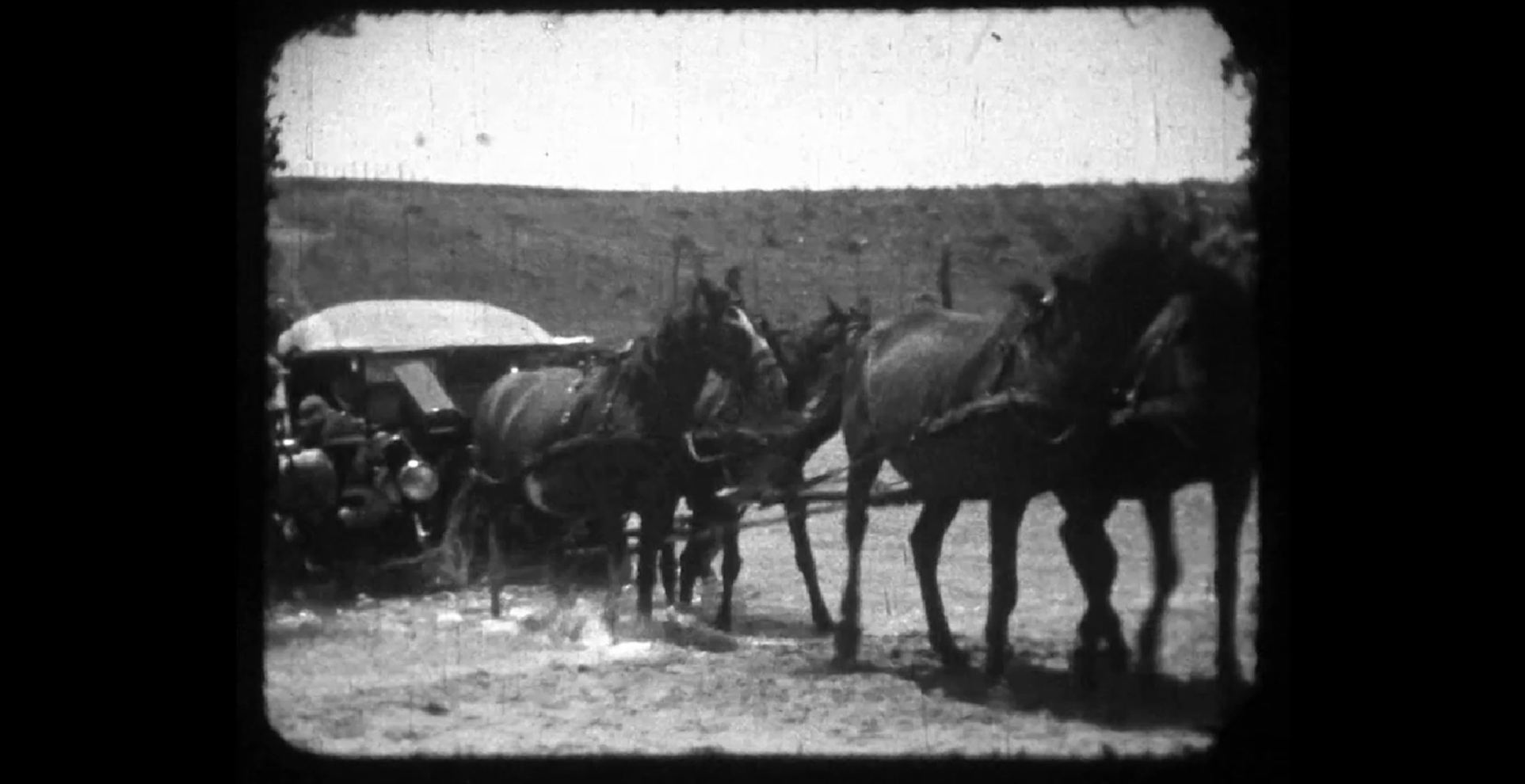
After some more galivanting, Oom Willem is seen attempting a water crossing (11:51) that almost turned out to be his undoing. He gets completely stuck in what appears to be a lagoon—possibly part of the Knysna Lagoon system. Try as they might, they could not get his car out. This led to their unloading the vehicle and undertaking an epic rescue attempt, which included the help of some oxen, a couple of horses, a horse cart (buggy) that ends up being flipped over, and the brute force of a large group of bystanders. Once again, it would have been fascinating to hear the commentary, had the film included sound. If for nothing else, this final part of the film is worth the watch. In the end, the vehicle is pulled free, but not without a few bruised egos.
 |
|
An epic rescue attempt, which included the help of some oxen, a couple of horses, |
So where is Oom Willem off to next? Watch next week’s instalment below. Can you identify the places visited?
Viewed: 2295

Andries van Zyl
Andries joined the Zoutpansberger and Limpopo Mirror in April 1993 as a darkroom assistant. Within a couple of months he moved over to the production side of the newspaper and eventually doubled as a reporter. In 1995 he left the newspaper group and travelled overseas for a couple of months. In 1996, Andries rejoined the Zoutpansberger as a reporter. In August 2002, he was appointed as News Editor of the Zoutpansberger, a position he holds until today.
Most Read Articles
Sponsored Content
Recent Headlines