

ADVERTISEMENT:

Search for a story:
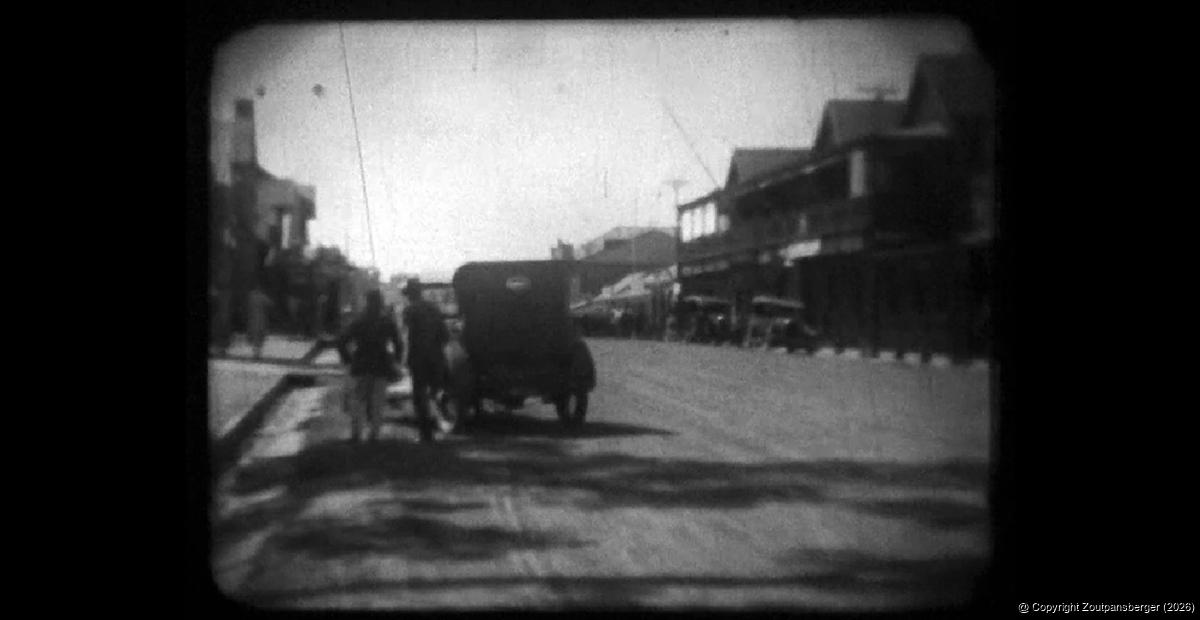
After a bit of rough “overlanding”, Oom Willem eventually finds himself in what seems to be Ladysmith, supporting a couple of local hawkers. The street scenes are indicative of early 1920s Ladysmith, with its colonial-era layout and buildings.
WATCH: Oom Willem enjoys some monkey business and visits a few Anglo-Boer-War landmarks
Date: 12 July 2025 By: Andries van Zyl
In Episode 7 of Oom Willem van den Berg’s travels this week, we pick up his trail on another tour through South Africa—this time to KwaZulu-Natal, almost 100 years ago. He makes a couple of fascinating pit stops along the way, including a historic Anglo-Boer-War monument. At the time, this war (also known as the Second Boer War or the South African War, which took place from 11 October 1899 to 31 May 1902) would still have been fresh in everyone’s minds.
Over the first six episodes of Oom Willem’s travels—diligently captured on 16 mm film and now digitised—we have come to know him as someone with a thirst for knowledge, a wide range of interests, and a passion for adventure. Perhaps that is what eventually made him settle in the Soutpansberg?
In this regard, the first almost four minutes of this week’s reel is just monkey business—literally. Why Oom Willem spent so much time filming a troop of Vervet monkeys is unclear, but it is evident that he and his tour party enjoyed the interaction and the monkeys’ antics. The exact location is not known, but it appears to be a park or some kind of stopover.
Vervet monkeys are very common in South Africa. They are found throughout all nine provinces and inhabit a wide range of environments, including woodlands, savannahs, riverine areas, agricultural lands, and even urban settings. Their adaptability allows them to thrive in both natural and human-modified landscapes, and they are often seen in rural areas, towns, and cities—especially where trees and water are available. The species is classified as “Least Concern” by conservation authorities due to its wide distribution and abundant population in South Africa.
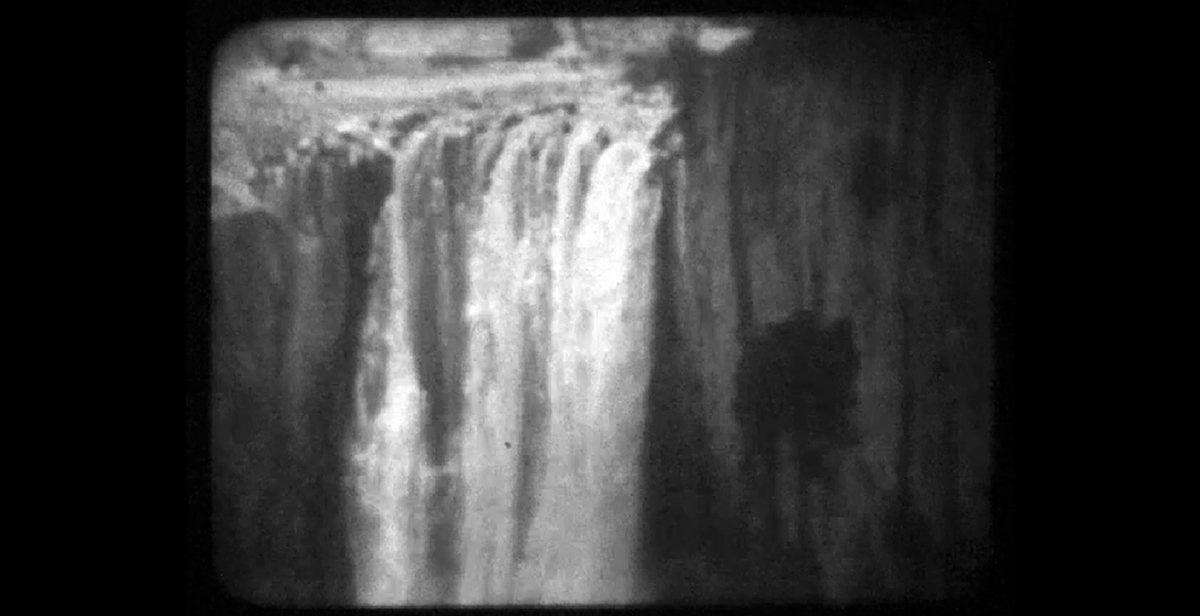
Once again, Oom Willem—a man who was by no means without resources—is travelling in his 1926 Hudson Super Six Tourer, which also helps to date the film to that period. After the monkeys, the group is seen traversing some rolling hills, suffering another breakdown, repairing a flat tyre, and visiting the impressive Howick waterfalls (05:03).
 |
|
Howick Falls is located in the Umgeni River. The falls plunge approximately 95 meters (about 310 feet) into a turbulent pool below. The Zulu people call the falls KwaNogqaza, meaning "Place of the Tall One," and regard the site as sacred. |
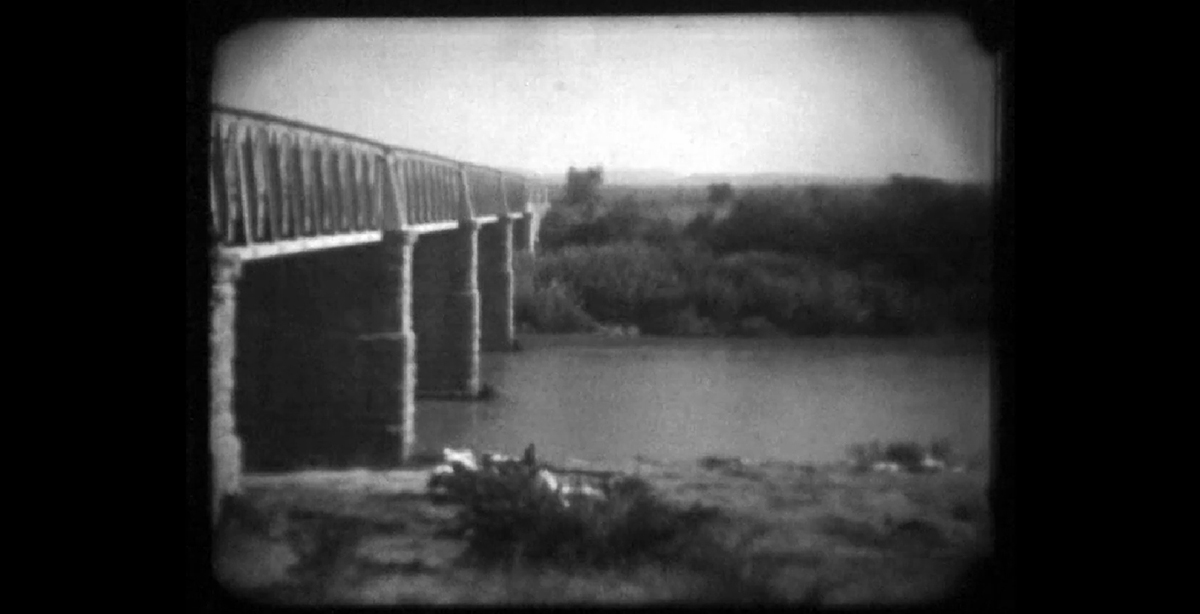
At the 06:14 mark, the film shows what looks like the Bulwer Bridge (also known as the Bulwer Railway Bridge or Bulwer Road Bridge) over the Tugela River near Colenso, KwaZulu-Natal. This historic stone and iron bridge was a key crossing point and played an important role during the Anglo-Boer War, particularly in the relief of Ladysmith.
 |
|
The Bulwer Bridge (also known as the Bulwer Railway Bridge or Bulwer Road Bridge). This historic stone and iron bridge was a key crossing point and played an important role during the Anglo-Boer War, particularly in the relief of Ladysmith. |
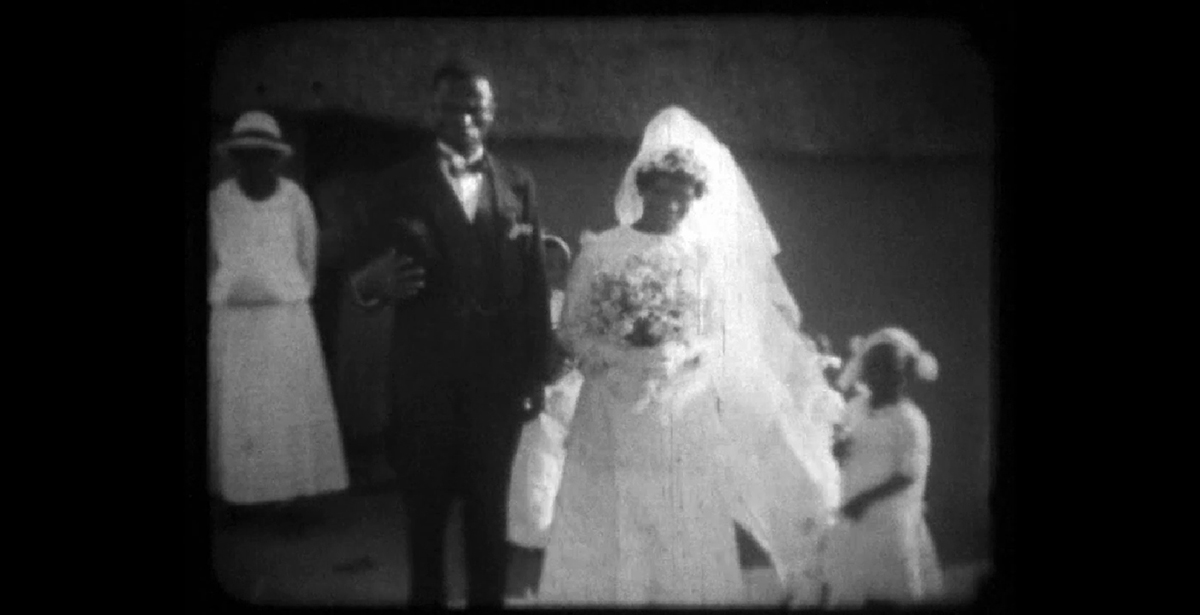
Oom Willem’s interest in local tribes and their customs comes to the fore again—although this time, it is a local tribe celebrating a “Western” wedding ceremony. Some time is spent filming the wedding couple and their entourage (at the 06:50 timestamp) in a remote rural setting. Emphasis, it seems, is placed on the village elders, whose interactions convey immense respect. The wedding couple, too, exude great pride—the groom sharply dressed in a morning suit or frock coat, complete with top hat, and the bride in a beautiful white wedding dress.
 |
|
Oom Willem’s interest in local tribes and their customs comes to the fore again—although this time, it is a local tribe celebrating a “Western” wedding ceremony. Some time is spent filming the wedding couple and their entourage in a remote rural setting. |
Somehow, it seems, this type of pride and respect for elders has since fallen by the wayside in South African culture.
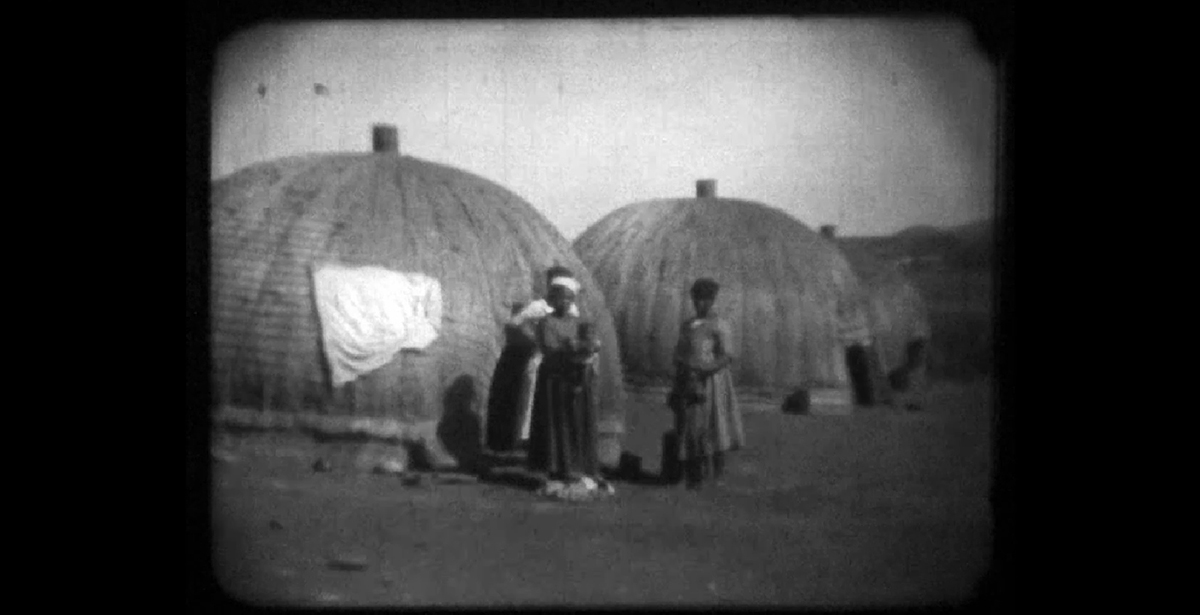
Another clue that Oom Willem and his fellow travellers are in KwaZulu-Natal comes at the 07:50 mark, with a group of local women filmed in front of traditional Zulu “beehive” huts (iQukwane, singular; amaQukwane, plural). These are built using a frame of flexible wooden poles bent into a dome shape and covered with thatch or grass mats. The style is iconic in Zulu homesteads (umuzi) and was widely used throughout KwaZulu-Natal and surrounding areas.
 |
|
Another clue that Oom Willem and his fellow travellers are in KwaZulu-Natal comes at the 07:50 mark, with a group of local women filmed in front of traditional Zulu “beehive” huts (iQukwane, singular; amaQukwane, plural). |
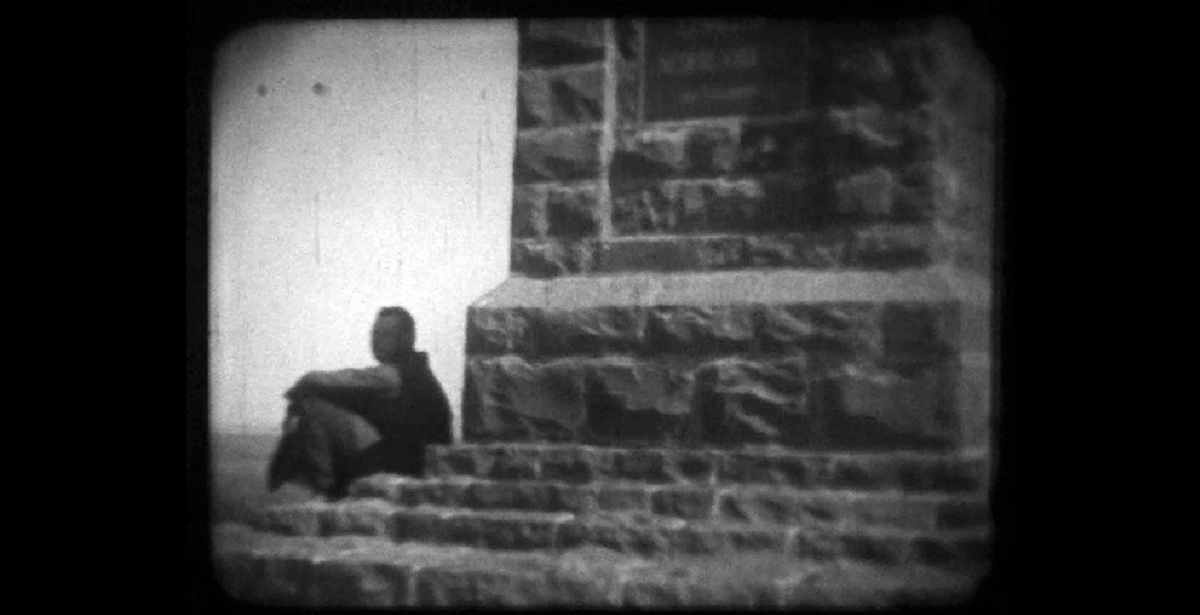
The film then shifts focus from one culture to the next, with Oom Willem visiting the Wagon Hill Dutch memorial near Ladysmith (08:08). The Dutch text on the plaque translates to "To the Dutch who fell on 6 January 1900." Wagon Hill, also known as Platrand, is the site of the memorial commemorating the Dutch volunteers who died during the Battle of Wagon Hill (6 January 1900) in the Anglo-Boer War.
 |
|
The Wagon Hill Dutch memorial near Ladysmith, a memorial commemorating |
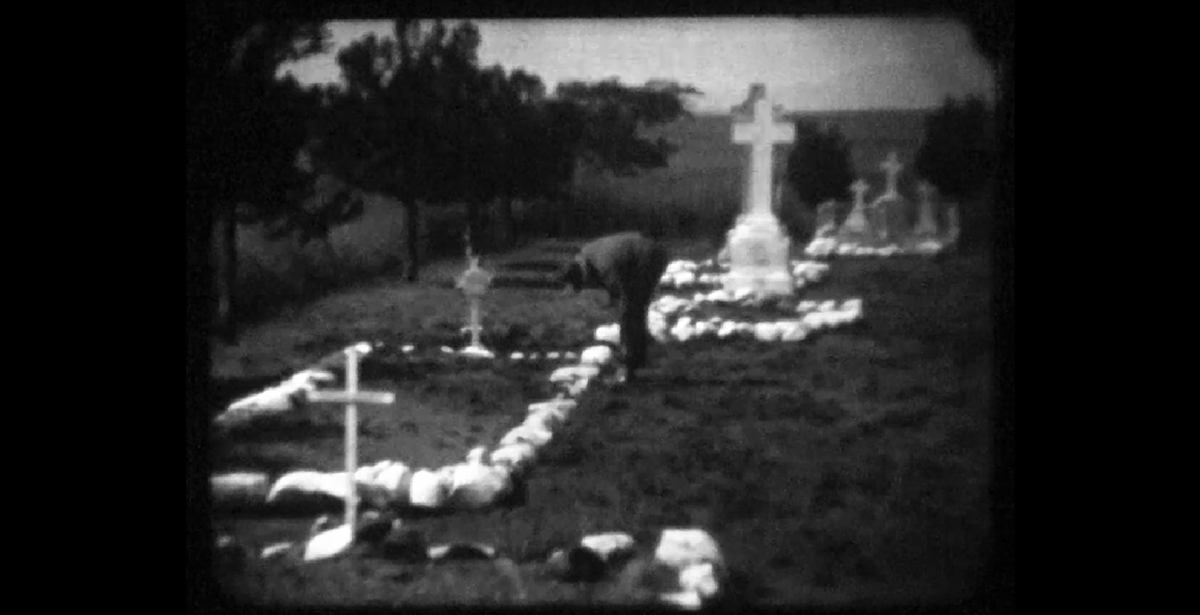
The Wagon Hill cemetery is also visited. Wagon Hill was a major battlefield during the Siege of Ladysmith in the Anglo-Boer War, and many British and Boer soldiers were buried there.
 |
|
The Wagon Hill cemetery is also visited. Wagon Hill was a major battlefield during the Siege of Ladysmith in the Anglo-Boer War, and many British and Boer soldiers were buried there. |
After a bit of rough “overlanding”, Oom Willem eventually finds himself in what seems to be Ladysmith, supporting a couple of local hawkers. The street scenes are indicative of early 1920s Ladysmith, with its colonial-era layout and buildings (10:22).
Oom Willem then crosses what appears to be the Van Reenen’s Pass that connects Ladysmith (today uMnambithi) and Harrismith. Van Reenen's Pass was built in the mid-19th century, with the route planned in 1856 by Frans van Reenen, who helped establish a road through the Drakensberg to open trade between Natal and the Orange Free State. The pass originally followed paths used by migrating animals and was adapted for wagons carrying supplies to gold mines. The railway line through Van Reenen's Pass was completed later in 1891, marking a significant engineering achievement to negotiate the steep incline.
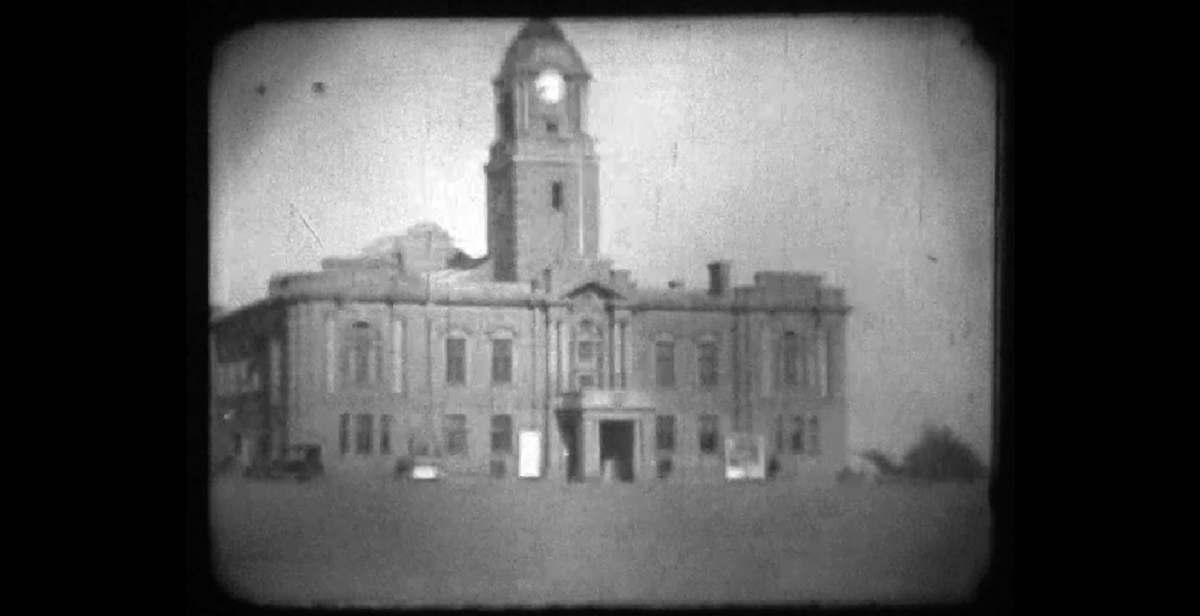
Continuing the journey, Oom Willem reaches Harrismith, with the very impressive Harrismith Town Hall a prominent landmark (11:56). The town hall, a graceful sandstone and brick building located on Warden Street, was constructed between 1907 and 1908, with its cornerstone laid by Sir Hamilton Goold-Adams, governor of the Orange River Colony, on 2 October 1907. It replaced an earlier, smaller stone town hall from 1883 and quickly became a prominent municipal landmark and social venue in the town.
 |
|
Continuing the journey, Oom Willem reaches Harrismith, with the very impressive Harrismith Town Hall a prominent landmark. The town hall, a graceful sandstone and brick building located on Warden Street, was constructed between 1907 and 1908. |
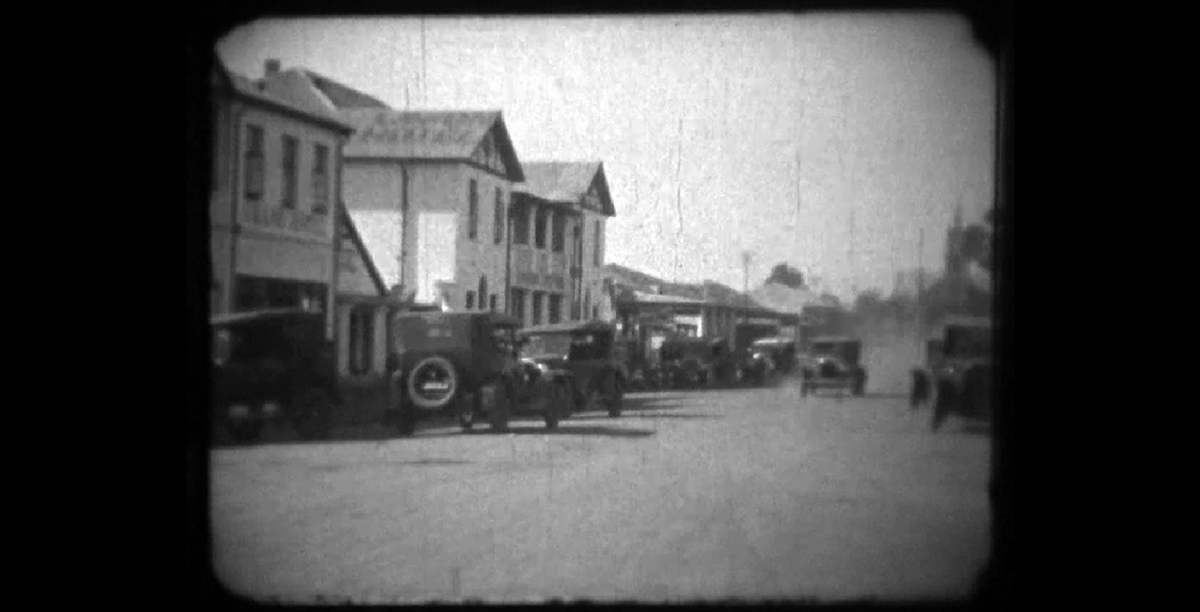
The tour party then visits what seems to be a quaint little town with dirt roads and sandstone buildings, where the predominant mode of transport appears to be ox wagons and horse-carts (12:45). After much research, this was found to be the town of Vrede in early 1920s KwaZulu-Natal. A street scene from the reel depicts the Vrede Hotel (13:36).
 |
|
A street scene from the reel depicts the Vrede Hotel in the 1920's. |
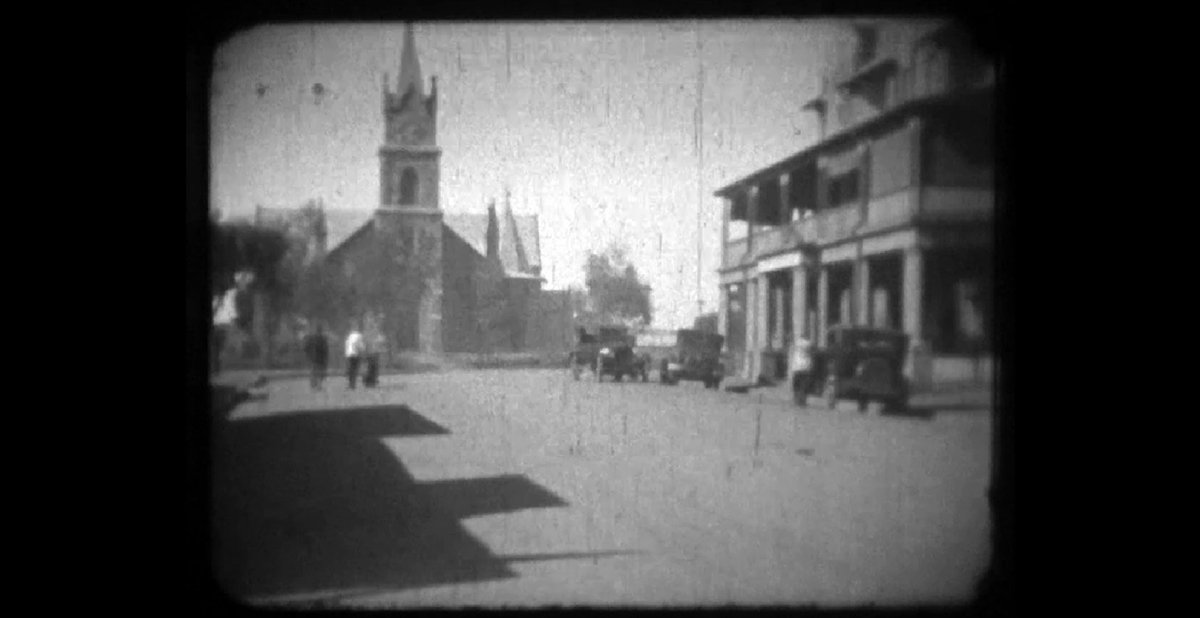
Vrede was established in 1863 on the banks of the Vals River and was originally called "Oorlogskloof" (War Gorge). The name was changed to Vrede, meaning "peace," in 1865 after a bitter feud among early settlers was resolved peacefully. The town grew around a Dutch Reformed Church and played a role in the Anglo-Boer War, with British troops occupying it in 1900. It was also a site of significant battles between 1899 and 1902 and was involved in the Great Rebellion of 1914 during World War I. And speaking of the Dutch Reformed Church in Vrede, the reel ends with a view of this historic church (13:42).
 |
|
The Dutch Reformed Church in Vrede in the 1920's. |
So, where will Oom Willem be heading next? For clues, view Episode 8 of Oom Willem’s travels by clicking on the QR code below.
Viewed: 2043

Andries van Zyl
Andries joined the Zoutpansberger and Limpopo Mirror in April 1993 as a darkroom assistant. Within a couple of months he moved over to the production side of the newspaper and eventually doubled as a reporter. In 1995 he left the newspaper group and travelled overseas for a couple of months. In 1996, Andries rejoined the Zoutpansberger as a reporter. In August 2002, he was appointed as News Editor of the Zoutpansberger, a position he holds until today.
Most Read Articles
Sponsored Content
Recent Headlines