

ADVERTISEMENT:

Search for a story:
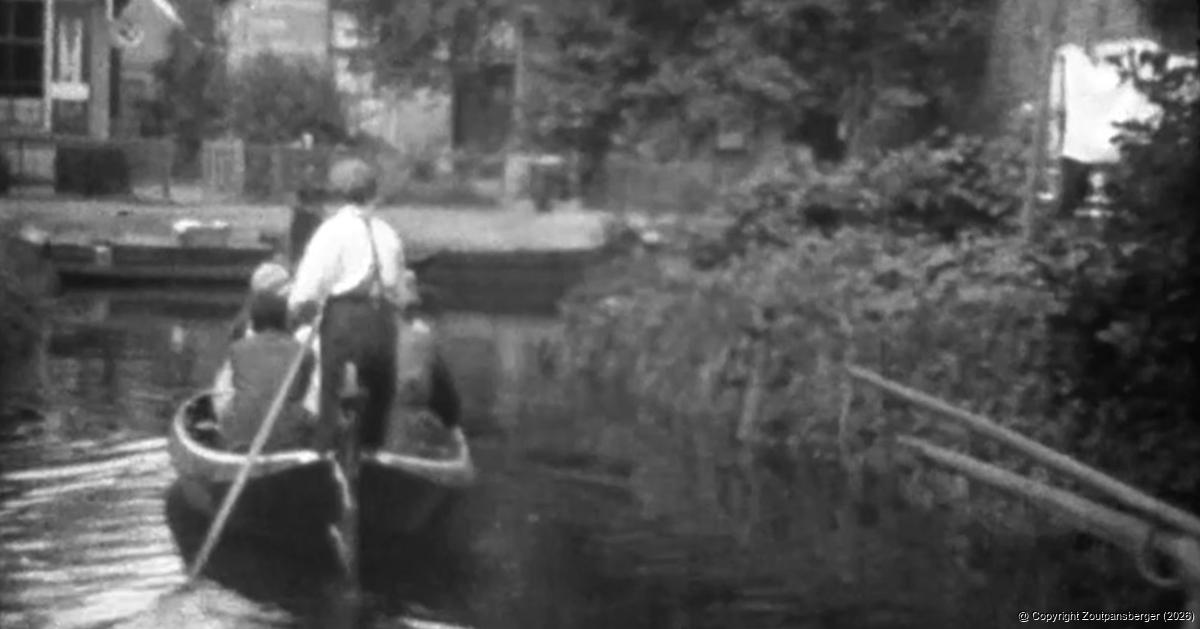
The picturesque scene from Giethoorn, which is often referred to as the “City with no roads”, or the Dutch Venice, for its extensive network of canals.
Watch: This week we join Oom Willem on a historical auto tour of Holland in 1927
Date: 21 June 2025 By: Anton van Zyl
In our fourth episode of the series about Oom Willem van den Berg’s travels in the early 1900s, we join him on a visit to the Netherlands. Last week, we covered the boat trip up the east coast of Africa that ended in Europe, but this week’s episode is not necessarily a continuation of that trip.
Every film reel is a surprise, and we do not really know where the journey will start or end. Most of the reels are not clearly marked, and we have to work from cryptic notes made on the reels, if any are available.
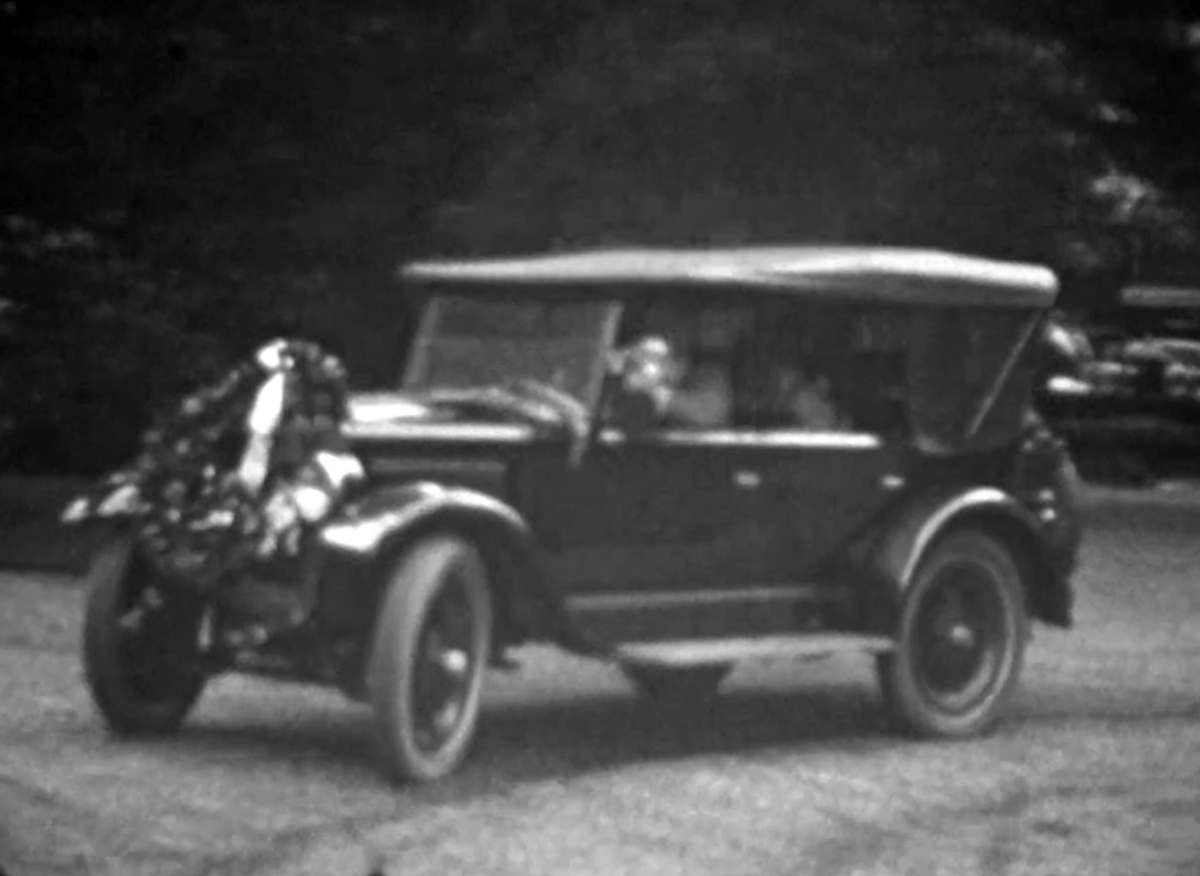
The reel we describe this week is marked “Auto Tour – 1927”, which at least partly indicates what it is about. It also starts on a very “motoring” note, showing a car sporting a laurel – presumably after winning an event.
The car that won seems to be a Ford Model T Touring. The Touring was one of the most popular and iconic Model T variants throughout its production run, which stretched from 1908 to 1927. The car had a top speed of roughly 45 mph. The second car looks like a 1926 Chevrolet Superior.
 |
|
The car that won the race seems to be a Ford Model T Touring. |
Searches for motor-sporting events in the Netherlands in the 1920s reveal very little information. Such competitions were rare and often logistically challenging due to the use of public roads. The only notable reference we could find is to a 24-hour regularity race in 1927, organised by the KNAC (Koninklijke Nederlandsche Automobiel Club) in September 1927. This event took place on a closed course, using public roads in the province of Limburg, specifically following the route Horn–Baexem–Kelpen–Grathem–Horn.
The event was structured as a regularity or reliability trial, meaning the focus was not on outright speed but on maintaining consistent performance and demonstrating the durability and reliability of the vehicles over a full 24-hour period.
From the footage of the driver being carried around, it is clear that he had won an important event. There is a bit of a discrepancy, in that a note on the film reel states that it was taken between July and August 1927, whereas the race took place in September 1927. It is possible that someone had the wrong date, or that there was another race.
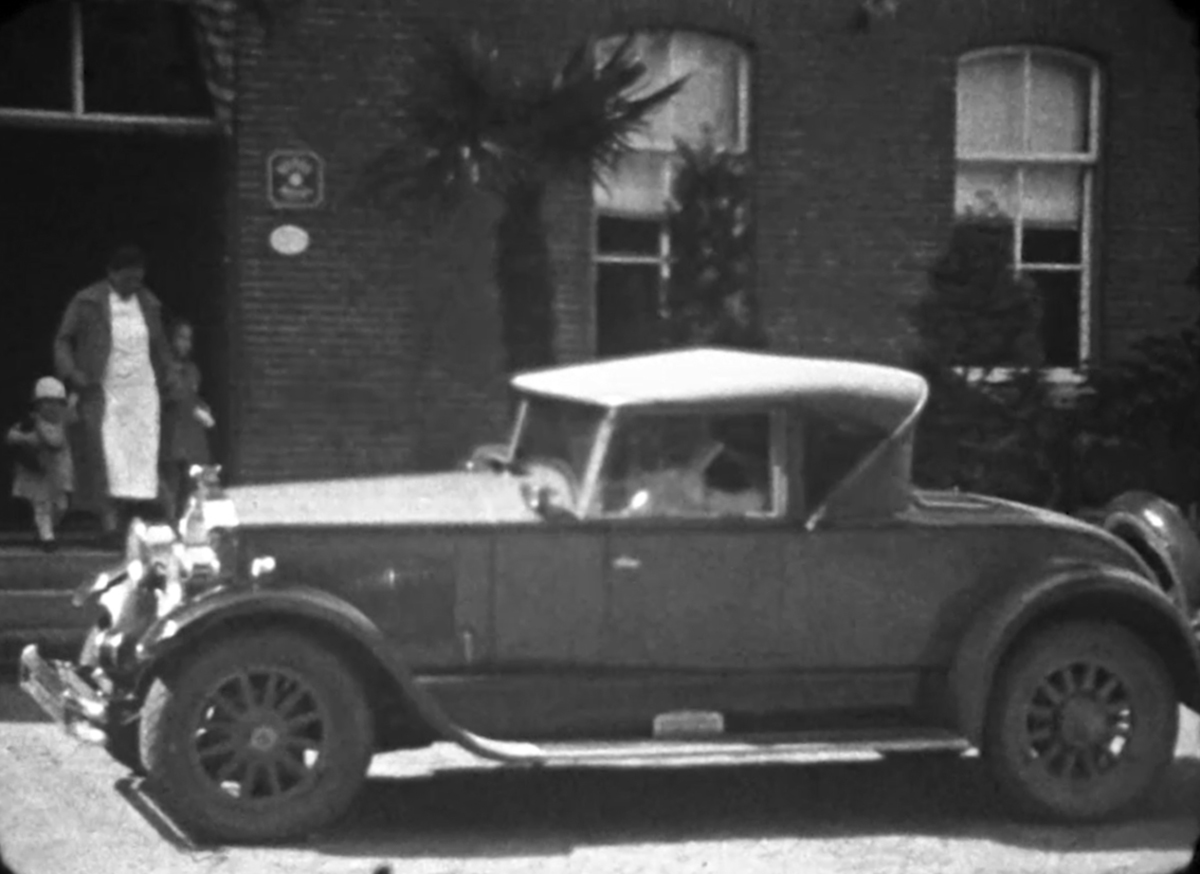
From 01:15, the group starts the tour and is joined by several other vehicles. It is difficult to identify all the cars, but it looks like a Mathis TY, and there is footage of what appears to be a 1926 Willys-Knight Model 66 with dickey seat at around 02:10. Without expert knowledge, it is very difficult to identify all the cars.
 |
|
One of the cars they travelled with looks like a 1926 Willys-Knight Model 66 |
At the 03:20 mark, the group members are waiting at what seems to be a hotel, restaurant or even a train station. The era of silent movies produces its comical moments, as they jump around, either dancing to a tune or waiting for the toilet to become available.
At 05:22, the group embarks on a boat ride along a canal. We reached out to Erwin Boonstra, Assistant Information Specialist at the Historisch Centrum Leeuwarden, to help identify some of the places. He reckoned that the footage of the waterways might have been filmed in the village of Giethoorn.
Giethoorn is often referred to as the “City with no roads”, or the Dutch Venice, due to its extensive network of canals and 176 wooden bridges connecting small islands with historic thatched-roof farmhouses. Giethoorn is unique in that its village centre has no roads for cars, and transportation is primarily by boat, bicycle or on foot. The village's lakes and canals were formed by peat digging. It is located about 85 minutes by car from Amsterdam and is part of the municipality of Steenwijkerland.
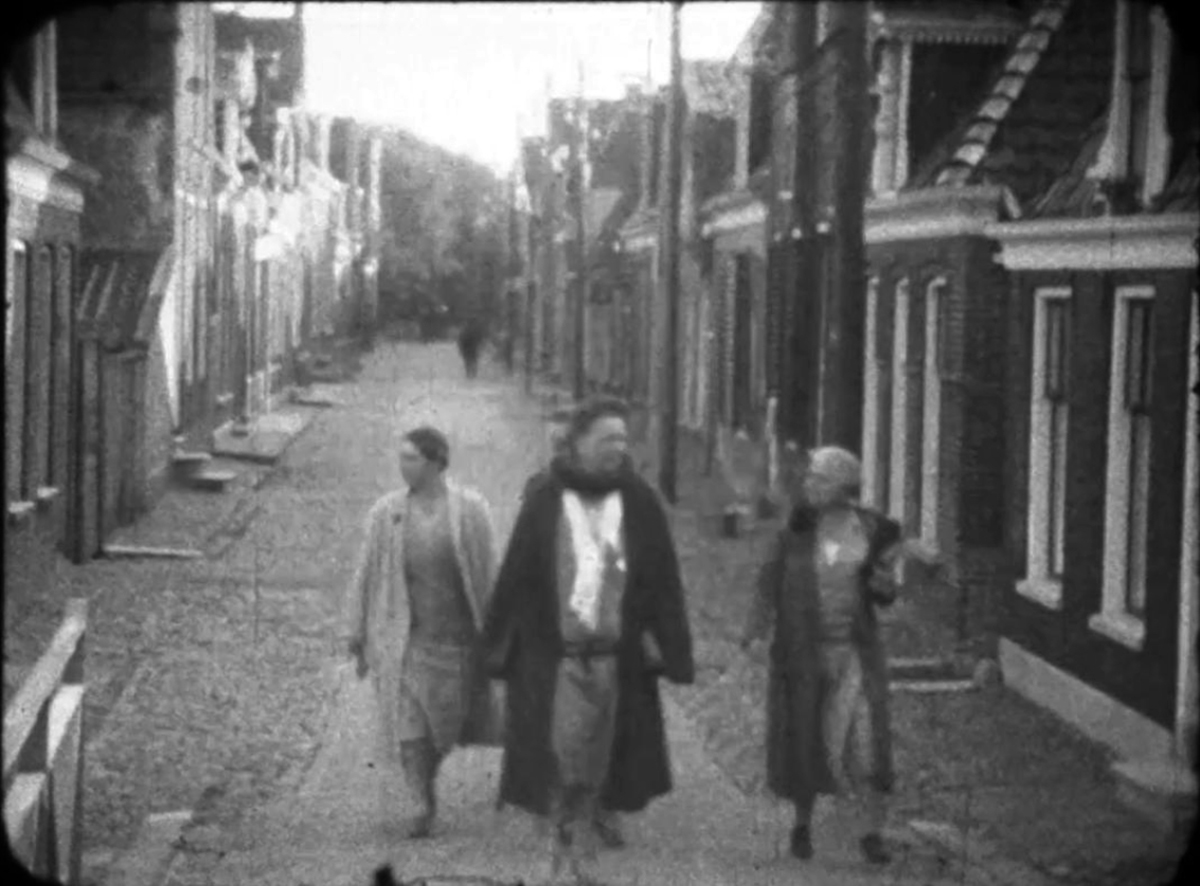
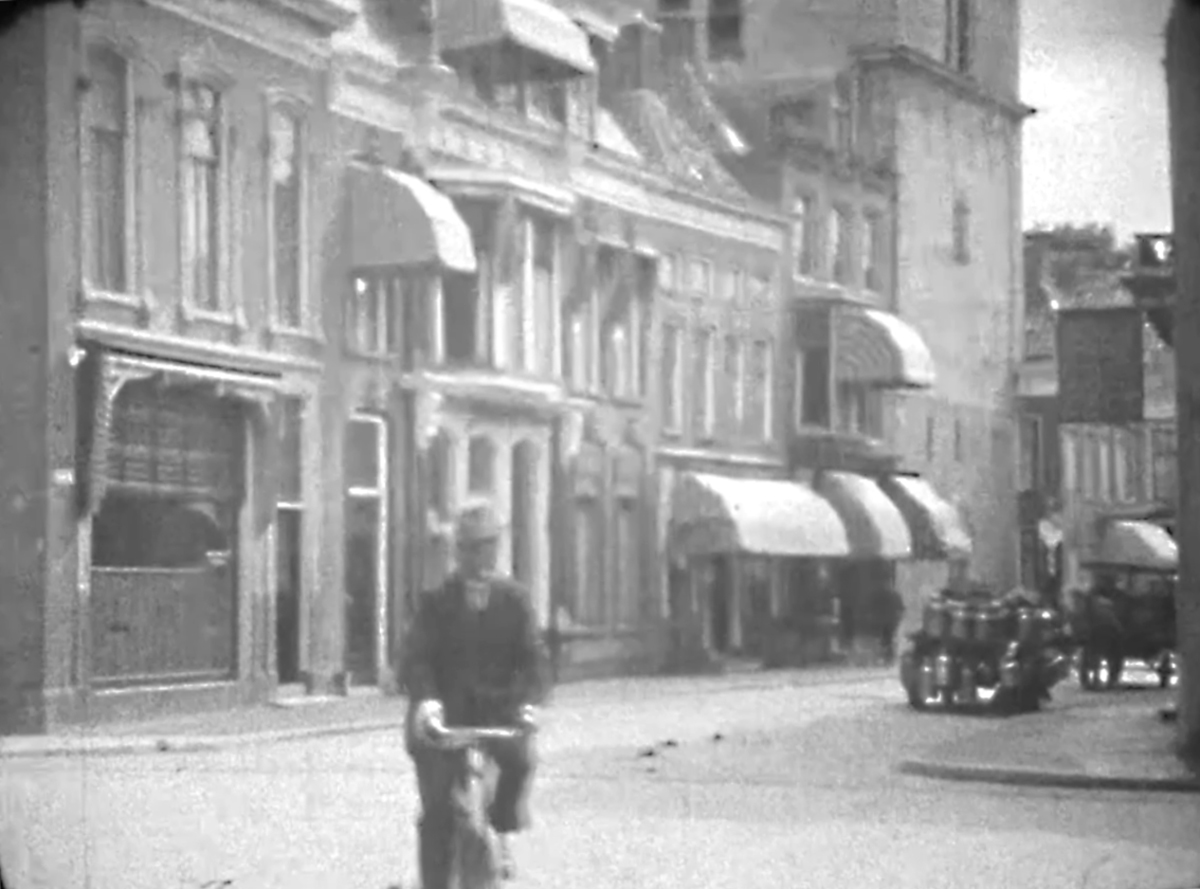
In the footage from 07:30 to 08:30, the town of Hindeloopen can be seen. This is another old picturesque city in the north of the Netherlands on the Ijsselmeer. It is famous because of the Hindeloopen art and hindeloopen costume. It is one of the 11 cities of Friesland.
 |
|
A street scene at what appears to be the town of Hindeloopen. |
At 09:07, the group visits the castle Menkemaborg in the village of Uithuizen (province of Groningen). Interestingly, it was restored and opened to the public as a museum in 1927, roughly the same time as Van den Berg’s visit.
Menkemaborg is an originally 14th-century brick-built house, which was dramatically altered around 1700 but has since been barely changed. The Alberda family, the 18th-century occupants, commissioned artists to decorate the interior with impressive chimney-pieces carved with baroque ornaments and paintings of mythological scenes. A four-poster bed, draped with yellow silk damask from China, has also been preserved.
The lovely gardens can be seen from 09:30. The gardens were reconstructed after the surviving garden design dating from around 1705, and are marked by a clear layout with symmetrical patterns of clipped-box enclosing beds of 18th-century flowering and ornamental plants. The natural sundial garden can be seen at around 10:00.
At 11:12, the historic Hotel B Dommering in Winschoten can be seen. The hotel, built in 1899, was a significant establishment, and hosted the first cinema in the area. The theatre was originally intended for stage plays, but by 1911 it became the first cinema where films were screened. The establishment was owned by Bé Dommering, who also owned Hotel Wisseman. Unfortunately, the building was destroyed by a fire in August 1967.
 |
|
Hotel B Dommering in Winschoten. The building was destroyed by a fire in August 1967. |
Next up, at 11:35, is Kasteel Weldam, located in Overijssel, Netherlands. The castle dates back to 1389 when it was first mentioned as the property of Wolder van den Weldamme, a vassal of the Bishop of Utrecht. The castle fell into disrepair in the 18th and 19th centuries, but in 1879 the property was acquired by Maria, the barones van Heeckeren van Wassenaer, and her husband Wilhelm Graf von Bentinck und Waldeck-Limpurg. They gave the castle its current appearance, adding two large corner towers designed by English architect Weatherley. The gardens were redesigned by French landscape architect Édouard André, resulting in a late 19th-century reconstruction of a 17th-century baroque garden style called style mixte. The estate remains in the family of their descendants today.
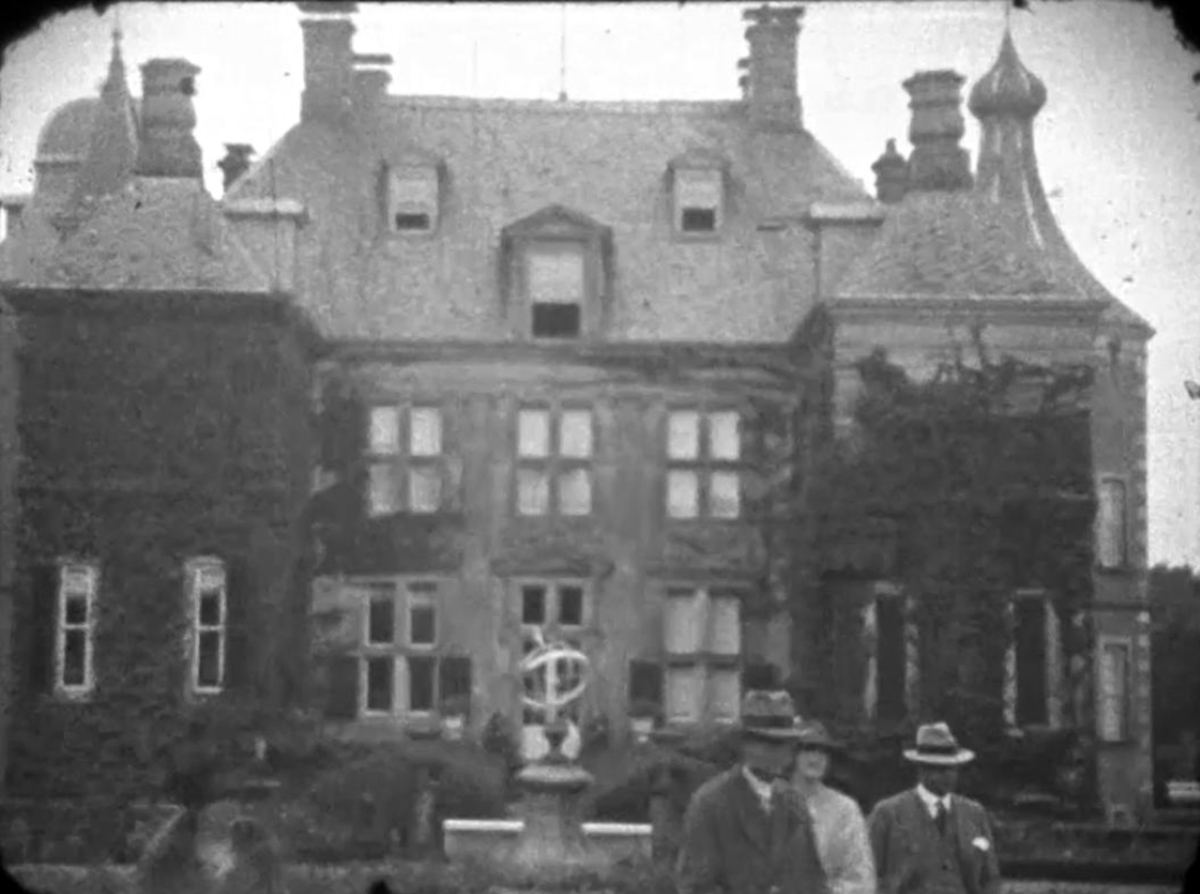 |
| The Kasteel Weldam, located in Overijssel, Netherlands. The castle dates back to 1389. |
The estate is one of the largest in the eastern Netherlands, surrounded by woodlands, avenues and formal gardens open to the public for visits.
From 13:22, the travellers hit the road again, but it is not clear what place they visited next. There are, unfortunately, too few distinguishing features to enable us to identify the buildings.
From 15:00, the group members are relaxing, engaging in various sporting activities. It starts with tennis, then moves on to ring tennis (Tennikoit), followed by another mixed doubles tennis match.
The film ends showing people relaxing in gardens, playing with dogs and even knitting. The clothing of both the men and women is stylish and very different from what people wear today.
Next week, we will discuss what we have found on the second “Auto Tour” reel (watch below). This one was filmed a year later, in 1928, and covers exotic tourist destinations in places such as Switzerland. You can assist us by watching the video and sending us your comments. It is quite fun to try to identify the places, especially using the online tools available today.
Viewed: 2007

Anton van Zyl
Anton van Zyl has been with the Zoutpansberger and Limpopo Mirror since 1990. He graduated from the Rand Afrikaans University (now University of Johannesburg) and obtained a BA Communications degree. He is a founder member of the Association of Independent Publishers.
Most Read Articles
Sponsored Content
Recent Headlines