

ADVERTISEMENT:

Search for a story:
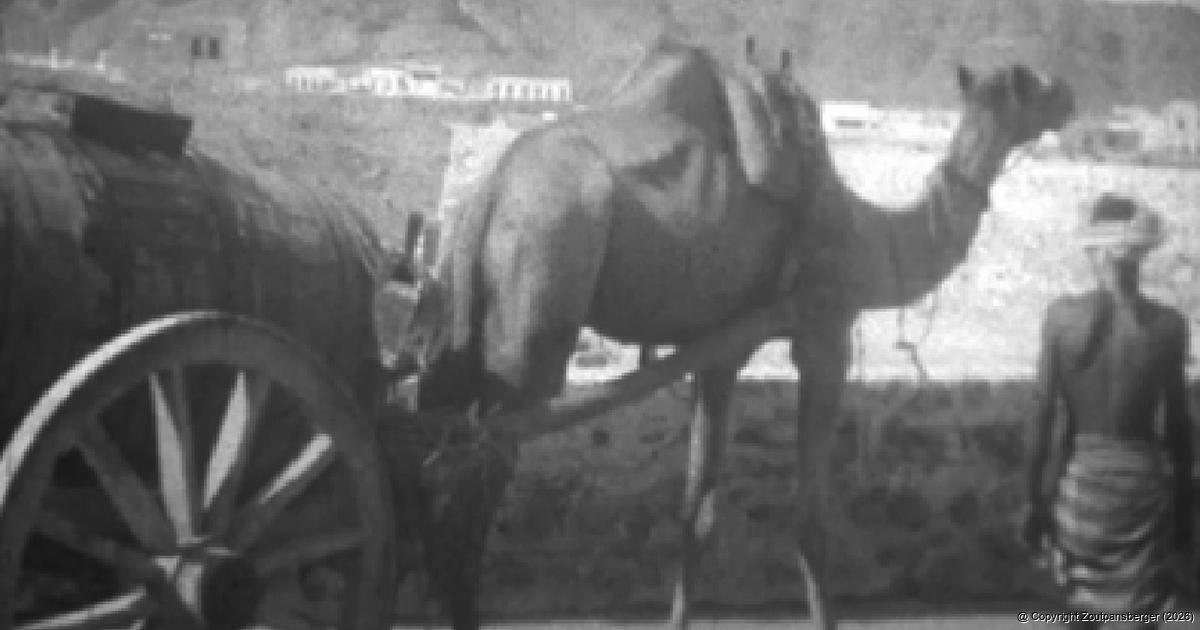
Last week, we concluded our journey with Oom Willem's leaving the Kenyan coast. This week, we pick up his spoor as the group reaches Aden (present-day Yemen). An early clue comes in the form of some unique street scenes — and, of course, the camels.
WATCH: Aden, the Suez Canal and Egypt next on Oom Willem's itinerary
Date: 14 June 2025 By: Andries van Zyl
We continue our tour with Oom Willem van den Berg this week, as the tour party makes its way past the Horn of Africa to Aden, and from there through the Suez Canal. Once again, Oom Willem’s nearly 100-year-old 16mm film offers a rare and fascinating glimpse into everyday life at the time as well as remarkable geographical scenery and places of interest in die 1920s.
Last week, we concluded our journey with Oom Willem’s leaving the Kenyan coast. This week, we pick up his spoor as the group reaches Aden (present-day Yemen). An early clue comes in the form of some unique street scenes — and, of course, the camels.
The first clear confirmation of their location appears at the 0:00:17 time stamp. The scene shows the Aden Cisterns (Tawila Tanks), a unique architectural masterpiece carved into the rock as vast reservoirs for storing rainwater. An engineering marvel dating back as far as the first century BCE, the site is today, sadly, under threat of ruin.
At the 0:00:49 time stamp, viewers catch a glimpse of the Aden Crater, a dormant shield volcano that forms a key part of the city’s landscape and history. Aden has long been a crucial port city because of its position on the Gulf of Aden, acting as a gateway between the Red Sea and the Arabian Sea. This strategic location made it a vital maritime hub connecting Africa, Asia, and the Middle East. During the British colonial period — especially after being declared a free trade port in 1850 — Aden became a major entrepôt for goods travelling between Europe, India, Africa and the Arabian interior. By the early 20th century (including the 1920s), Aden was described as "the chief emporium of Arabian trade", importing goods from Africa, Europe, the United States and India, and supplying the needs of the Arabian interior and smaller ports.
It is clear that our group of travellers spent some time in Aden, not only enjoying the various tourist sites but also connecting with the region’s people. There are several historic street scenes of vendors and locals going about their everyday lives in this arid region.
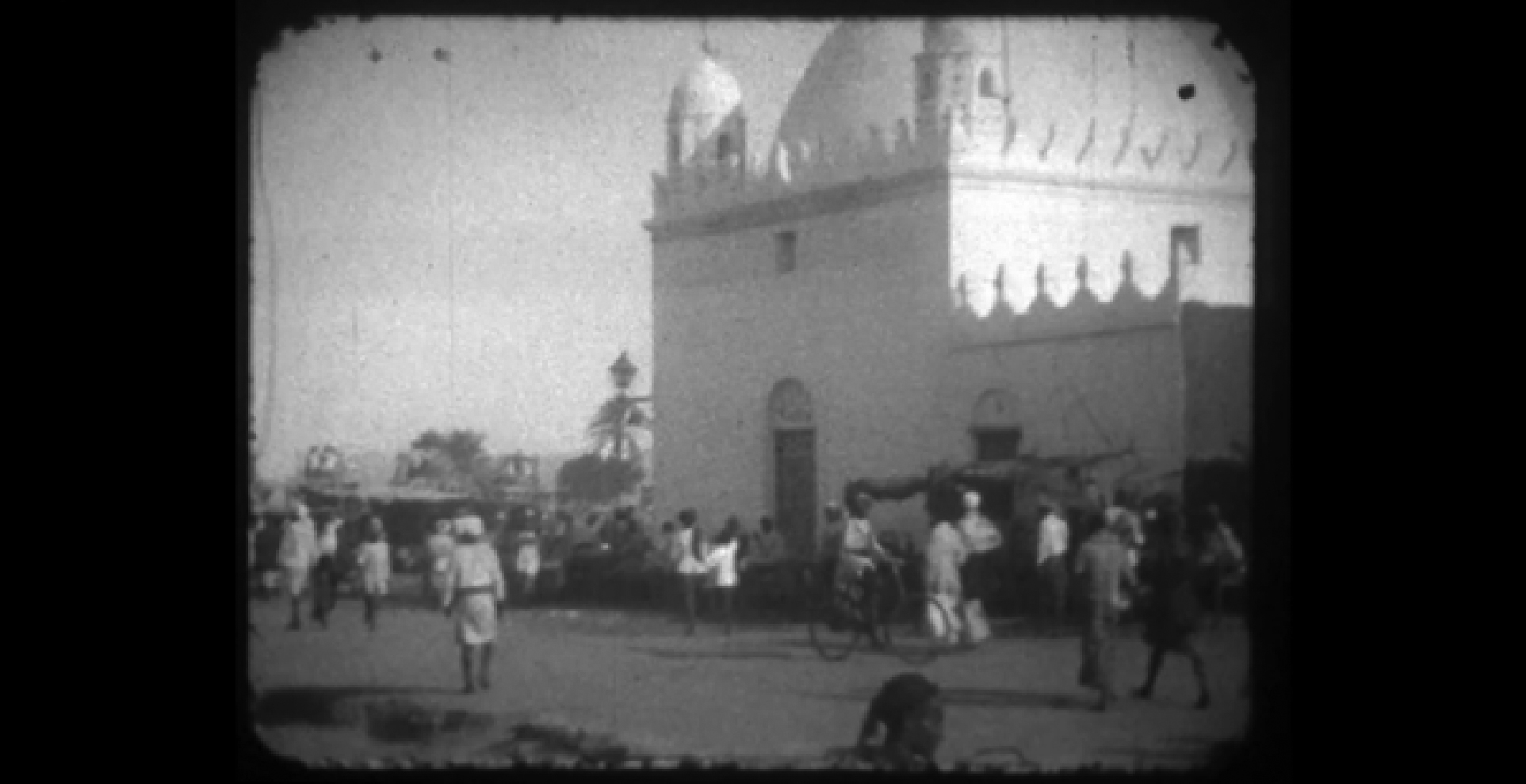
A visit is also made to the Mosque of Abu Bakr al-‘Aydarus — or Aidrus Mosque (0:02:27). One of the principal mosques in Aden, it is named after Abu Bakr al-Aydarus, the wali (saint) of Aden. Originally built in the late 15th or early 16th century, the mosque was rebuilt after being destroyed in 1859.
 |
|
The Mosque of Abu Bakr al-‘Aydarus. One of the principal mosques in Aden, it is named after Abu Bakr al-Aydarus, the wali (saint) of Aden. Originally built in the late 15th or early 16th century, the mosque was rebuilt after being destroyed in 1859. |
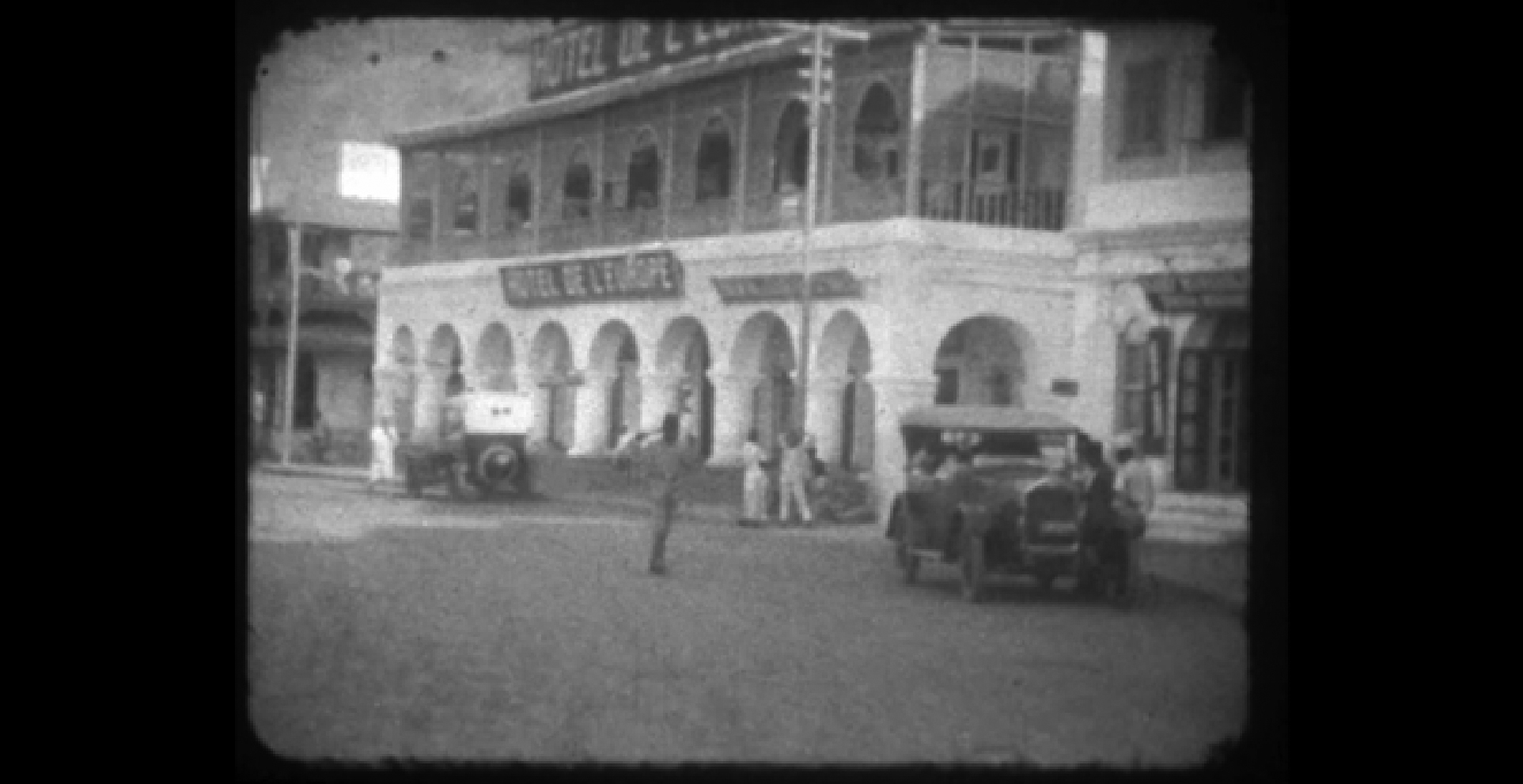
The Aden Museum in Crater (0:03:05) was also visited, along with the Hotel Europe Partie (0:03:18). Located at Steamer Point, the hotel was a prominent landmark during the British colonial period, serving travellers and expatriates in this strategic colony — which remained under British control for 129 years after being seized in 1839.
 |
|
Located at Steamer Point, Hotel Europe Partie was a prominent landmark during the British colonial period, serving travellers and expatriates in this strategic colony — which remained under British control for 129 years after being seized in 1839. |
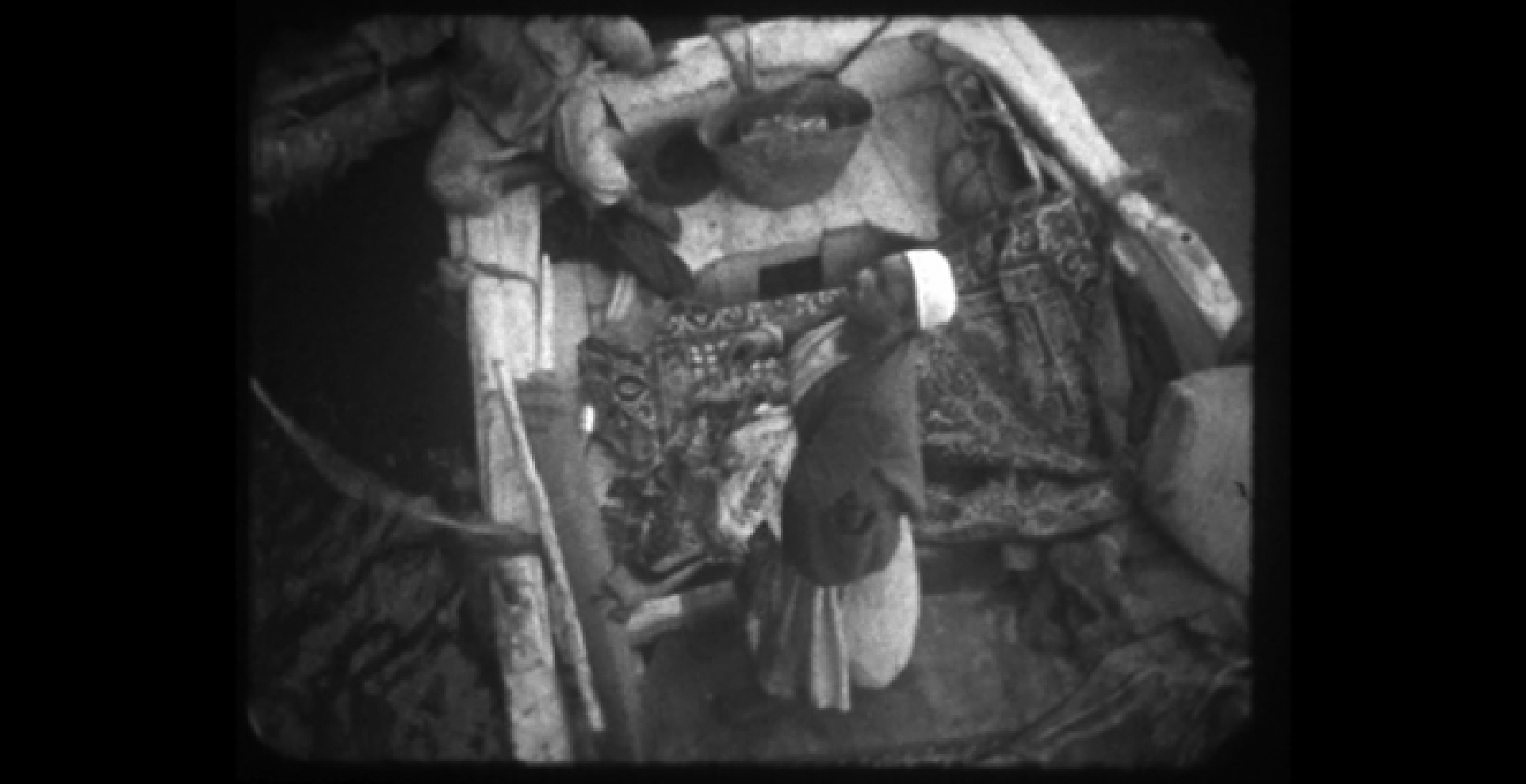
Oom Willem and his companions then find themselves back aboard the ferry. From about the 0:05:06 to 0:06:05 time stamps, they are seen trading with seafaring hawkers who have anchored alongside their vessel — a common scene at the time. Aden, by the early 20th century, was indeed a bustling trade hub. It was particularly known for exporting coffee, frankincense, salt, wheat, barley, and millet. It also served as a redistribution centre for imported goods such as textiles and luxury items. Silk and carpets — prized for their craftsmanship and status — feature prominently in the film.
 |
|
Hawkers are seen anchored alongside Oom Willem’s vessel — a common scene at the time. Aden was particularly known for exporting coffee, frankincense, salt, wheat, barley, and millet, but also served as a redistribution centre for imported silk and carpets featuring prominently in the film. |
Our travellers then head further north, with the scenery confirming they passed through the Suez Canal and made landfall — by all indications — at Port Said, Egypt. A clue to this is a clip showing the Port Said commercial area. Editing techniques in the 1920s were not quite what they are today, and the footage jumps a bit between locations. It shows the Alexandria Port Authority building at the 0:06:53 mark, then cuts back to the historic Steamer Point Customs House (also known as the Aden Port Authority or Customs House) at 0:07:09, before returning to Port Said.
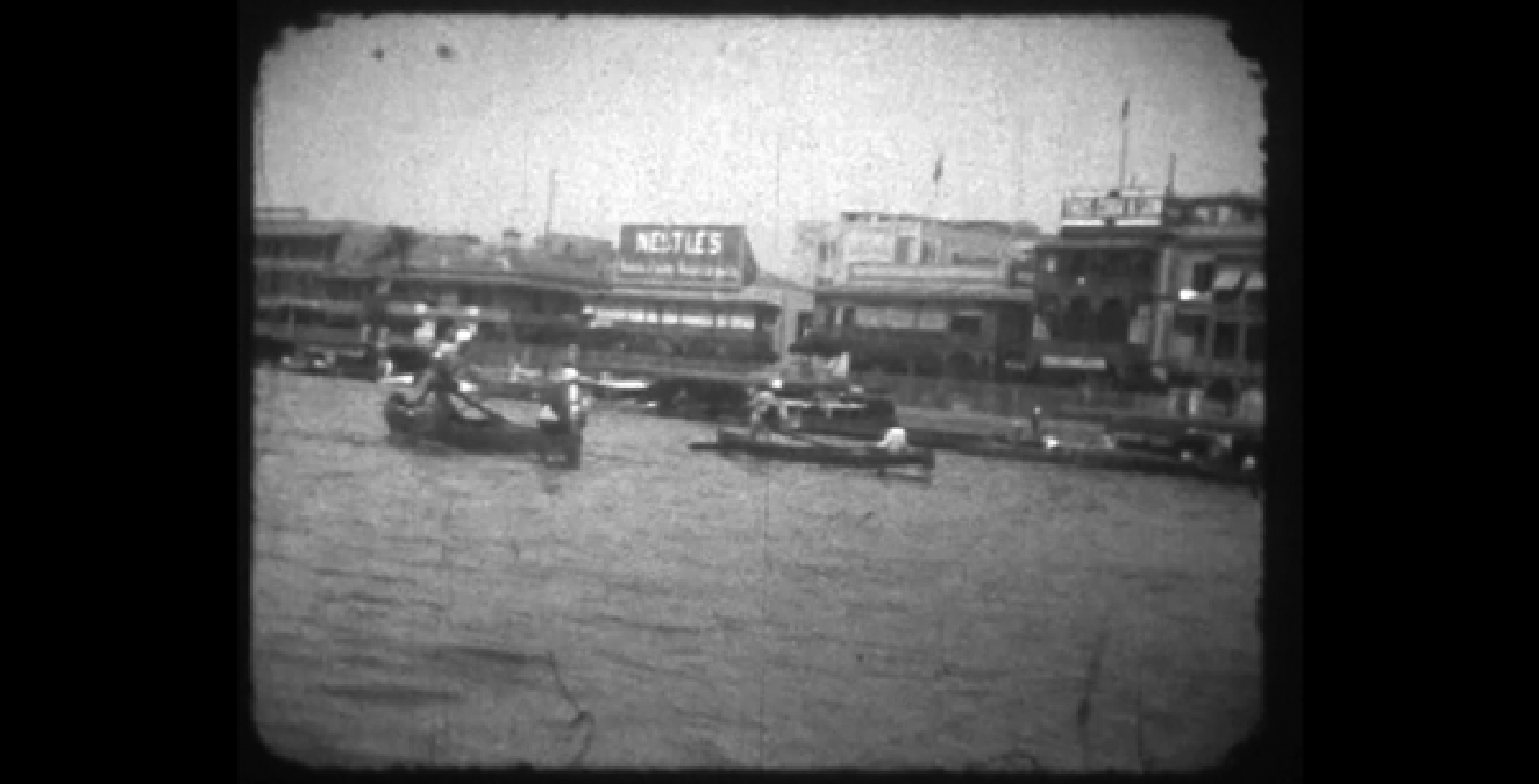
The film segment featuring the Port Said commercial area shows a "Nestlé" sign (0:07:44) on one of the buildings. These structures exhibit the characteristic colonial architecture of Port Said from the 1920s to 1930s, with multi-storey buildings featuring balconies — typical of the European quarter. By the late 1920s, Port Said was a thriving international port with more than 100,000 residents and a multinational business community. Nestlé had by then established distribution networks in Egypt, including Port Said.
 |
|
By the late 1920s, Port Said was a thriving international port with over 100,000 residents and a multinational business community. Nestlé had by then established distribution networks in Egypt, including Port Said. |
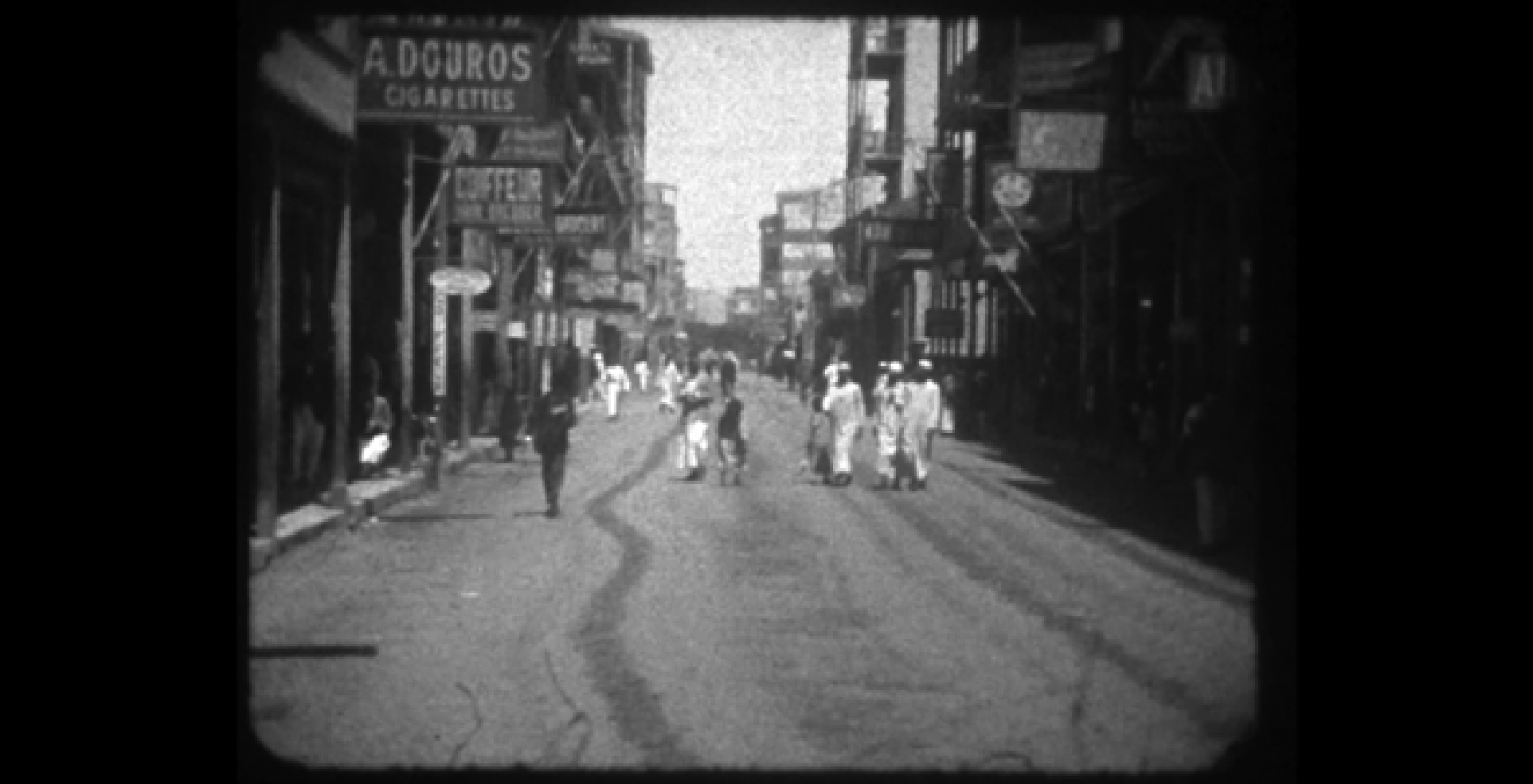
Another scene (0:08:04) captures the spirit of 1920s Port Said — a bustling street view featuring signage in French ("COIFFEUR" for barber) and English ("CIGARETTES"), and a mixture of people in both colonial-era European and local attire. The most prominent sign reads "A. DOUROS CIGARETTES", with several other French-language signs visible. "A. DOUROS" was a well-known Greek-Egyptian cigarette manufacturer based in Port Said and famous during the interwar years.
 |
|
Another scene captures the spirit of 1920s Port Said — a bustling street view featuring signage in French (COIFFEUR for barber) and English (CIGARETTES), and a mixture of people in both colonial-era European and local attire. |
At the 0:08:54 mark, Oom Willem films the statue of Ferdinand de Lesseps (visible just right of the boat), which once stood at the entrance to Port Said harbour. De Lesseps was the French engineer who oversaw the construction of the Suez Canal. The statue, erected in 1899, stood on a prominent pedestal on the western jetty. It was removed in 1956 during the Suez Crisis.
Oom Willem then sets sail once more. From the 08:57 to 12:45 time stamp, our travellers are seen on an extended sea voyage. The film provides a rare and fascinating glimpse into everyday life aboard a 1920s cruise. It depicts families and friends — parents with their children — enjoying various onboard activities. The clothing and general attire reflect the charm of that bygone era. The atmosphere is relaxed and cheerful.
Their next point of interest appears to be the town of Philippeville, Algeria — today known as Skikda — as viewed from the sea (0:13:08). The town lies on the Mediterranean coast of North Africa.
The timeline then becomes somewhat muddled again, with the travellers suddenly appearing to be on a train journey somewhere in Europe. We’ll be doing some digging to determine exactly where they are and where they’re heading next. Be sure to watch our next uploaded film for more clues:
Viewed: 3293

Andries van Zyl
Andries joined the Zoutpansberger and Limpopo Mirror in April 1993 as a darkroom assistant. Within a couple of months he moved over to the production side of the newspaper and eventually doubled as a reporter. In 1995 he left the newspaper group and travelled overseas for a couple of months. In 1996, Andries rejoined the Zoutpansberger as a reporter. In August 2002, he was appointed as News Editor of the Zoutpansberger, a position he holds until today.
Most Read Articles
Sponsored Content
Recent Headlines