

ADVERTISEMENT:

Search for a story:
Tracing Oom Willem’s footsteps up the East African coast
Date: 31 May 2025 By: Andries van Zyl
Last week, we set off with Oom Willem van den Berg from Levubu on his now almost 100-year-old journey up the east coast of Africa. Back then, the adventurous Oom Willem captured his travels on 16 mm film – one of the few people in the country able to do so at the time. We have since digitised his “home movies”, and, in the absence of sound and subtitles, we are trying to retrace his steps.
Did you have time to watch the first home movie of Oom Willem’s travels on our website? Did you spot any landmarks? If not, let us pick up the trail.
Watch the first movie below:
Our first movie reel starts at a dusty rural train station. With no distinguishing landmarks, however, it was difficult to determine exactly where this was. At the 54-second mark, another train station appears which, according to an image search on the Internet, was most probably the old Johannesburg Park Station, dating from the late 1920s or early 1930s. Johannesburg Park Station underwent significant expansion during this era. By the late 1920s, the original station had become too small, and a new, much larger station was constructed. The foundation stone for the new station was laid in December 1928, and the new concourse and platforms opened in 1932.
 |
|
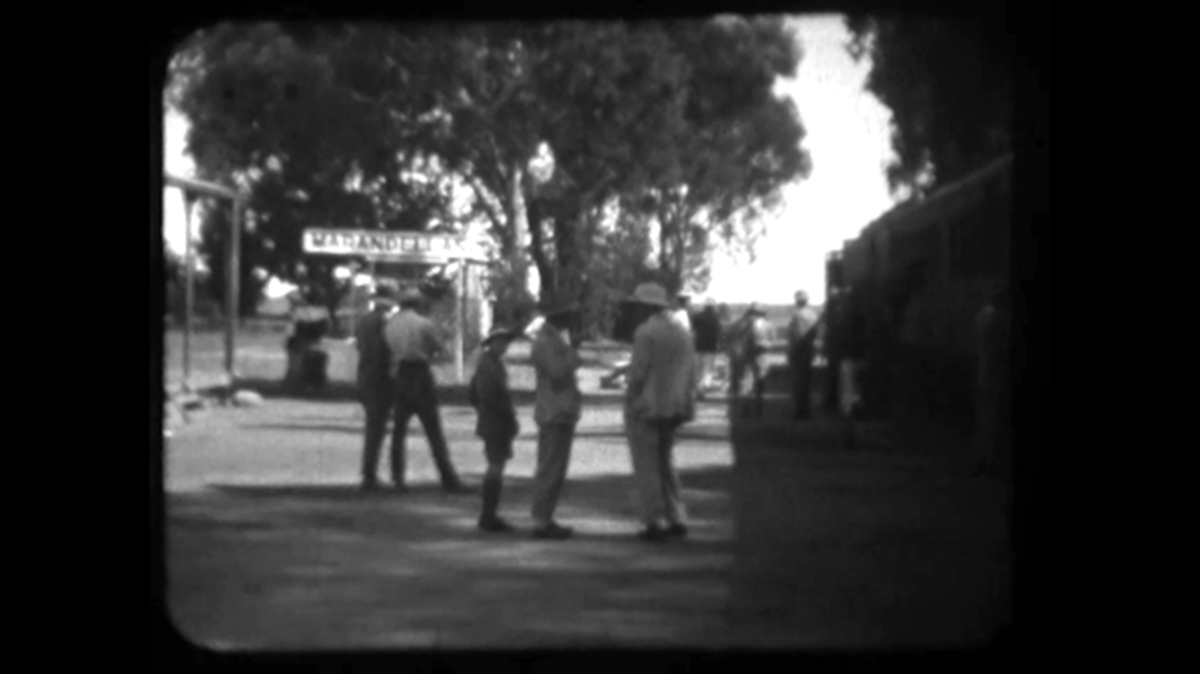
Oom Willem and friends clearly crossed into what was then Rhodesia by rail. A clue to this is a stopover at the Marandellas train station (timestamp 0:01:51). The station was at the centre of a fairly large white farming area, about 65 km south-east of Salisbury (Harare). |
From there, Oom Willem and friends head north, clearly crossing into what was then Rhodesia by rail. A clue to this is a stopover at the Marandellas train station (timestamp 0:01:51). The station was at the centre of a fairly large white farming area, about 65 km south-east of Salisbury (Harare). The town developed around the railway station, both as an administrative centre (native commissioner, police, post office) and as a commercial hub. In the 1950s and 1960s, it grew from being a village serving the white farmers – who made a living mainly from tobacco farming and cattle ranching – into a small town manufacturing goods. An influx of labour during this time led to the establishment of a new and, on the whole, well-provisioned, township for the workers at Dombo Tombo. (Source: A Small Town in Crisis: Marandellas, Zimbabwe by Richard Hodder-Williams, 1983)
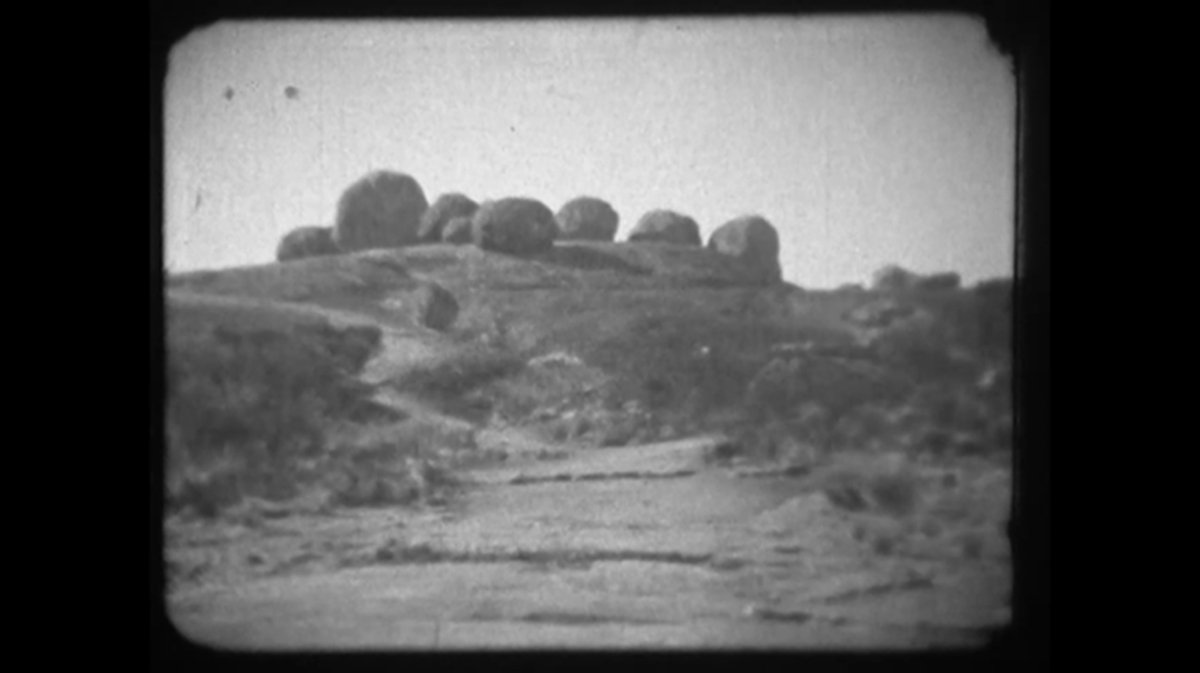
Arguably, the next place of interest visited is also one of Zimbabwe’s most iconic geological formations – the unique boulder rock formations at the Matopos Hills near Bulawayo (0:01:13). Also known as “World's View" or "View of the World," this prominent feature sits atop a rocky outcrop and was a favourite spot of Cecil John Rhodes’s, who later chose it as his final resting place. The area is sacred to the Ndebele people, who call it Malindidzimu, or “the hill of spirits”. The Matopos Hills, including World’s View, were designated a UNESCO World Heritage Site in 2003.
 |
|
Zimbabwe’s most iconic boulder rock formations at the Matopos Hills near Bulawayo. Also known as “World's View" or "View of the World," this prominent feature sits atop a rocky outcrop and was a favourite spot of Cecil John Rhodes's, who later chose it as his final resting place. |
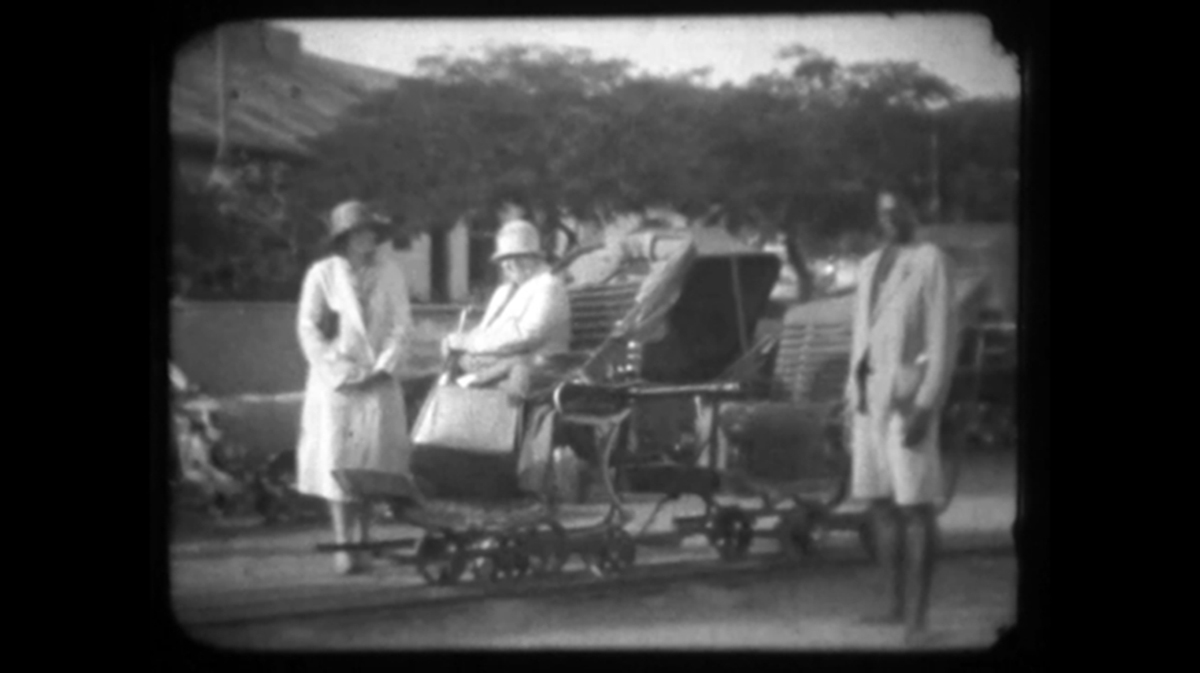
The Van den Berg tour party then made their way east, crossing into Mozambique. Oom Willem’s female companions can be seen riding on a passenger rail cart (0:02:17) – or “push-push” – a type of human-powered rail cart used for short-distance passenger transport, particularly in colonial Africa in the early 20th century. Mozambique, especially around Lourenço Marques (now Maputo), was known for these passenger rail carts in the 1920s and 1930s.
 |
|
The Van den Berg tour party then made their way east, crossing into Mozambique. Oom Willem’s female companions can be seen riding on a passenger rail cart – or “push-push” – a type of human-powered rail cart used for short-distance passenger transport, particularly in colonial Africa in the early 20th century. |
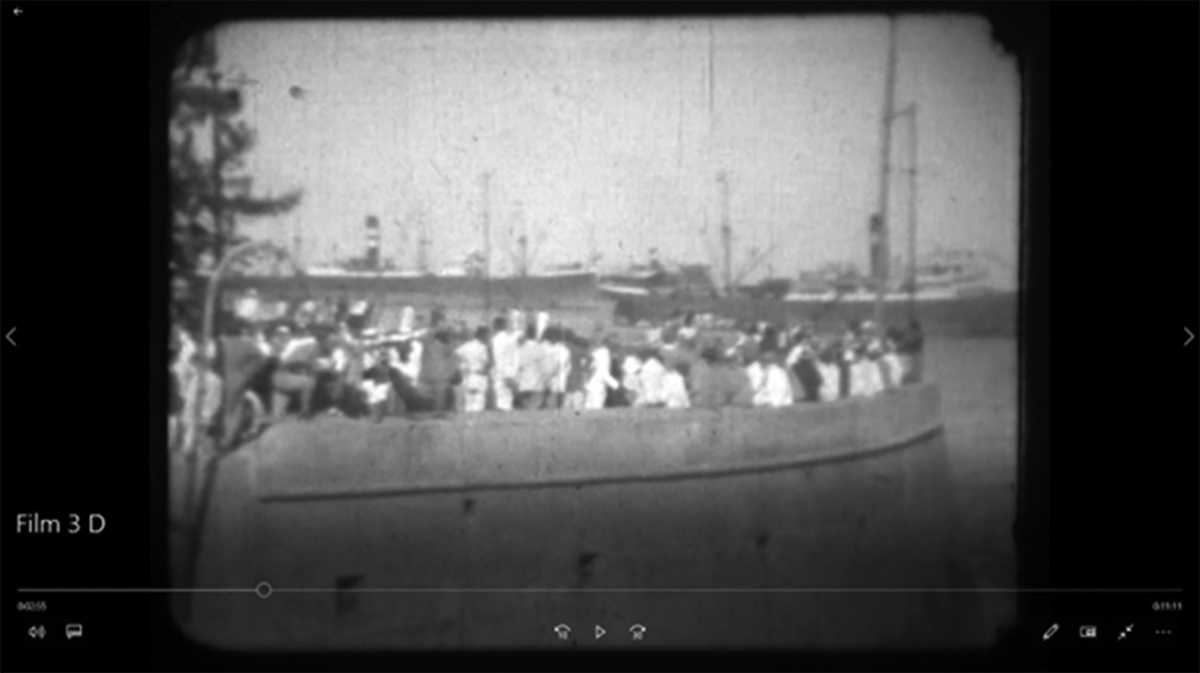
Another clue that the travellers found themselves in Lourenço Marques is the harbour scenes and accompanying military parade. Based on visual analysis of the footage and historical context, it is highly plausible that this scene (0:02:55) was filmed at the harbour of Lourenço Marques in the 1920s. The large crowd gathered on a concrete quay or pier aligns with historical photographs of the busy harbour during the colonial era. The attire of the people – light-coloured clothing and hats – matches the typical colonial dress of Portuguese East Africa at the time, as do the uniforms worn by the African troops.
 |
|
Other clues that the travellers found themselves in Lourenço Marques (now Maputo) are the harbour scenes and accompanying military parade. |
In Lourenço Marques, Oom Willem and company swapped rail for sea travel, and the group can be seen travelling up the East African coastline. Their next stopover is most certainly the Island of Mozambique (Ilha de Moçambique), a UNESCO World Heritage Site. In one clip (0:04:14), a pyramid-shaped gravestone is visible – a feature famously associated with the coast of northern Mozambique. The island, once a key Portuguese colonial outpost, contains several such monuments in its cemeteries and public spaces.
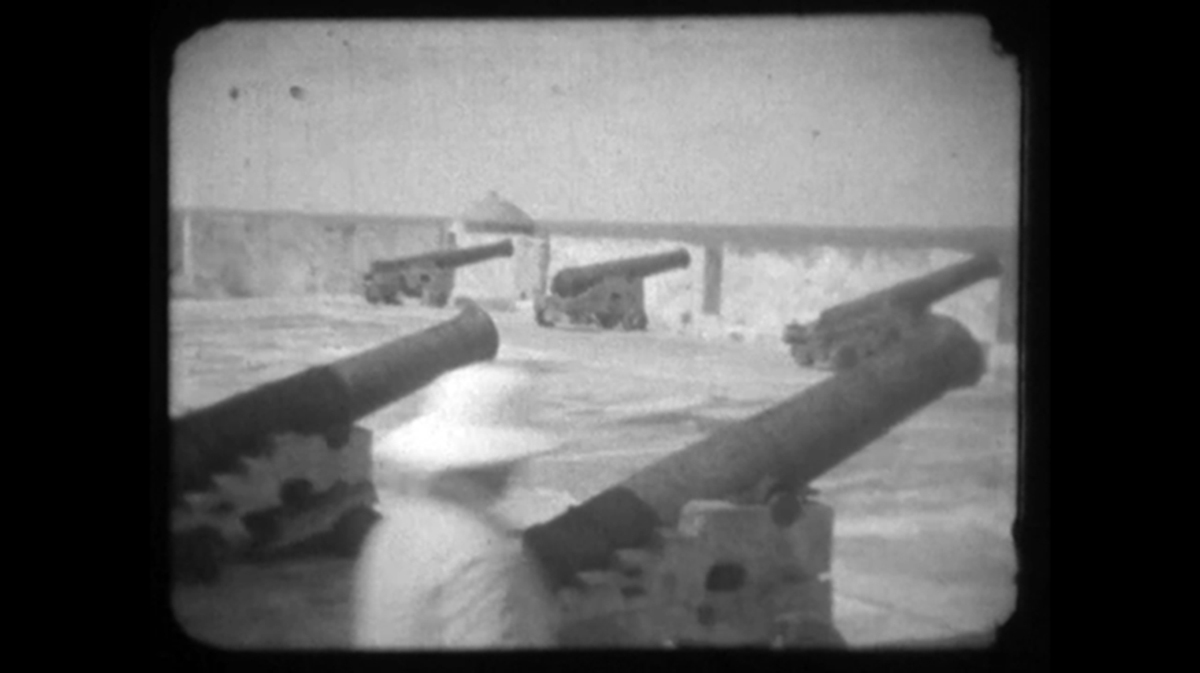
Further confirming that Oom Willem visited the Island of Mozambique is very clear footage (0:05:37–0:05:55) of, among other landmarks, the Fortaleza de São Sebastião (Fortress of Saint Sebastian). Built by the Portuguese in the mid-1500s, the fort was strategically important for protecting the harbour and Indian Ocean trade routes. Known for its cannons, stone ramparts, and prominent colonial buildings, it remained a significant administrative and military site under Portuguese control during the 1920s.
 |
|
Oom Willem and friends also paid a visit to Fortaleza de São Sebastião (Fortress of Saint Sebastian) on the Island of Mozambique. |
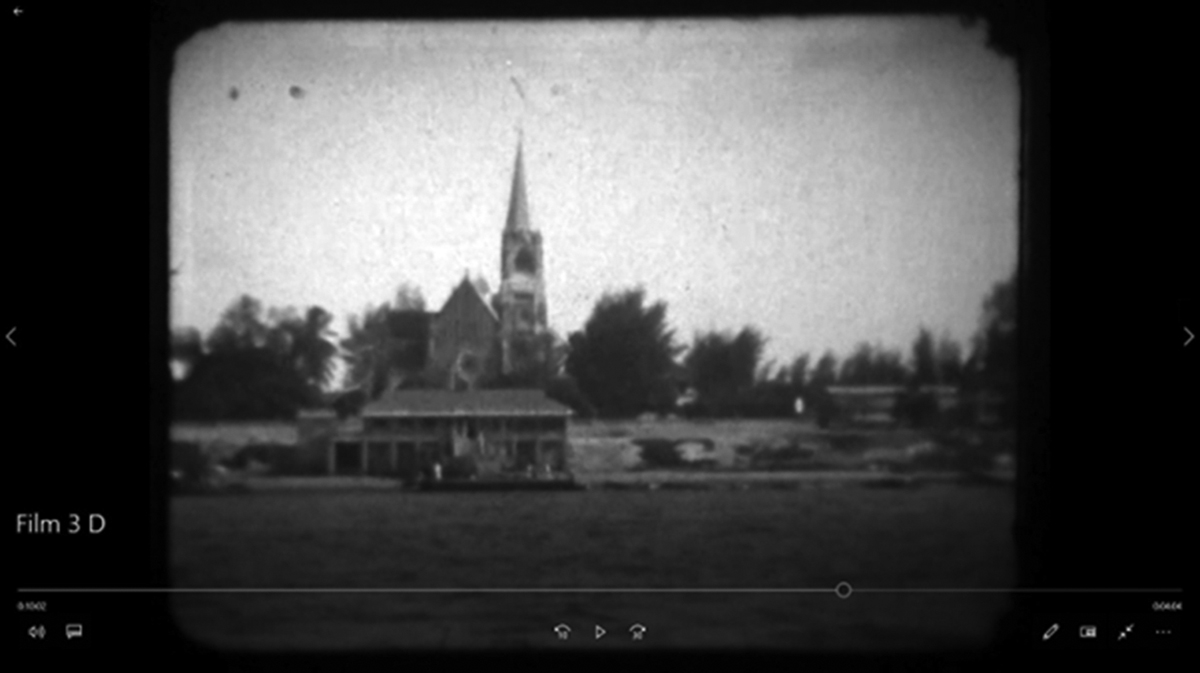
At the eight-minute mark, Oom Willem and friends have reached Dar es Salaam, Tanzania (then Tanganyika, under British administration). One of the first landmarks on screen is the historic Lutheran Church of Christ in Africa along the shoreline. The church, originally built by the Germans in the early 1900s and then known as the Evangelical Lutheran Church, is identifiable by its distinctive steeple and location along the old harbour. By the 1920s, Dar es Salaam had become a key coastal city under British rule, following the handover from German East Africa.
 |
|
At the eight-minute mark, Oom Willem and friends have reached Dar es Salaam, Tanzania (then Tanganyika, under British administration). One of the first landmarks on screen is the historic Lutheran Church of Christ in Africa along the shoreline. |
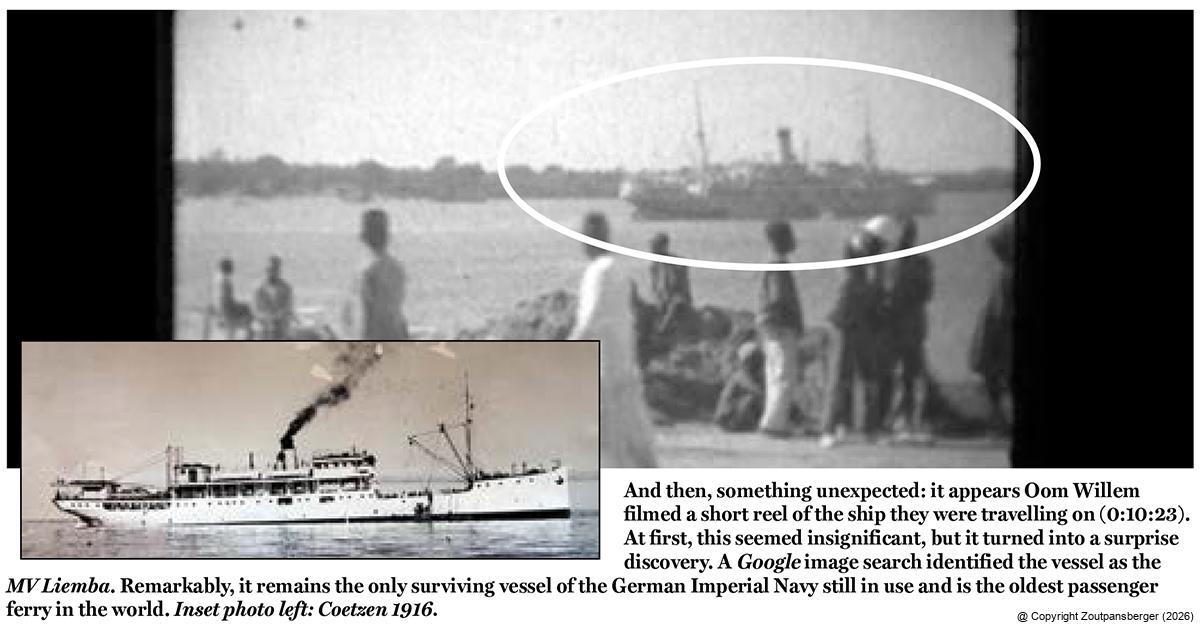
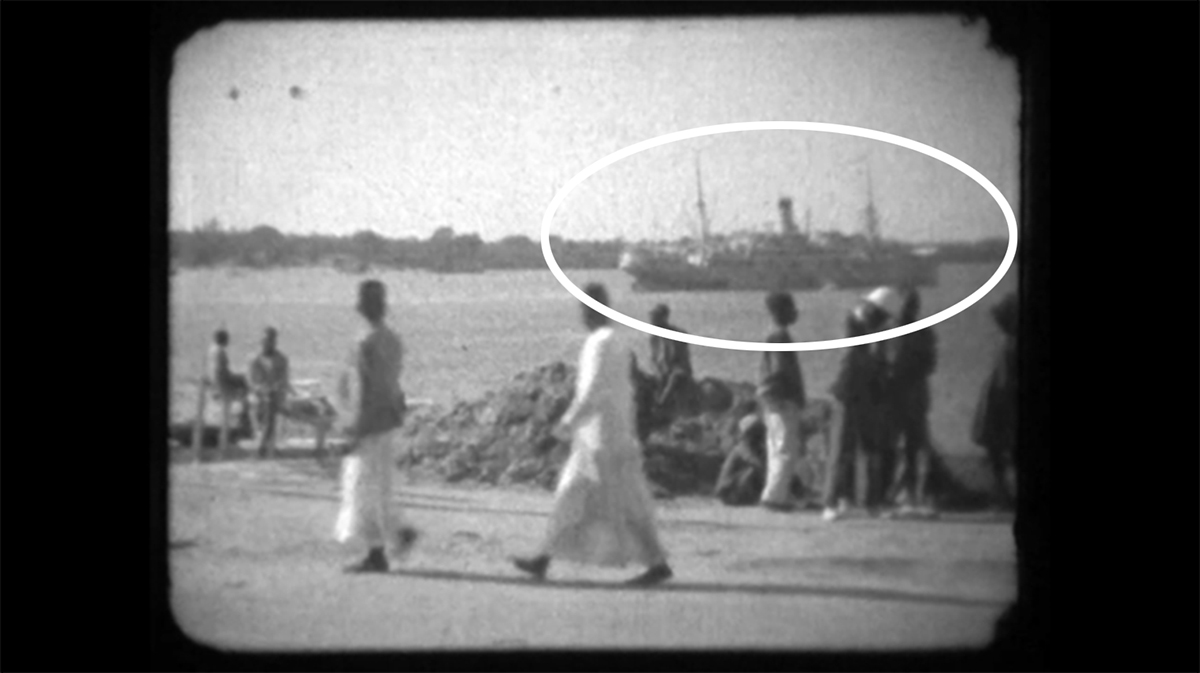
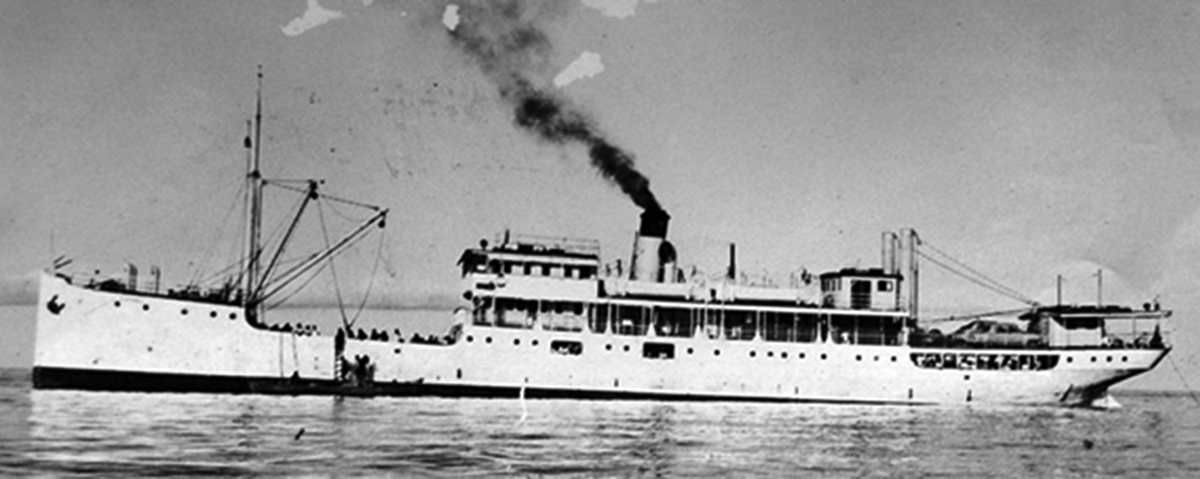
And then, something unexpected: it appears Oom Willem filmed a short reel of the ship they were travelling on (0:10:23). At first, this seemed insignificant, but it turned into a surprise discovery. A Google image search identified the vessel as the MV Liemba, formerly the Graf von Götzen – a passenger and cargo ferry that ran along the eastern shore of Lake Tanganyika. Built in 1913, the ship was scuttled in 1916, only to be salvaged and returned to service as a ferry in 1927. Remarkably, it remains the only surviving vessel of the German Imperial Navy still in use and is the oldest passenger ferry in the world.
 |
|
And then, something unexpected: it appears Oom Willem filmed a short reel of the ship they were travelling on (0:10:23). At first, this seemed insignificant, but it turned into a surprise discovery. A Google image search identified the vessel as the MV Liemba. |
 |
|
MV Liemba, formerly the Graf von Götzen, is a passenger and cargo ferry that runs along the eastern shore of Lake Tanganyika. Built in 1913, the ship was scuttled in 1916, only to be salvaged and returned to service as a ferry in 1927. Remarkably, it remains the only surviving vessel of the German Imperial Navy still in use and is the oldest passenger ferry in the world. Photo: Coetzen 1916. |
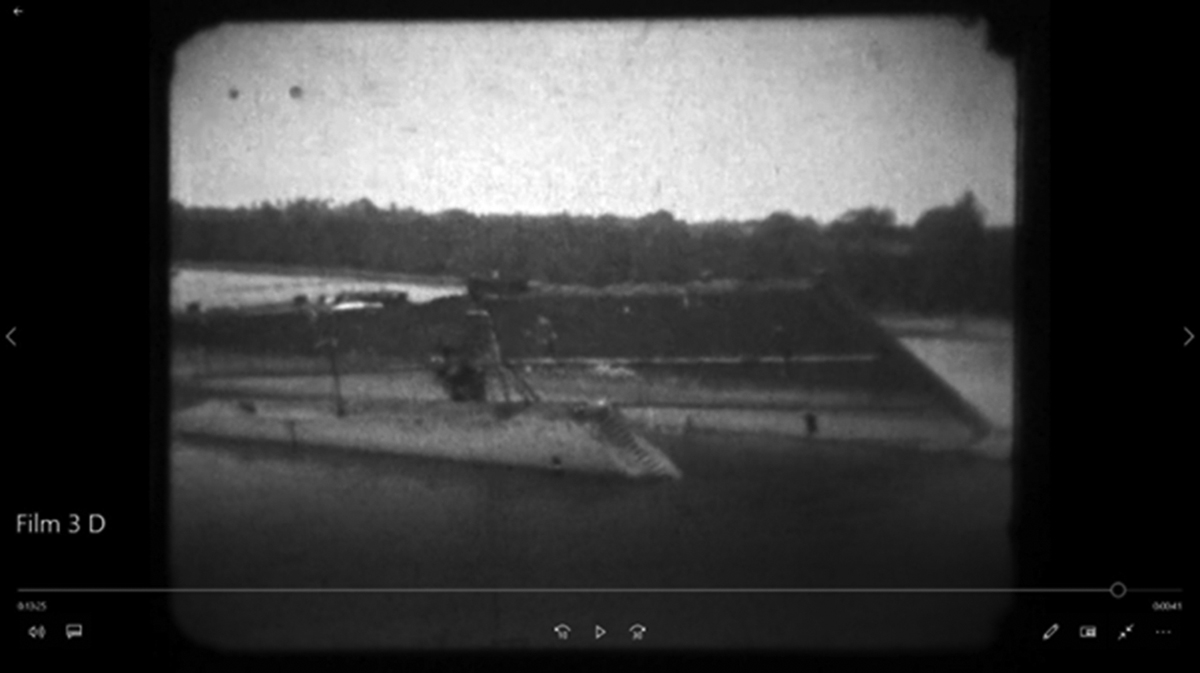
The Van den Berg party then spends some time in Dar es Salaam, visiting several landmarks, including the Ocean Road Hospital (also known as the European Hospital) at 0:11:53, and Government House at 0:12:07. They also capture a unique “water feature” that appears to have since been completely washed away by the tides. At 0:13:25, a strange structure can be seen just off the Dar es Salaam shoreline. Further research revealed it to be a German dry dock dating from the First World War.
 |
|
During their time in Dar es Salaam, Oom Willem also captured a unique “water feature” that appears to have since been completely washed away by the tides. A strange structure can be seen just off the Dar es Salaam shoreline. Further research revealed it to be a German dry dock dating from the First World War. |
That wraps up our tour recap for this week. Be sure to watch the next reel in our series about Oom Willem’s travels up the East Coast of Africa by clicking on the movie below. Where will they be going next? Can you identify the places they are visiting? Any bits of information can be sent to us at andries@zoutnet.co.za or WhatsApp it to him at (082) 603-2419)
Viewed: 2270

Andries van Zyl
Andries joined the Zoutpansberger and Limpopo Mirror in April 1993 as a darkroom assistant. Within a couple of months he moved over to the production side of the newspaper and eventually doubled as a reporter. In 1995 he left the newspaper group and travelled overseas for a couple of months. In 1996, Andries rejoined the Zoutpansberger as a reporter. In August 2002, he was appointed as News Editor of the Zoutpansberger, a position he holds until today.
Most Read Articles
Sponsored Content
Recent Headlines